
Huawei is accelerating the rollout of its next generation of Ascend AI processors, pulling several products forward from its previously announced schedule and sharply increasing the performance target for one of the most important chips on its roadmap.
The updated plans center on Huawei’s Ascend 950, 960 and 970 families, which are intended to form the foundation of increasingly powerful AI computing systems over the next several years. The most striking change involves the Ascend 960PR, which Huawei now says will deliver substantially more low-precision AI computing performance than originally planned.
The roadmap matters beyond a routine processor refresh. Huawei is attempting to build a complete domestic alternative for large-scale AI computing at a time when U.S. export restrictions limit its access to Nvidia’s most advanced accelerators and cutting-edge semiconductor manufacturing technology.
Huawei Is Moving Its Ascend Roadmap Forward
Huawei publicly outlined an unusually detailed multi-year Ascend roadmap in 2025, including successive generations designed for both AI training and inference. The plan represented a change for a company that historically disclosed relatively little about future processor releases.
Now Huawei is accelerating parts of that schedule.
According to the revised roadmap, some next-generation Ascend processors are expected to arrive several quarters earlier than previously indicated. That suggests Huawei is attempting to compress its development cycle as demand for domestic AI infrastructure grows rapidly in China.
The accelerated schedule is particularly important because Chinese AI companies need alternatives to high-end Nvidia hardware. Export restrictions have made access to Nvidia’s most capable data-center GPUs increasingly difficult, creating a large strategic opportunity for Huawei if it can supply competitive accelerators in sufficient quantities.
Ascend 960PR Gets a Major FP4 Upgrade
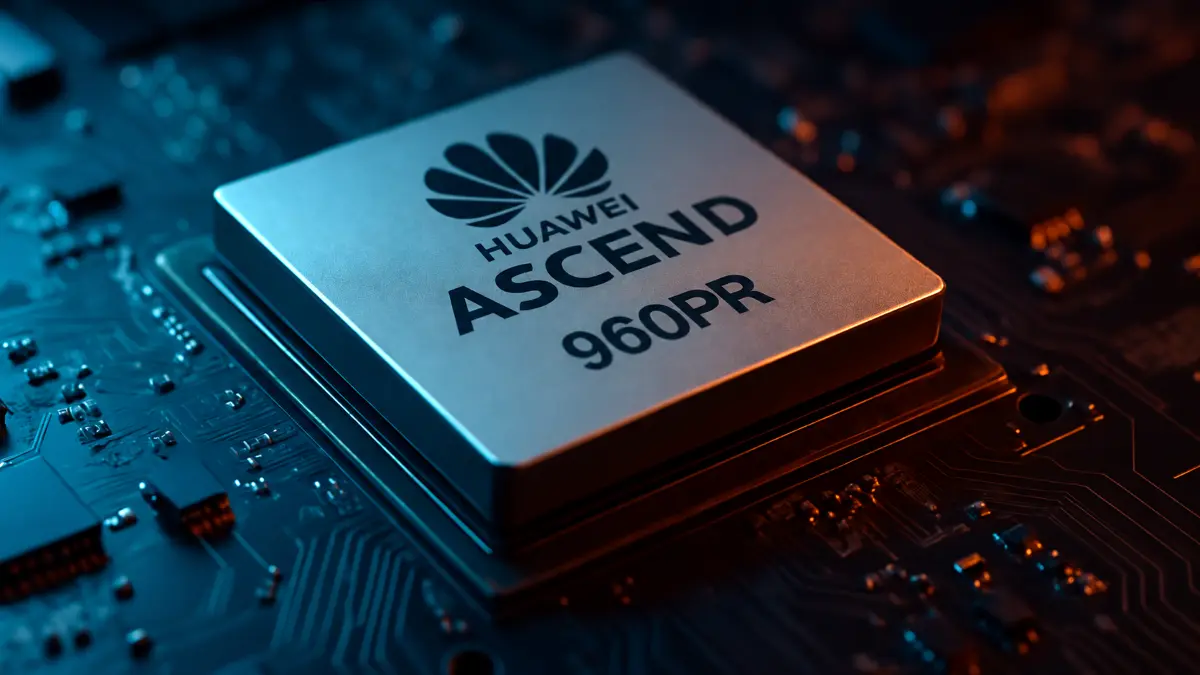
The biggest performance revision concerns the Ascend 960PR, a processor aimed heavily at AI inference.
Huawei’s revised specifications call for approximately 4 PFLOPS of FP4 performance, roughly double the 2 PFLOPS previously expected for the processor. FP4 refers to four-bit floating-point computation, an extremely low-precision numerical format increasingly important for running large AI models efficiently.
That distinction matters because the headline number should not be interpreted as the processor becoming twice as fast at every workload.
AI accelerators support several numerical formats, including FP32, FP16, BF16, FP8 and increasingly FP4. Higher precision is useful when calculations require greater numerical accuracy, while lower precision can dramatically increase throughput and reduce memory requirements for workloads capable of tolerating it.
FP4 is particularly attractive for AI inference, where a model that has already been trained generates answers, images, video or other outputs for users.
Reducing numerical precision means the accelerator can process more operations using the same amount of hardware and move less data through memory. For enormous generative AI models serving millions of requests, those efficiency gains can translate into higher token throughput and lower infrastructure costs.
Why FP4 Has Become So Important
The AI hardware competition is no longer determined solely by how quickly a processor can train a model.
Inference is becoming an equally important battleground.
Every interaction with an AI chatbot, coding assistant, image generator or AI agent consumes inference capacity. As reasoning models use more computation before producing answers and AI agents perform longer sequences of operations, the amount of compute required after a model has been trained can become enormous.
That makes low-precision processing increasingly valuable.
A processor capable of handling FP4 efficiently can potentially execute significantly more inference operations than one relying on higher-precision formats, provided the model has been optimized to maintain acceptable accuracy at that precision.
Huawei’s decision to double the Ascend 960PR’s planned FP4 capability therefore appears aimed directly at the next phase of the AI infrastructure race: running increasingly large models economically rather than simply training them.
Performance on Paper Is Only Part of the Story
The revised specification does not automatically mean the Ascend 960PR will deliver twice the real-world AI performance.
Peak FLOPS measure theoretical computational throughput. Actual model performance depends on considerably more.
Memory bandwidth, memory capacity, interconnect performance, software optimization, model architecture, quantization techniques, power consumption and communication between accelerators can all determine how efficiently the theoretical compute capability is used.
For large language models in particular, moving model weights and intermediate data can become as important as raw arithmetic throughput.
That is why real-world measurements such as tokens per second, latency, throughput per watt and performance across large clusters will ultimately matter more than a single peak FP4 figure.
Huawei Is Building Systems, Not Just Chips
Huawei’s strategy also extends well beyond individual Ascend processors.
One of the company’s biggest challenges is competing against Nvidia’s ability to connect enormous numbers of accelerators into a unified AI computing system. Modern frontier models are rarely trained on a single processor. They use hundreds, thousands or tens of thousands of accelerators operating together.
Huawei has responded by developing its CloudMatrix architecture, which combines large numbers of Ascend processors with high-speed networking and other infrastructure.
This system-level approach can compensate, at least partially, for disadvantages at the individual-chip level. If Huawei cannot always match the performance or manufacturing technology of the latest Nvidia processor, it can attempt to achieve competitive aggregate performance by connecting more Ascend chips together.
The trade-off is efficiency.
Using more processors to achieve the same workload can increase electricity consumption, networking requirements, cooling demands and physical data-center space. Huawei therefore needs improvements in both individual Ascend chips and the infrastructure connecting them.
Memory Is Another Critical Piece
AI accelerators are increasingly constrained by memory as much as computation.
Large models require enormous quantities of high-speed memory to store model parameters and rapidly feed data into the processor. Nvidia and other leading accelerator vendors rely heavily on high-bandwidth memory, or HBM, for this reason.
Huawei has been developing alternative approaches to memory and packaging as restrictions complicate access to some advanced components.
The performance of future Ascend systems will consequently depend not only on Huawei’s processor architecture but also on whether its suppliers can provide enough advanced memory, packaging and supporting silicon to manufacture complete AI accelerators at scale.
Manufacturing Remains Huawei’s Biggest Constraint
Huawei’s progress is particularly notable because it operates under severe semiconductor restrictions.
U.S. export controls restrict Huawei’s access to leading-edge semiconductor manufacturing equipment and advanced chips. The company consequently relies heavily on China’s domestic semiconductor ecosystem, including manufacturing capabilities associated with SMIC.
That creates a very different challenge from the one facing Nvidia or AMD.
Huawei does not simply need to design a competitive accelerator. It must produce increasingly sophisticated processors using manufacturing technology that may lag the most advanced processes available to competitors such as TSMC.
This can affect transistor density, power consumption, yields and manufacturing costs.
Huawei can compensate through architecture, packaging, networking and system design, but manufacturing remains one of the most important variables behind the Ascend roadmap.
Yield Could Matter More Than Peak Performance
Another overlooked factor is manufacturing yield.
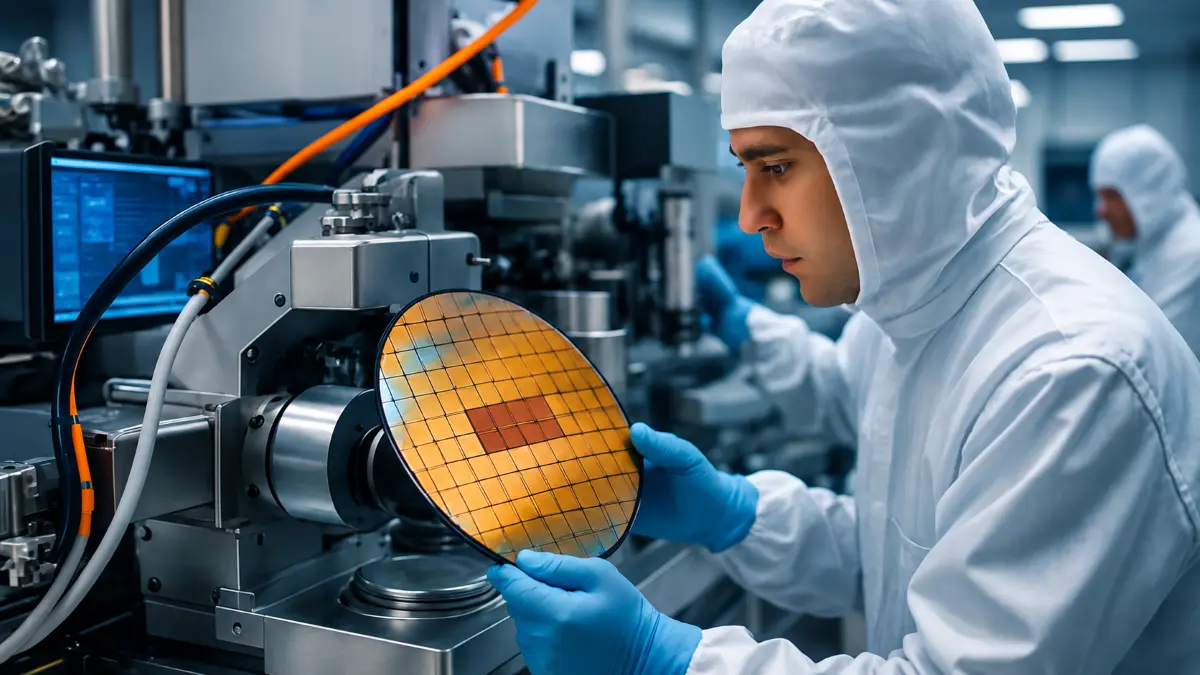
An AI processor is a very large and complex piece of silicon. As chips become larger, defects during manufacturing can reduce the percentage of usable processors produced from each wafer.
If Huawei can design an accelerator with impressive specifications but cannot manufacture enough working chips economically, its impact on the AI market will remain limited.
Conversely, even an accelerator that trails the leading Nvidia product in some benchmarks could become strategically important if Huawei can manufacture it in large volumes.
For Chinese cloud providers and AI developers facing restricted access to Western accelerators, availability can be as important as absolute performance.
Software Is Huawei’s Other Major Test
Nvidia’s dominance in AI hardware is not based solely on GPU performance.
CUDA and the enormous software ecosystem built around it remain major competitive advantages. AI frameworks, libraries, development tools and optimized kernels have been built around Nvidia hardware for years.
Huawei has been developing its own alternative software ecosystem around Ascend, including its CANN computing architecture and integration with AI frameworks.
That work is critical because developers need to move existing models onto Ascend hardware without extensive rewriting or performance tuning.
An accelerator delivering impressive theoretical FP4 throughput is considerably less valuable if developers struggle to make their models use that performance efficiently.
Huawei therefore has two races underway simultaneously: improving the silicon and making the software ecosystem easier for developers to adopt.
China’s AI Companies Have a Strong Incentive to Make Ascend Work
Huawei has one advantage that should not be underestimated: a large domestic market with increasingly strong incentives to reduce dependence on foreign AI processors.
Chinese technology companies, cloud providers, universities and AI laboratories need enormous amounts of compute. Restrictions on advanced Nvidia products create pressure to qualify and optimize alternative hardware.
That can accelerate ecosystem development.
The more organizations deploy Ascend processors, the more software is optimized for them. More optimized software makes the hardware attractive to additional customers, potentially creating the kind of feedback loop that helped establish CUDA.
Whether Huawei can reach that point remains uncertain, but the conditions for building a domestic ecosystem are stronger than they were several years ago.
Nvidia Is Still the Benchmark
Huawei’s accelerated roadmap does not mean it has overtaken Nvidia.
Nvidia continues advancing its own architecture rapidly, while combining processors, networking, memory, software and rack-scale systems into integrated AI infrastructure.
AMD and other accelerator developers are also competing for the same rapidly expanding market.
That means Huawei is chasing a moving target.
By the time Ascend 960 systems reach large-scale deployment, competing products will also have advanced. Comparing Huawei’s future processor with hardware available today can therefore give an overly optimistic picture of its competitive position.
The more meaningful comparison will involve products shipping at roughly the same time and running the same models under comparable conditions.
Geopolitics Is Accelerating the Technology
The Ascend roadmap also demonstrates an unintended consequence of semiconductor export restrictions.
The restrictions were designed in part to limit China’s access to the world’s most advanced AI computing technology. At the same time, they have created powerful economic incentives for Chinese companies to develop domestic alternatives.
Huawei has emerged as one of the most important beneficiaries of that pressure.
Chinese customers that might previously have defaulted to Nvidia now have strategic reasons to evaluate Ascend. Chinese semiconductor manufacturers have stronger incentives to improve production technology, while software developers have more reason to optimize frameworks for domestic processors.
That does not eliminate the technological disadvantages created by restricted access to leading manufacturing equipment, but it changes the economics of developing alternatives.
The Real Test Comes After the Roadmap
The revised Ascend roadmap is ambitious, and doubling the planned FP4 performance of the Ascend 960PR makes the processor considerably more interesting for inference-heavy AI workloads.
But roadmaps are promises.
The decisive questions will come when Huawei begins shipping the hardware at scale.
Can the company manufacture enough processors? Can it obtain sufficient high-speed memory? How much power will large Ascend clusters consume? Can CloudMatrix efficiently connect thousands of accelerators? Can CANN make migration from Nvidia hardware practical? And, most importantly, how many tokens per second can real AI models produce for every dollar and watt consumed?
Those measurements will determine whether the accelerated Ascend roadmap represents an impressive engineering target or a genuine change in the global AI hardware market.
Huawei does not necessarily need to build the world’s fastest individual AI accelerator to alter that market.
If it can deliver competitive AI systems in large volumes to customers that cannot reliably obtain the latest Nvidia hardware, availability itself could become one of Ascend’s most important performance advantages.