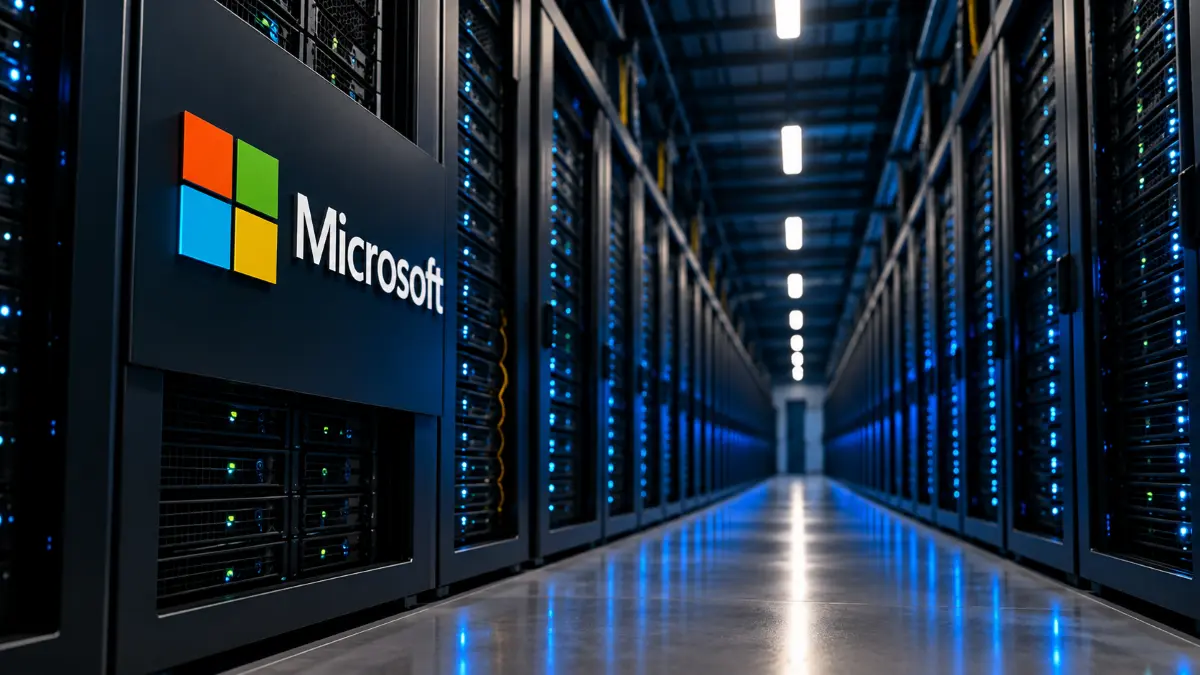

Microsoft is preparing for a massive expansion of its global data center infrastructure, with plans to roughly triple the size of its fleet by 2032. The scale of the proposed buildout illustrates how quickly the physical infrastructure behind cloud computing is changing as artificial intelligence drives demand for unprecedented amounts of computing power, electricity, networking capacity, and specialized chips.
The expansion would strengthen the infrastructure supporting Microsoft Azure as well as the company’s rapidly growing portfolio of AI services. Training and operating increasingly sophisticated AI models requires large clusters of accelerators, high-speed networking, storage, and cooling systems. As more businesses deploy generative AI and AI agents across their operations, Microsoft needs substantially more capacity to handle workloads that can be far more computationally intensive than traditional cloud applications.
That makes the planned expansion about more than simply adding buildings. Modern AI data centers require enormous electrical capacity and increasingly sophisticated designs capable of supporting dense racks of GPUs and other accelerators. Microsoft must secure suitable land, grid connections, networking infrastructure, water or alternative cooling resources, and large quantities of computing hardware before a new facility can begin serving customers.
The company is also competing for many of those same resources with other hyperscale operators. Amazon Web Services, Google Cloud, Meta, Oracle and other technology companies are investing heavily in infrastructure as the AI boom transforms data centers into one of the industry’s most strategically important assets.
For Microsoft, the expansion is closely connected to Azure’s competitive position. More infrastructure can allow the company to place computing resources closer to customers, increase available AI capacity and provide greater redundancy across regions. Geographic expansion can also help organizations satisfy requirements governing where sensitive or regulated data is stored and processed.
AI is changing the economics of that infrastructure. Traditional cloud data centers were designed to accommodate a broad mixture of computing, storage and networking workloads. AI facilities increasingly need extremely high-density computing clusters where thousands of accelerators can work together on a single workload. That requires upgrades extending from the servers themselves to networking, cooling and power distribution.
Electricity could become one of the biggest constraints on Microsoft’s ambitions. Large AI facilities can consume hundreds of megawatts, and proposed hyperscale campuses can require considerably more as they expand. In some markets, obtaining enough grid capacity can take years, making access to reliable electricity almost as important as access to advanced processors.
Microsoft has consequently been exploring long-term energy strategies alongside its data center investments, including renewable energy and nuclear power. The broader objective is not only to secure enough electricity for future computing demand but also to reconcile rapidly increasing data center consumption with the company’s sustainability commitments.
Cooling represents another challenge. High-performance AI accelerators generate substantially more heat per rack than conventional servers, pushing operators toward technologies such as direct-to-chip liquid cooling and other advanced thermal-management systems. Future Microsoft facilities will therefore likely differ significantly from data centers constructed during earlier phases of cloud expansion.
Tripling the fleet could also improve Microsoft’s ability to expand into markets where cloud and AI infrastructure remains relatively limited. Building capacity closer to customers can reduce latency while helping governments and enterprises meet data-residency requirements. This is particularly important as countries increasingly view domestic AI computing capacity as strategic infrastructure.
However, expansion at this scale carries financial and operational risks. Data centers require billions of dollars in capital investment, and the useful life of AI hardware can be relatively short as new generations of accelerators arrive. Microsoft must therefore balance today’s extraordinary demand for AI computing with the possibility that hardware efficiency, model design or customer demand could evolve considerably before 2032.
There is also growing scrutiny from communities where hyperscale facilities are being constructed. Data center developments can create investment and construction jobs, but concerns about electricity consumption, water use, noise, land requirements and pressure on local power grids have become increasingly prominent as campuses grow larger.
Strategically, Microsoft’s plan shows that the competition in artificial intelligence is increasingly becoming an infrastructure race. Having leading AI models and software will remain important, but companies must also possess enough physical computing capacity to train models, operate AI services and deliver them reliably to millions of customers.
The 2032 target therefore represents more than an expansion of Microsoft’s real estate footprint. It is a long-term bet that demand for cloud computing and AI will continue growing rapidly enough to justify an enormous increase in physical infrastructure.
What to watch next is where Microsoft chooses to build, how much additional electricity it secures, which technologies it uses to power and cool the new facilities, and whether AI demand continues growing fast enough to absorb the additional capacity. Those factors will determine whether tripling its data center fleet becomes a major competitive advantage for Azure or one of the most expensive infrastructure bets of the AI era.