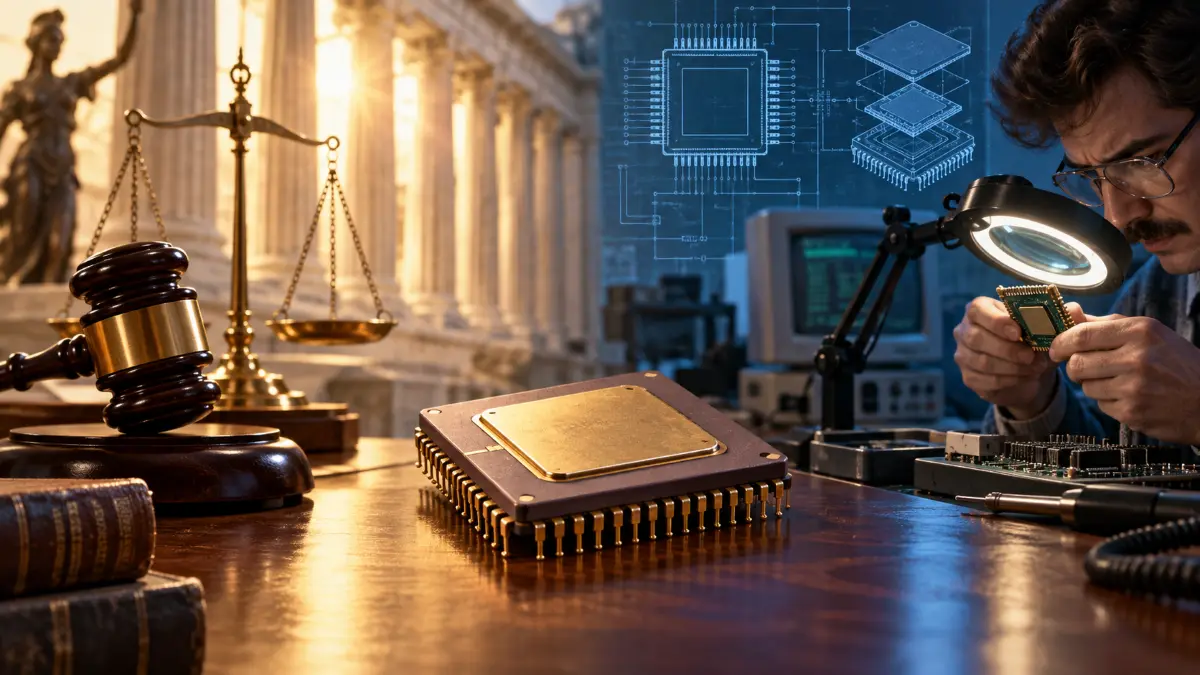

Code is law, but not without limits. On September 22, 1986, the US District Court for the Northern District of California made a ruling that would send ripples through the tech industry. The court declared that computer code is protected under copyright law. This was no abstract legal decision; it was the outcome of NEC Corp. v. Intel Corp, a case that revolved around who held the rights to produce x86 processors. The ruling granted Intel copyright protection for the code embedded in their processors but also carved out a crucial exception: reverse engineering was legal. NEC’s efforts to produce their own x86 processors did not violate Intel’s copyright.
At the time, this ruling addressed a thorny question: could software, intangible and often replicated, be treated like a written work or a piece of music under copyright law? The court’s decision said yes, but with nuance. It recognized software as intellectual property deserving protection. This was a big deal because it gave developers and companies legal grounds to defend their innovations against blatant copying. Yet, the ruling also acknowledged the importance of competition and innovation by permitting reverse engineering. This meant companies could study existing code to understand how it worked and build compatible products without infringing copyrights.
This balance solved a complex problem. Without copyright protection, software companies risked losing control over their creations, which could stifle investment and innovation. But without the allowance for reverse engineering, the market could become monopolized, locking out competitors and slowing progress. The NEC v. Intel ruling created a framework that encouraged both protection and competition, setting a precedent for how software would be treated legally going forward.
The effects of this ruling were profound. It legitimized software as a form of creative expression and intellectual property, which influenced countless court cases and legislation worldwide. At the same time, it empowered engineers and companies to dissect and learn from existing technologies. This dual approach helped fuel the rapid expansion of the personal computer industry and the software ecosystem. It allowed for interoperability and compatibility, which are pillars of modern computing.
Today, the implications of the 1986 ruling still resonate. Copyright protection for computer code remains a cornerstone of software law, shaping how companies protect their innovations and how developers navigate intellectual property boundaries. The legal acceptance of reverse engineering continues to be vital for security research, interoperability, and innovation. It enables developers to analyze software for vulnerabilities, create compatible hardware and software, and foster healthy competition.
The NEC v. Intel case reminds us that technology and law must evolve together. It highlights the delicate balance between safeguarding creativity and encouraging exploration. As software becomes even more integral to our lives, understanding these legal foundations helps us appreciate the frameworks that keep innovation alive without stifling competition.
Looking back at the ruling from September 22, 1986, it’s clear that the decision was more than a legal formality. It was a turning point that shaped the tech landscape by defining what software is in the eyes of the law and how it can be used. That balance between protection and openness remains a critical conversation as technology continues to advance.