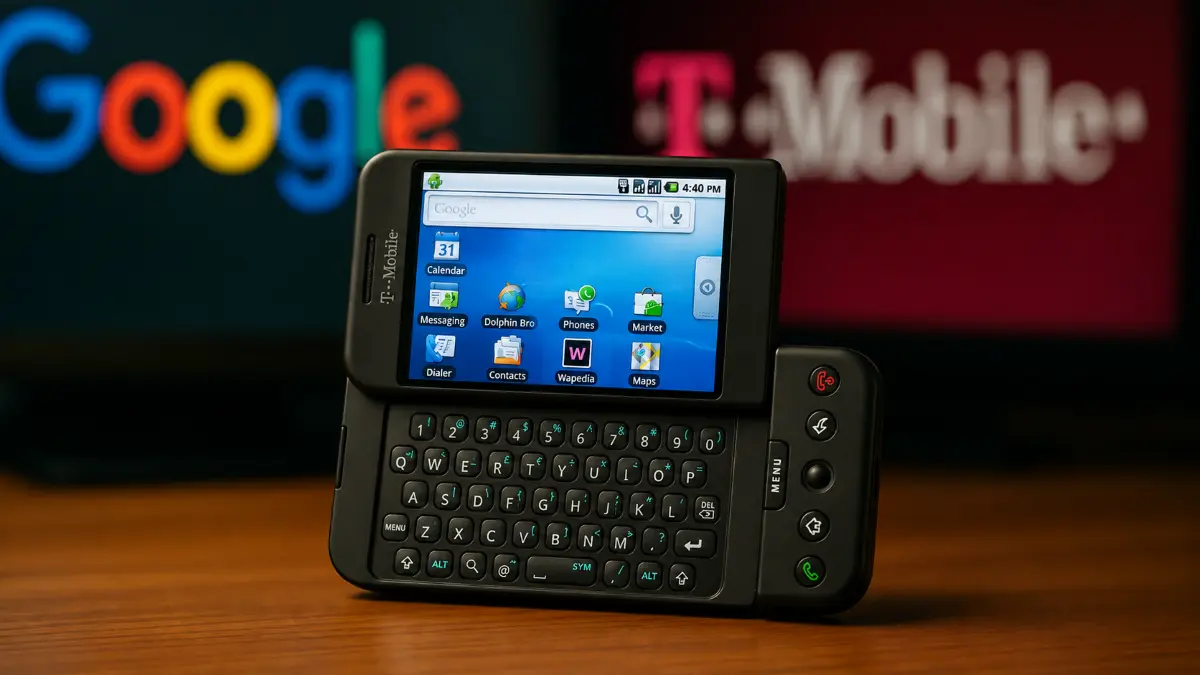

The smartphone landscape we take for granted today was once a blank slate. On September 23, 2008, Google and T-Mobile introduced the T-Mobile G1, also known as the HTC Dream. This wasn’t just another phone launch, it was the debut of the world’s first Android-based smartphone, a device that would quietly dismantle the status quo and redefine mobile computing.
At the time, smartphones were dominated by closed ecosystems and limited developer access. Apple’s iPhone had made waves with its sleek design and intuitive interface, but it was a closed garden. The T-Mobile G1 arrived with a different philosophy: open-source Android, a platform designed to be flexible, customizable, and accessible to a broad range of manufacturers and developers.
This openness addressed a critical problem. Before Android, mobile operating systems were fragmented and often proprietary, limiting innovation and user choice. The G1’s launch signaled a shift toward a more democratic smartphone ecosystem. Developers could build apps without restrictive gatekeeping, and manufacturers could tailor devices to different markets and price points.
The implications were immediate and profound. Android’s modularity and adaptability meant it could scale from budget phones to high-end devices. This flexibility attracted a diverse hardware ecosystem, driving rapid adoption worldwide. Today, Android is the world’s most popular smartphone platform by raw sales numbers, a testament to the foundation laid by the G1.
Beyond market share, the T-Mobile G1’s release reshaped how we think about mobile software. It introduced features like a physical keyboard combined with a touchscreen, early app marketplace integration, and Google services deeply embedded in the user experience. These elements demonstrated a new way to blend hardware and software that prioritized user empowerment and connectivity.
The G1 also set a precedent for collaboration between tech giants and carriers. Google’s partnership with T-Mobile was a strategic move to gain market entry and leverage carrier distribution channels, a model that would be replicated in various forms across the industry.
Why does the T-Mobile G1 still matter today? Its release marked the beginning of Android’s ascent, which has since influenced everything from app development paradigms to global internet access. Android’s open-source roots continue to foster innovation in emerging markets, making smartphones more affordable and accessible. The platform’s dominance also drives competition, pushing other players to innovate or adapt.
The G1’s legacy is embedded in the devices billions use daily. It showed that an open, adaptable approach to mobile OS design could thrive against closed systems. It also highlighted the importance of ecosystem thinking, building platforms that invite collaboration rather than control.
Looking back, the T-Mobile G1 was more than a phone; it was a blueprint for a new era of mobile technology. Its introduction on September 23, 2008, was a quiet but calculated move that reshaped the digital landscape, setting the stage for the interconnected, app-driven world we navigate today.