
The power of a technology brand lies not only in the products it creates, but also in the story it tells. On September 28, 1997, Apple introduced its “Think Different” campaign, a bold effort that went far beyond conventional product advertising. At a critical point in the company’s history, the campaign helped redefine what Apple wanted its name to represent.
Just weeks after Steve Jobs became interim CEO, Apple was attempting to reconnect with customers and restore confidence in its future. “Think Different” became an important part of that effort. Rather than focusing on processor speeds, specifications, or individual computers, the campaign presented Apple as a company associated with creativity, individuality, and people willing to challenge convention.
Apple Needed More Than New Products
Apple entered the late 1990s facing serious challenges. Its product lineup had become complicated, its share of the personal computer market had declined, and questions surrounded the company’s long-term direction.
The problem extended beyond sales. Apple needed to clarify its identity at a time when much of the personal computer industry was competing around specifications, compatibility, and price.
“Think Different” addressed that challenge through branding rather than technology itself. Instead of explaining why consumers should purchase a particular Macintosh, Apple reminded audiences what the company wanted to stand for.
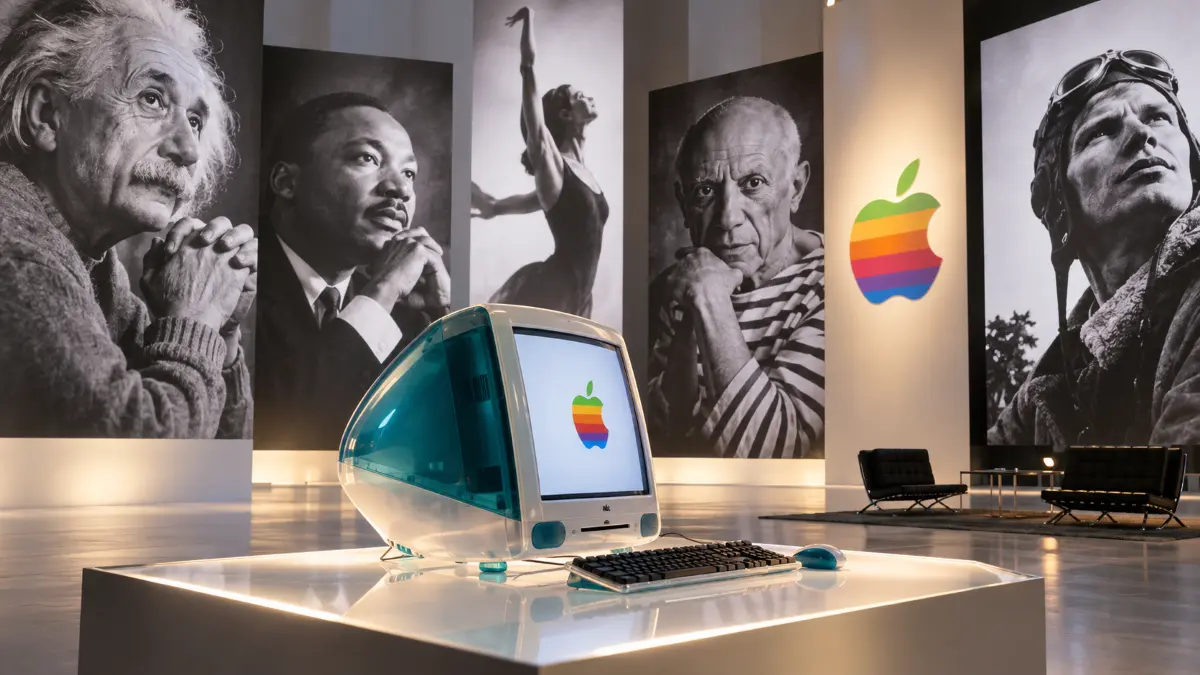
The campaign associated Apple with influential figures including Albert Einstein, Mahatma Gandhi, Pablo Picasso, Amelia Earhart, and other people known for challenging established ideas. Apple products were largely absent from the campaign’s most recognizable advertisements.
That was part of what made the approach distinctive.
Selling an Idea Instead of a Computer
What made “Think Different” particularly effective was its focus on identity over products. It wasn’t about specifications or features. It was about aligning Apple with creativity, individuality, and the idea of challenging convention.
The campaign’s minimalist imagery reinforced that message. Its television commercial combined black-and-white footage of influential historical figures with the now-famous “Here’s to the crazy ones” narration. Actor Richard Dreyfuss provided the voice for the widely broadcast version.
Rather than asking viewers to compare one computer against another, Apple was asking them to identify with a philosophy.
That distinction was important. Technology products inevitably become obsolete, but a recognizable brand identity can survive multiple generations of hardware.
A Symbol of Apple’s Comeback
The campaign received widespread attention and industry recognition, but its significance extended beyond advertising awards. “Think Different” arrived as Apple was beginning a much broader transformation under Jobs.
The campaign did not cause Apple’s recovery by itself. Major changes in management, product strategy, operations, industrial design, and software would all contribute to the company’s resurgence.
But “Think Different” gave those changes a clear public identity.
It established a brand message that closely complemented the product and design direction Apple would pursue in the years that followed.
In 1998, Apple introduced the colorful iMac G3, a computer whose distinctive translucent enclosure stood apart from the beige PCs that dominated the market. Later products including the iPod, MacBook, iPhone, and iPad would continue Apple’s emphasis on combining technology with recognizable industrial design and tightly integrated user experiences.
When Technology Marketing Became Storytelling
“Think Different” also demonstrated something increasingly important to the wider technology industry: technical specifications were not the only way to differentiate a product.
Technology could be marketed around what people created, experienced, or accomplished with it.
That approach would become increasingly visible across the industry as computers, smartphones, and other consumer electronics became mainstream products. Advertising could focus less on the technology inside a device and more on how that technology fit into people’s lives.
For Apple, the campaign helped establish a particularly strong connection between its products and ideas such as creativity, design, simplicity, and personal expression.
The Lasting Legacy of “Think Different”
Nearly three decades later, “Think Different” remains one of the most recognizable campaigns in technology advertising.
Its importance comes partly from timing. The campaign appeared when Apple needed to convince customers, developers, employees, and the broader technology industry that the company still had a distinctive reason to exist.
It also showed how branding and technology strategy can reinforce each other. A compelling advertising campaign cannot rescue weak products on its own, but a clear identity can help audiences understand the direction behind those products.
The lessons remain relevant in a technology market where competing devices frequently offer similar capabilities. Specifications matter, but companies also compete through design, ecosystems, user experience, trust, and the identities they build around their products.
Looking back at September 28, 1997, “Think Different” was more than a memorable advertising campaign. It became a highly visible symbol of a company beginning to redefine itself.
Apple still had enormous challenges ahead, and some of its most influential products had yet to be imagined. But “Think Different” helped articulate the identity that would accompany that transformation.
It demonstrated a lesson that remains relevant across the technology industry today: sometimes changing how people understand a technology company can be almost as important as changing the technology itself.