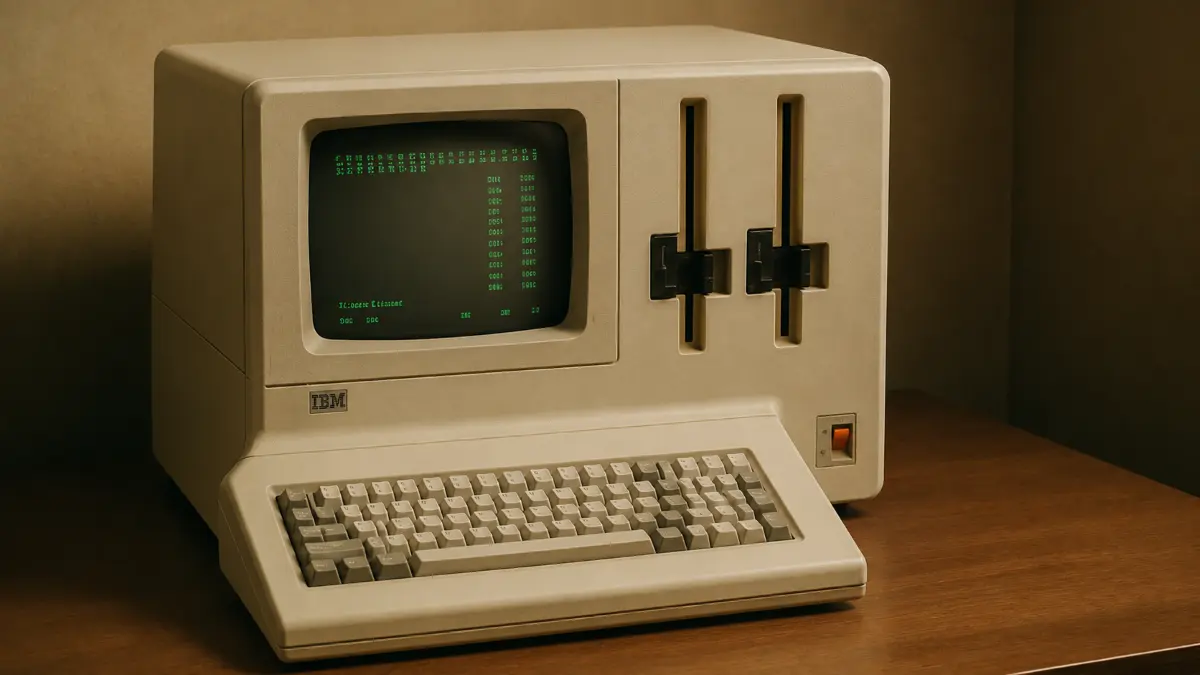

In the summer of 1981, IBM quietly launched the System/23 Datamaster, a desktop computer aimed squarely at small businesses. It wasn’t flashy or groundbreaking on its own, but this machine laid crucial groundwork for one of the most iconic devices in computing history: the IBM PC. On July 28, 1981, the Datamaster made its debut just two weeks before IBM introduced the PC, marking a subtle but strategic step in personal computing’s evolution.
The Datamaster was designed with simplicity in mind. It targeted small business users who needed a reliable word processor and data processor but didn’t have access to dedicated IT specialists. The goal was clear: create a system that could be set up and operated by end-users without technical help. This focus on user-friendly design was a response to a growing demand for accessible computing solutions outside of large corporate IT departments.
What made the Datamaster especially important wasn’t just its specs or market positioning but the team behind it. Many of the engineers and developers who built the Datamaster were soon reassigned to work on IBM’s secret PC project. The knowledge and experience they gained from the Datamaster directly influenced the rapid development of the IBM PC. For instance, the decision to use the Intel 8088 processor in the IBM PC was rooted in the team’s familiarity with the similar Intel 8085 chip used in the Datamaster. This continuity in hardware expertise helped IBM accelerate the PC’s design and launch.
At the time, the Datamaster’s role was overshadowed by the IBM PC’s arrival, which would dominate headlines and reshape the computing landscape. Yet the Datamaster solved a critical problem: how to bridge the gap between complex business computing and everyday users. It proved that a desktop computer could be both powerful and approachable, setting a precedent for user-centric design in business technology.
The ripple effects of the Datamaster’s development team and design philosophy are still felt today. The IBM PC’s architecture became the foundation for the vast majority of personal computers that followed, influencing hardware standards and software ecosystems for decades. Without the Datamaster’s contribution, the PC might have taken longer to materialize or looked very different. It’s a reminder that innovation often builds on incremental, behind-the-scenes advances rather than sudden leaps.
Looking back, the IBM System/23 Datamaster is a case study in how focused engineering and strategic team deployment can accelerate technological breakthroughs. It also highlights the importance of designing technology with the end-user in mind, a principle that remains central in today’s tech development. The Datamaster wasn’t just a footnote; it was a critical stepping stone that helped shape the future of personal computing.
The story of the Datamaster invites us to appreciate the less glamorous but deeply influential projects that underpin major tech milestones. It’s a lesson in how groundwork laid quietly can enable the rapid rise of transformative technologies.