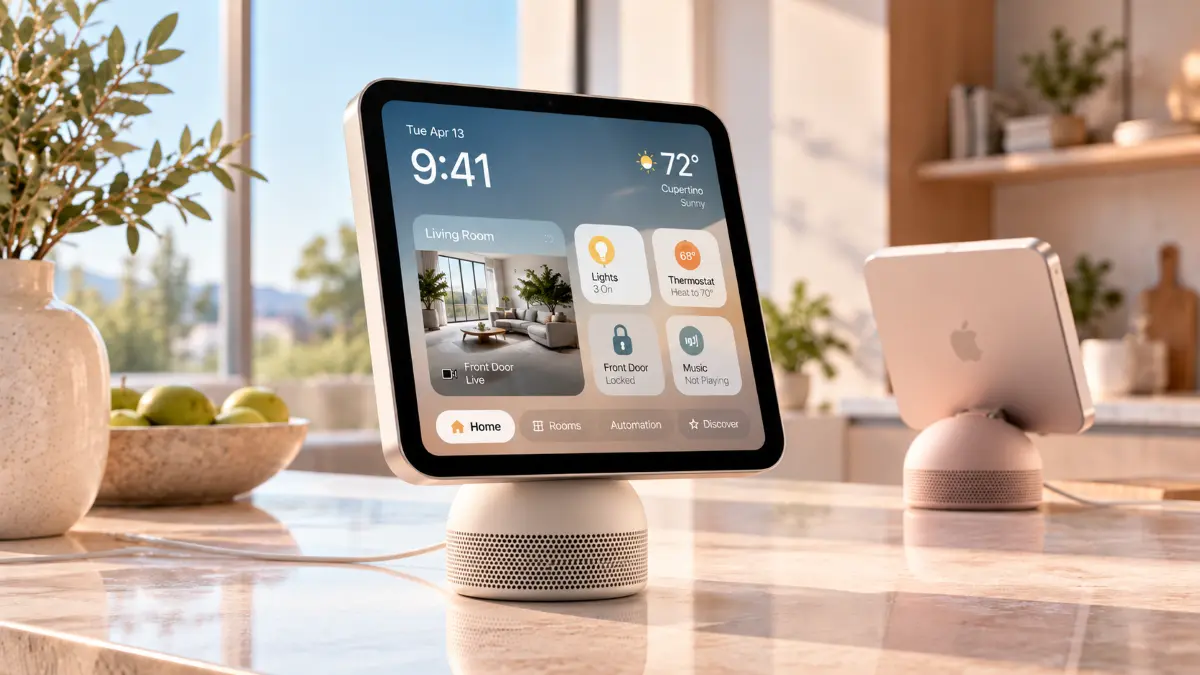

Apple has quietly expanded its smart home ecosystem with the introduction of the HomeView hub, a new device featuring built-in temperature and humidity sensors. This addition marks a notable step in Apple’s approach to indoor environmental monitoring, allowing users to track home conditions more precisely and automate climate control with compatible thermostats from LG and Schneider Electric.
The HomeView hub’s integration of environmental sensors enables a more granular understanding of indoor air quality and comfort. By measuring temperature and humidity directly, the device can provide real-time data to the Home app, empowering users to create smarter automation routines based on actual conditions rather than relying solely on external devices or manual input.
Built-in Sensors for Indoor Climate Monitoring
Unlike previous smart home hubs that primarily focused on connectivity and control, the HomeView incorporates dedicated sensors for temperature and humidity. These sensors continuously monitor the indoor environment, feeding data into Apple’s HomeKit framework. This allows users to view current conditions through the Home app and receive notifications if thresholds are crossed, such as excessive humidity that could lead to mold growth or temperature fluctuations that impact comfort.
The inclusion of these sensors also supports more responsive automation. For example, users can set rules to adjust heating, ventilation, or air conditioning systems automatically when the HomeView detects specific temperature or humidity levels. This creates a more dynamic and efficient smart home experience tailored to real-world conditions.
Seamless Integration with Third-Party Thermostats
Apple has partnered with LG and Schneider Electric to enable direct integration between the HomeView hub and their smart thermostats. This means the temperature and humidity data collected by the HomeView can be used to control these thermostats without requiring additional sensors or devices.
This integration simplifies setup and enhances interoperability within the HomeKit ecosystem. Users with LG or Schneider Electric thermostats can now leverage the HomeView’s environmental readings to optimize their heating and cooling systems, improving energy efficiency and comfort without juggling multiple apps or platforms.
Implications for Users and Developers
For users, the HomeView hub’s sensor capabilities translate into a more cohesive and intelligent smart home environment. The ability to monitor and react to indoor climate conditions from a single device reduces the complexity of managing multiple sensors and controllers.
Developers and smart home accessory makers can also benefit from this development. The HomeView sets a new baseline for environmental sensing within the HomeKit ecosystem, encouraging third-party manufacturers to design devices that complement or extend these capabilities. It also opens opportunities for app developers to create more sophisticated automation scenarios and data visualizations based on the hub’s sensor data.
What Remains Unchanged in Apple’s Smart Home Strategy
While the HomeView hub adds valuable sensor functionality, it does not replace existing HomeKit hubs such as the Apple TV, HomePod, or iPad, which continue to serve as central controllers for smart home devices. The HomeView is positioned as a specialized device focused on environmental sensing and integration rather than a full replacement for core hub functions.
Additionally, the new sensors do not extend to air quality metrics beyond temperature and humidity, such as VOCs or particulate matter, which some competing smart home devices offer. Apple’s approach remains focused on precise climate control rather than comprehensive air quality monitoring at this stage.
Strategic Context and Future Directions
Apple’s move to embed temperature and humidity sensors directly into a HomeKit hub reflects a broader trend toward deeper environmental awareness in smart homes. By controlling the hardware and software stack, Apple can ensure tight integration, privacy protections, and a seamless user experience.
This development also aligns with Apple’s emphasis on energy efficiency and user comfort, leveraging sensor data to reduce wasteful heating or cooling. The partnerships with LG and Schneider Electric indicate a strategic push to strengthen HomeKit’s appeal by supporting popular third-party devices with native integration.
What to Watch Next
As the HomeView hub rolls out, it will be important to monitor how widely it is adopted and whether Apple expands sensor capabilities in future iterations. Developers will be watching for new APIs that expose sensor data for richer automation and app experiences. Additionally, the potential for Apple to incorporate more advanced environmental sensors or expand third-party integrations could further enhance the HomeKit ecosystem’s competitiveness.
For users invested in Apple’s smart home vision, the HomeView hub offers a promising step toward more intelligent, responsive, and comfortable living spaces.