
With smartphone cameras becoming increasingly capable, users often wonder how to manage their growing photo libraries efficiently. One question that frequently arises is whether capturing photos in HEIF (High Efficiency Image Format) instead of the long-established JPEG format can save storage space without compromising image quality.
Claim: Capturing photos in HEIF format instead of JPEG saves storage without noticeable loss in quality on smartphones.
Quick answer: HEIF saves storage space on smartphones while maintaining photo quality, making it a smarter choice than JPEG.
HEIF is a modern image format designed to store photos using advanced compression methods. Unlike JPEG, which has been the standard for decades, HEIF can reduce file sizes significantly while preserving more image detail and color information. But how does this translate to everyday use on smartphones?
How HEIF Compression Works Compared to JPEG
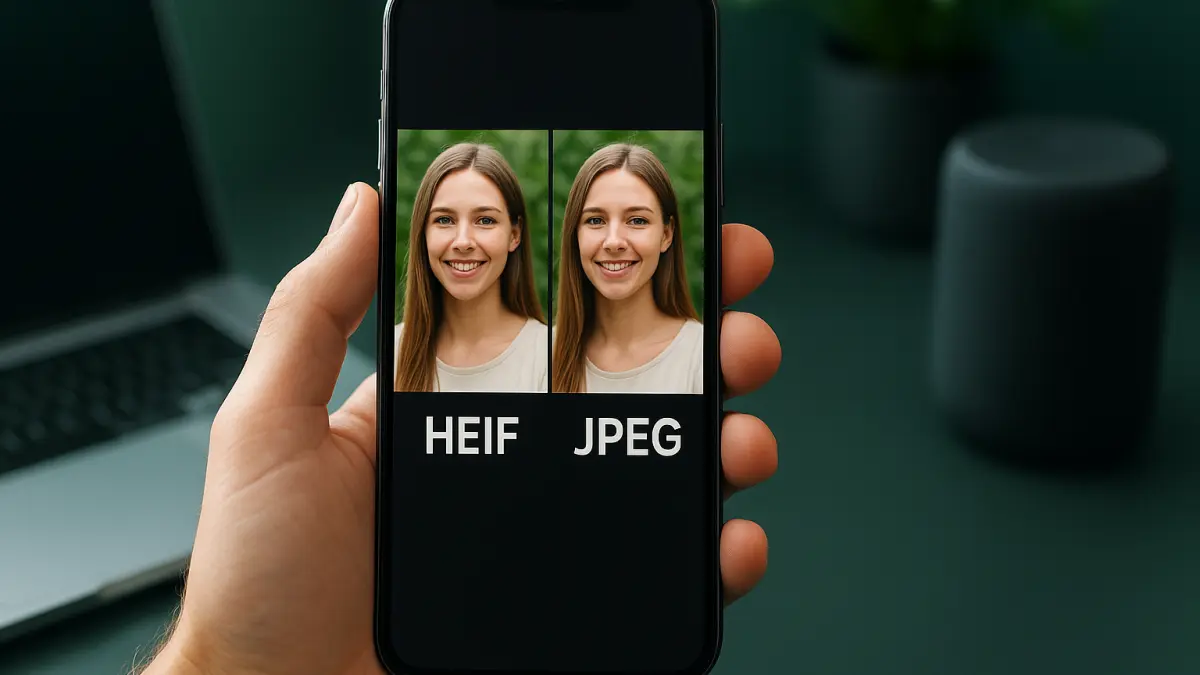
HEIF relies on more sophisticated compression algorithms, including those used in video codecs like HEVC (High Efficiency Video Coding). This allows HEIF files to achieve roughly half the size of equivalent JPEG images at similar or better quality levels. The format supports features such as 16-bit color depth and transparency, which JPEG does not, enabling richer and more accurate photos.
In practical terms, this means that photos saved in HEIF format consume less storage space, allowing users to keep more images on their devices. The reduced file size comes without a noticeable loss in sharpness, detail, or color fidelity for most users viewing photos on typical smartphone screens or sharing them online.
Context and Compatibility Considerations
While HEIF offers clear advantages in storage efficiency and quality preservation, its adoption depends on device and software support. Most recent smartphones, including iPhones since iOS 11 and many Android devices running newer versions, support HEIF natively. However, some older devices and platforms may not fully support HEIF, which can complicate sharing or editing photos outside the device.
To address compatibility, many phones offer automatic conversion to JPEG when sharing images with apps or contacts that do not support HEIF. This ensures seamless usability but may negate storage savings if photos are frequently shared or transferred in JPEG format.
Practical Advice for Smartphone Users
If your phone supports HEIF and you primarily view and store photos on the device, switching to HEIF can be a smart way to save storage without sacrificing quality. This can be especially useful for users who take many photos or shoot in high resolution. However, if you often share images with devices or software that lack HEIF support, consider how automatic conversions might affect your workflow.
Ultimately, HEIF represents a more efficient photo storage format that balances file size and image quality effectively on compatible smartphones. Users looking to optimize storage should explore enabling HEIF capture in their camera settings while being mindful of compatibility needs.