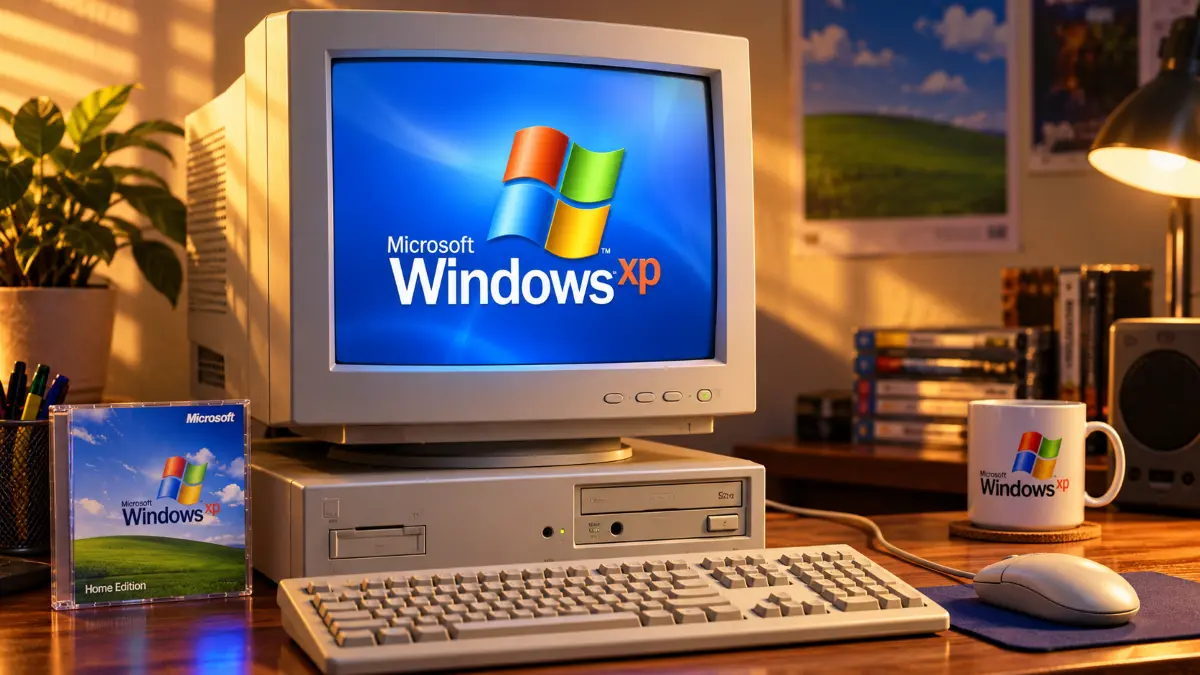

October 25, 2001, marked a defining moment in personal computing when Microsoft released Windows XP. This wasn’t just another operating system launch. It was a strategic fusion of two distinct Windows families, Windows NT and Windows 95, into a single platform that would dominate for years. Windows XP’s release addressed a fundamental challenge: unifying Microsoft’s fragmented OS ecosystem to create a more stable, user-friendly experience.
At the time, Microsoft faced a split between the business-oriented Windows NT line, known for its robustness, and the consumer-focused Windows 95 line, which prioritized ease of use. Windows 2000 and Windows ME represented these branches but lacked cohesion. Windows XP bridged this gap by combining NT’s reliability with the accessibility of the consumer OS. This integration was not merely cosmetic. It laid the groundwork for a more secure and efficient system architecture, improving stability and compatibility across a wide range of hardware and software.
The significance of Windows XP extended beyond its technical specs. It was the first Windows OS to offer a consistent user interface that appealed to both home users and enterprises. Its introduction of features like the Start menu redesign, improved hardware support, and better networking capabilities made it a versatile platform. These design choices helped Windows XP become the default environment for millions, setting expectations for what an operating system should deliver in terms of performance and usability.
Windows XP’s tenure was unusually long. Although Microsoft officially replaced it with Windows Vista in January 2007, the latter’s troubled launch and performance issues meant many users stuck with XP. This extended lifespan, lasting until August 2012 as the world’s most popular OS, is a testament to Windows XP’s solid foundation. It became the benchmark against which future operating systems were measured, influencing user interface design, security protocols, and software compatibility standards.
The release of Windows XP also shifted developer priorities. Software makers could now target a unified platform, reducing the complexity of supporting multiple Windows versions. This consolidation helped accelerate the growth of third-party applications and games optimized for XP’s architecture. It also pushed hardware manufacturers to align drivers and peripherals with a single dominant OS, streamlining the ecosystem.
Today, Windows XP’s legacy still resonates. It demonstrated the value of merging technical robustness with user-centric design, a principle that continues to guide OS development. The challenges it addressed, fragmentation, stability, and usability, are evergreen issues in technology. Windows XP’s success story reminds us that a well-balanced operating system can sustain user loyalty and industry support far beyond its expected lifecycle.
Reflecting on the release of Windows XP reveals more than nostalgia. It shows how thoughtful engineering and strategic product planning can shape the digital landscape. Its influence is embedded in the DNA of modern operating systems, proving that sometimes, the best innovations come from unifying what once seemed incompatible.