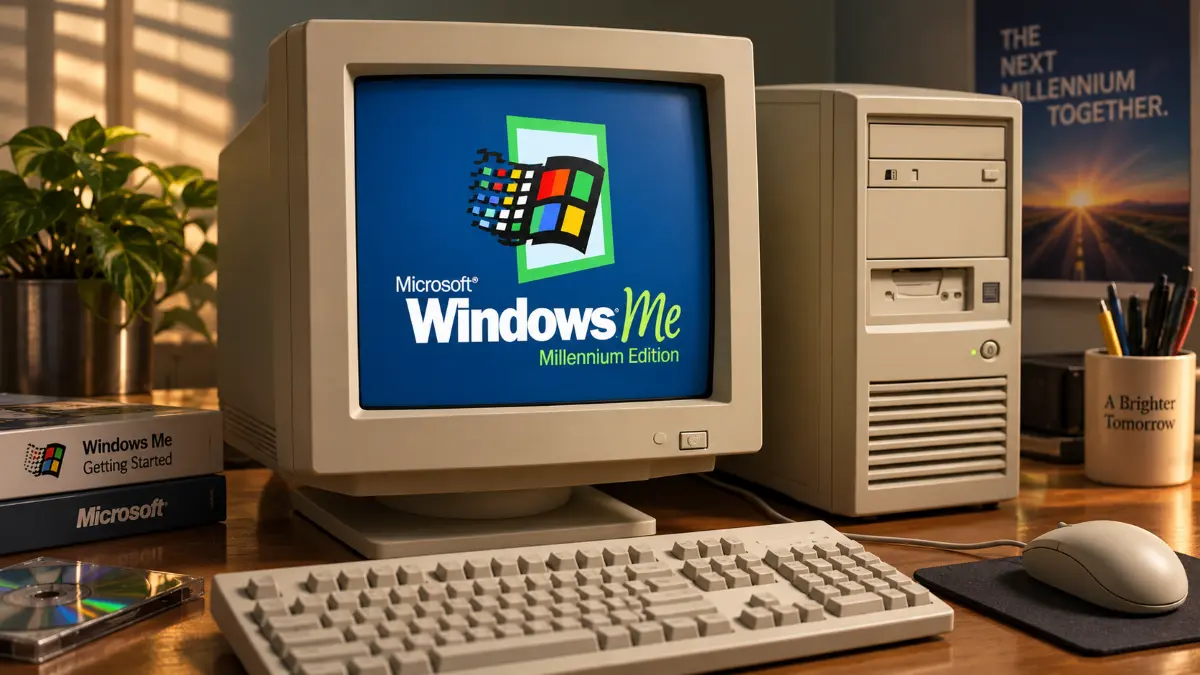

The year 2000 was a time when personal computing was shifting gears, and Microsoft was pushing the envelope on how PCs fit into everyday life. On September 14, 2000, Microsoft released Windows Me, a version of its operating system that aimed to bridge the gap between traditional computing and the emerging digital home environment. Windows Me was not just another update; it was an attempt to integrate multimedia and networking features directly into the consumer PC experience.
At the time, Windows Me introduced several new features designed to make PCs more user-friendly for home users, especially those interested in digital media. It included improved multimedia capabilities, such as Windows Movie Maker, which allowed users to edit videos, a nod to the growing importance of digital content creation. The operating system also enhanced home networking support, making it easier for non-experts to connect multiple devices and share resources within a household.
What set Windows Me apart was its focus on the “digital lifestyle.” It was designed to support the increasingly common use of PCs for entertainment, communication, and creative tasks. This was a shift from previous versions of Windows, which were more business-oriented or focused on basic computing functions. Windows Me aimed to make the PC a hub for digital media consumption and creation, anticipating trends that would dominate the next two decades.
Despite its ambitions, Windows Me faced criticism for stability and compatibility issues. However, its attempt to integrate multimedia tools and simplified networking laid groundwork that would influence future operating systems. The concept of bundling creative software and making networking accessible to everyday users was a clear step toward the modern, connected digital ecosystem.
Windows Me’s legacy is visible in how modern operating systems handle media and connectivity. The idea of an OS as a platform for creative expression and seamless device integration is now standard. Features like built-in video editing, easy file sharing, and home networking owe a debt to the groundwork laid during this era. While Windows Me itself was short-lived, it was a testing ground for concepts that have become essential in today’s computing environment.
Today, as we navigate a world of cloud storage, streaming media, and smart home devices, the seeds planted by Windows Me in 2000 remain relevant. The operating system’s focus on multimedia and networking anticipated the shift from isolated PCs to interconnected digital hubs. Understanding this helps us appreciate how user expectations for seamless media handling and device connectivity evolved.
Looking back at Windows Me is a reminder that even imperfect technology can push boundaries and set the stage for future innovation. It was an early experiment in making computers more accessible and versatile for everyday users, a mission that continues to shape software development today.