
Smart speakers have become a common fixture in many homes, offering convenience through voice commands. However, concerns about privacy and unintended recordings are widespread. One question many users ask is whether enabling privacy settings on these devices can completely stop all accidental voice recordings from being uploaded to the cloud.
Claim: Enabling privacy settings on smart speakers can prevent all accidental voice recordings being uploaded.
Quick answer: Privacy settings can reduce but not always fully prevent accidental recordings from uploading, depending on the device’s design and implementation.
Privacy settings on smart speakers typically include microphone mute buttons and software-based privacy modes designed to limit when and how recordings are sent to cloud servers. But the effectiveness of these measures varies significantly depending on the device’s architecture and manufacturer implementation.
How Microphone Mute and Privacy Modes Work
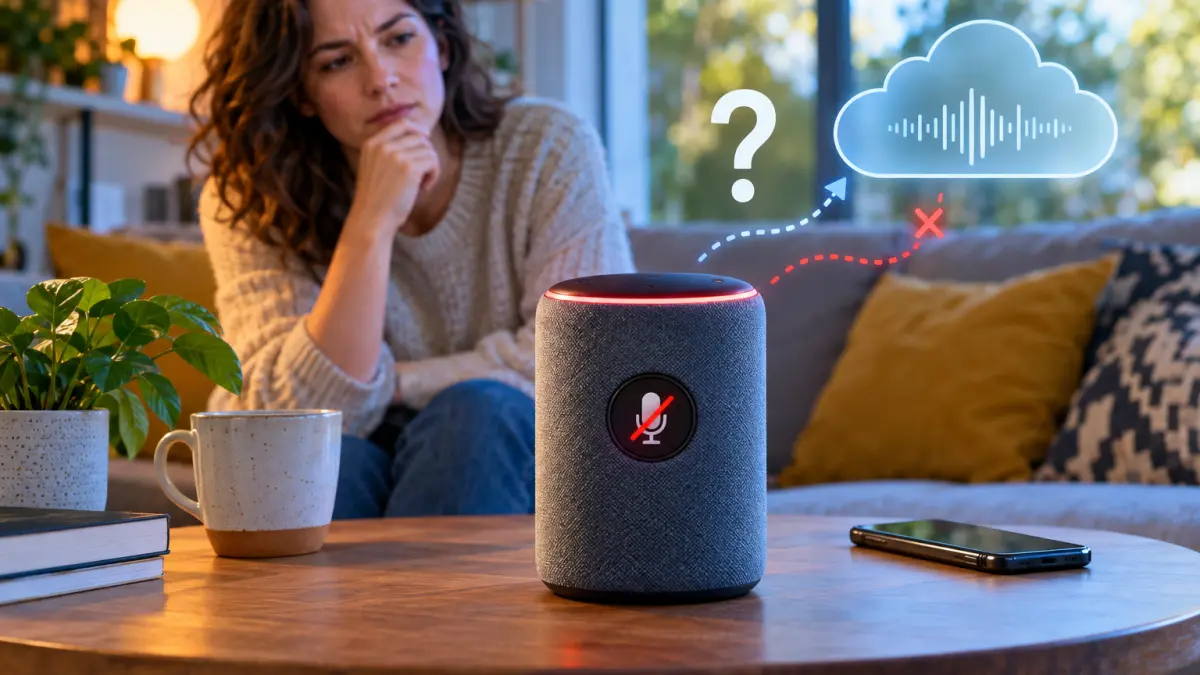
The physical microphone mute button usually disconnects or disables the microphone hardware, preventing the device from capturing audio altogether. When this button is engaged, the speaker should not record or upload any sound. However, the reliability of this feature depends on the hardware design, some devices may still have software processes active that could inadvertently capture data if the mute function is not truly hardware-based.
Software privacy modes often limit data collection by restricting or delaying when voice snippets are uploaded for processing. These modes might require explicit wake words or manual activation before recording begins. Yet, the implementation details vary, and some devices may still buffer short audio clips locally or upload data under certain conditions, such as error reporting or feature diagnostics.
Device Design Impacts Privacy Effectiveness
Manufacturers differ in how strictly their devices enforce privacy settings. Some prioritize hardware-level muting that completely cuts off the microphone, while others rely more on software controls. This means that even with privacy modes enabled, some smart speakers could still upload brief, unintended recordings if the device misinterprets sounds or if software bugs occur.
Additionally, firmware updates and changes in privacy policies can affect how these features operate over time. Users should regularly review privacy settings and manufacturer statements to understand what protections are currently in place.
Practical Implications for Users
For users concerned about accidental recordings, the safest approach is to use the physical microphone mute switch when privacy is desired. Relying solely on software privacy modes may not guarantee complete prevention of unintended uploads. Understanding the specific device’s design and privacy features is crucial.
Regularly checking device settings, reviewing privacy policies, and keeping firmware updated can help maintain the best possible privacy posture. Users should also be aware that some data collection might still occur for essential functions or troubleshooting, depending on the device.
In summary, while privacy settings on smart speakers can reduce the risk of accidental voice recordings being uploaded, they do not universally guarantee complete prevention. Device design and implementation play a key role in how effective these protections are.