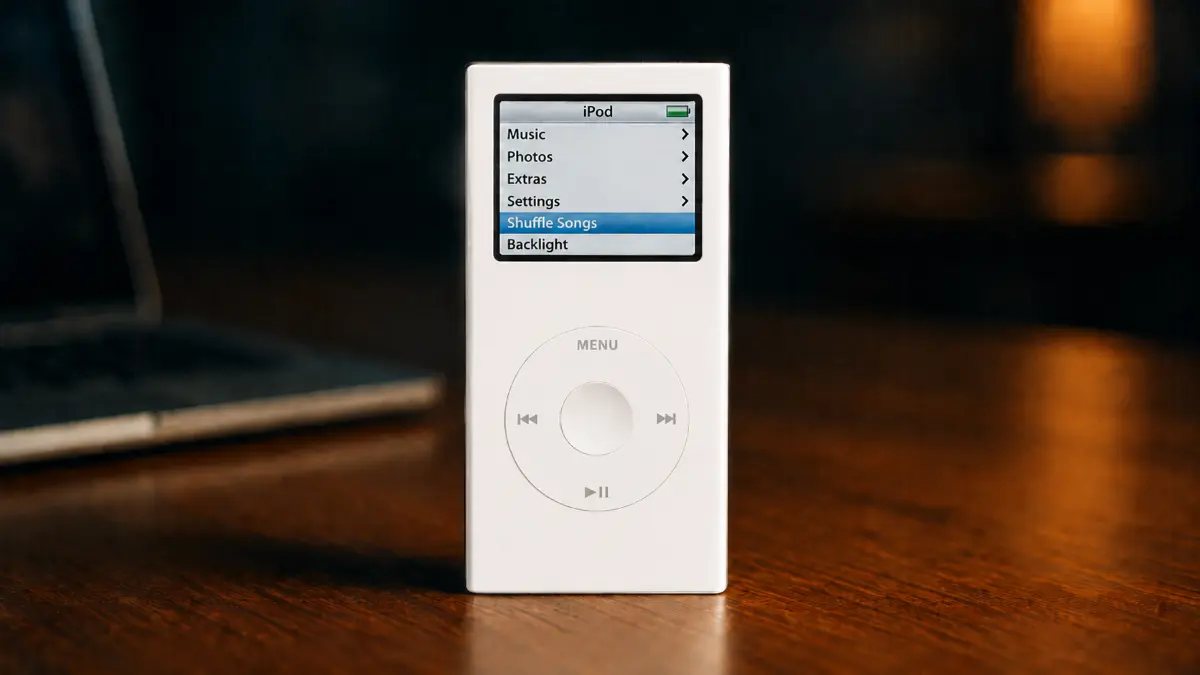

The tech world rarely sees a product drop that quietly resets the rules. On September 7, 2005, Apple introduced the iPod Nano, and the ripples from that release are still felt today. The iPod Nano launch wasn’t just about a new music player, it was the moment flash storage stepped out of niche applications and into the spotlight of consumer electronics.
Apple’s move to replace the wildly popular iPod Mini with the Nano caught many by surprise. The Mini had carved out a loyal following with its compact size and hard drive-based storage. But the iPod Nano took a different path, swapping the traditional spinning hard drive for flash memory. This technical pivot allowed Apple to shrink the device significantly while boosting reliability and battery life.
At the time, hard drives were the default storage medium for portable music players. They offered high capacity but came with mechanical parts prone to damage and power-hungry operation. Flash storage, by contrast, had no moving parts, was more shock-resistant, and consumed less energy. The iPod Nano’s adoption of flash memory solved a critical problem: how to make portable devices smaller, tougher, and longer-lasting without sacrificing storage capacity.
The market response was immediate and emphatic. One million units sold in just 17 days. That wasn’t just a commercial success; it was a validation of flash technology’s potential in consumer devices. The iPod Nano didn’t just replace the Mini, it set a new standard for what portable electronics could be.
This shift had far-reaching consequences beyond music players. The pioneering use of flash storage in the iPod Nano laid the groundwork for Apple’s future product lines. The iPhone, iPad, and MacBooks that followed all embraced flash memory, benefiting from its compact size and energy efficiency. These devices could be thinner, faster, and more durable, thanks in large part to the groundwork laid by the Nano.
The iPod Nano’s launch also accelerated the broader industry trend toward flash storage. As costs dropped and capacity increased, flash memory became the backbone of mobile computing and portable devices. Today, solid-state drives dominate laptops, smartphones rely on embedded flash, and cloud data centers use flash arrays for speed. The Nano was an early consumer proof point that helped push this transition forward.
Why does this still matter today? Because the iPod Nano’s flash storage innovation was a catalyst for the mobile-first, always-on digital lifestyle we now take for granted. It solved the problem of balancing size, durability, and battery life in a way that hard drives never could. That breakthrough made possible the sleek, powerful devices that define our modern tech ecosystem.
Looking back, the iPod Nano launch is a reminder that sometimes the most impactful tech moments come not from flashy new features but from a smart rethinking of core components. By embracing flash storage, Apple didn’t just improve a product; it rewrote the blueprint for portable electronics. That legacy continues to shape how we interact with technology every day.