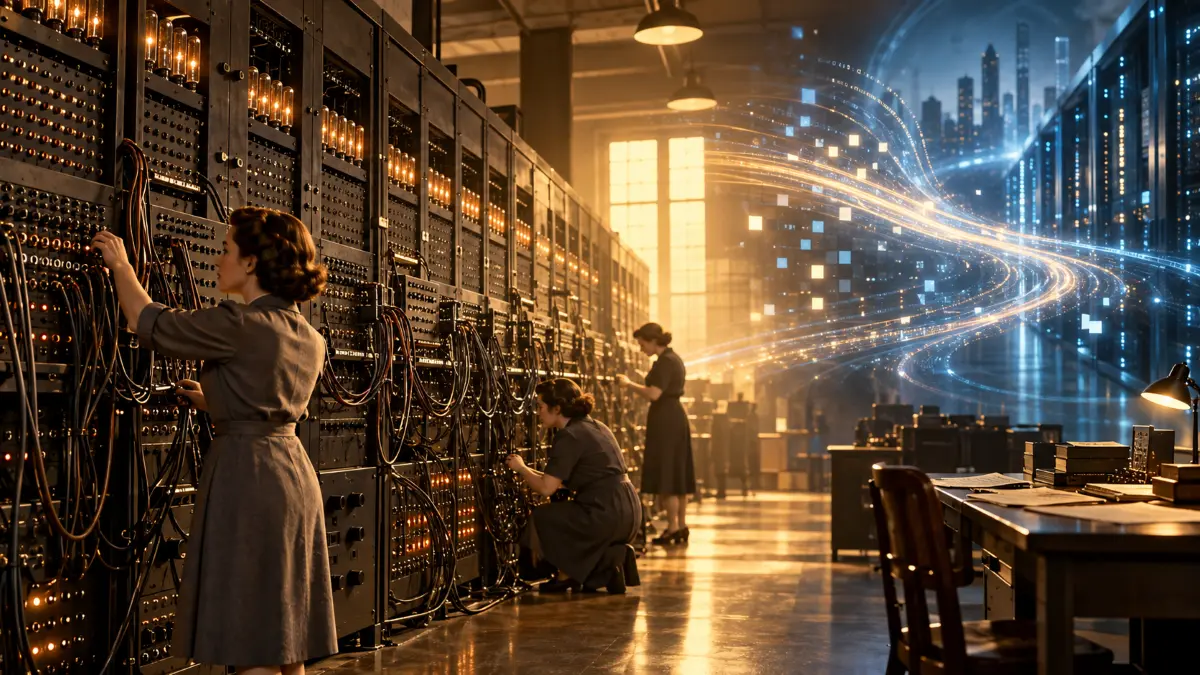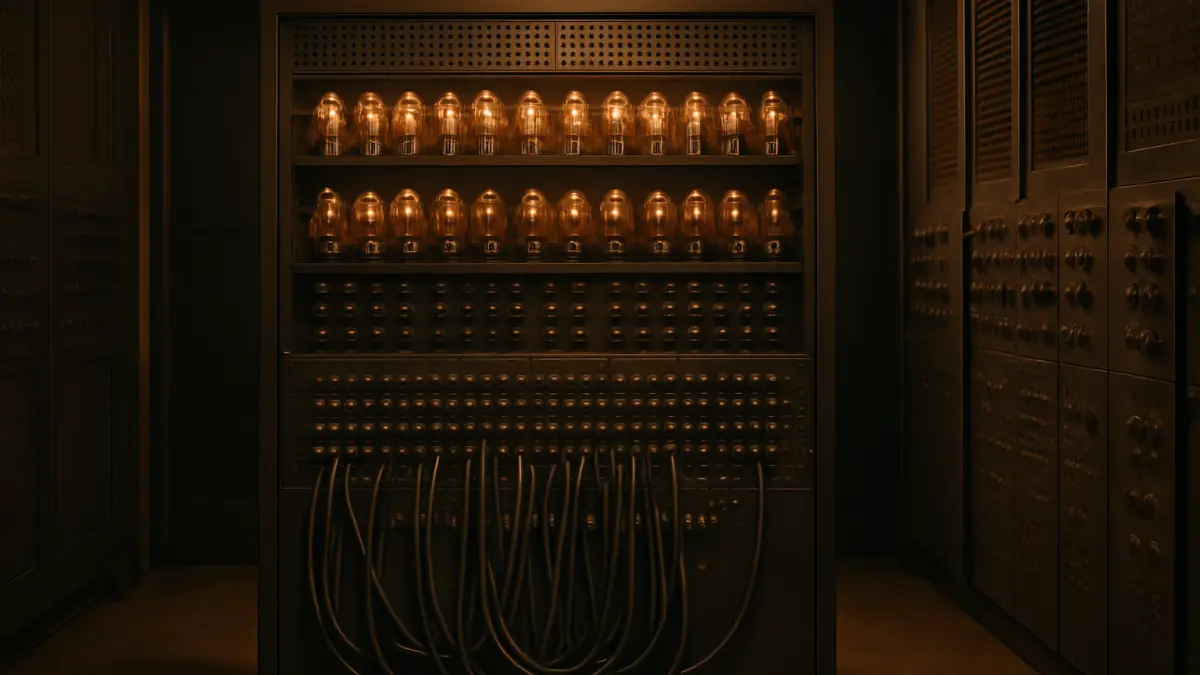

The hum of vacuum tubes replacing clunky electromagnetic switches set a new rhythm for computing on May 17, 1943. That day, the US Army and the University of Pennsylvania signed the ENIAC contract, initiating the creation of the world’s first fully electronic computer. This was no mere upgrade; it was a fundamental shift in how calculations could be performed, with implications that still ripple through technology today.
At the time, the Army’s goal was clear and urgent: develop a machine capable of calculating ballistic firing tables for World War II. The complexity and volume of these calculations overwhelmed existing mechanical and electromechanical devices. ENIAC’s design, based on thousands of vacuum tubes, promised a speed and flexibility that had never been seen before. Although the war ended before ENIAC was completed, the contract marked the beginning of a new computing paradigm.
ENIAC’s significance lies in its architecture. By using vacuum tubes, it bypassed the slow, mechanical relays that had limited earlier machines. This allowed ENIAC to perform thousands of calculations per second, a staggering leap forward. The contract’s focus on electronic components laid the groundwork for modern digital computing. It was a clear departure from previous designs and set a standard for future developments.
Once operational, ENIAC tackled problems far beyond military ballistics. It contributed to atomic energy research and early rocketry calculations, fields that demanded massive computational power. The ability to process complex mathematical problems electronically opened doors to scientific advancements that were previously impossible or impractical. This contract, therefore, was not just about building a machine; it was about enabling new frontiers of knowledge.
The ENIAC contract also highlighted the emerging collaboration between government and academia in technology development. The University of Pennsylvania’s involvement was crucial, providing the expertise and innovation necessary to realize the Army’s vision. This partnership model has since become a cornerstone of technological progress, demonstrating how focused investment and intellectual resources can accelerate breakthroughs.
Today, the legacy of the ENIAC contract is visible in every electronic device that computes data. The transition to vacuum tubes was a stepping stone to transistors and integrated circuits, which power modern computers. Understanding this contract helps us appreciate the incremental yet radical shifts that define technological evolution. It reminds us that behind every leap in capability lies a foundational decision to rethink how problems are solved.
Reflecting on this event, we see more than a contract; we see a commitment to pushing boundaries. The ENIAC contract was a calculated risk that paid off by ushering in the electronic age of computing. It’s a reminder that innovation often begins with a clear problem and the courage to pursue an unconventional solution.