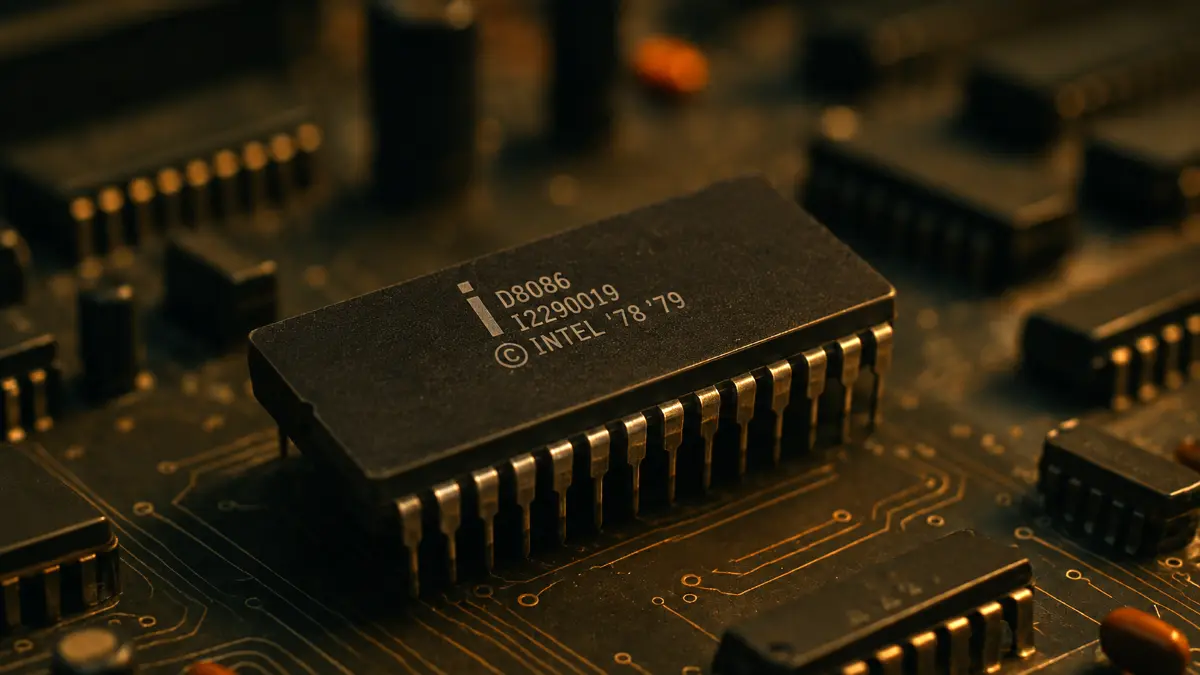

The Intel 8086 processor didn’t just arrive quietly on June 8, 1978. It marked the start of a computing lineage that would dominate personal and enterprise computing for decades. The 8086 was Intel’s first 16-bit processor, boasting clock speeds of 10, 8, and 5 MHz. But its significance goes far beyond raw specs.
Intel’s 8086 processor introduced a new architecture that became the backbone of the “IBM Compatible” PC ecosystem. While the original IBM PC famously used the 8-bit 8088 variant to cut costs, the 8086 set the stage for a family of processors that would evolve into the x86 series. This architecture became synonymous with PC computing, influencing everything from software development to hardware design.
At the time, the 8086 solved a critical problem: how to deliver more computing power while maintaining compatibility with existing software and hardware ecosystems. Moving from 8-bit to 16-bit processing meant more data could be handled per clock cycle, improving performance without completely abandoning the familiar programming model. This balance made it easier for developers and manufacturers to adopt the new technology.
The release of the 8086 also sparked a competitive race in microprocessor design. Intel’s architecture became a de facto standard, encouraging a vast ecosystem of compatible chips, peripherals, and software. This compatibility was crucial for the rapid expansion of personal computing in the 1980s and beyond. The architecture’s design allowed for scalability, enabling Intel to push clock speeds and integrate more features over time.
What changed because of the 8086 processor was not just the hardware inside PCs but the entire computing landscape. The x86 architecture underpinned the rise of Microsoft Windows and countless applications that defined the PC era. It also influenced the way software was written, optimized, and deployed. The processor’s design philosophy emphasized backward compatibility, which helped preserve software investments and foster innovation on a stable platform.
Today, the legacy of the Intel 8086 processor is unmistakable. Modern Intel Core processors still trace their lineage back to this architecture. Despite massive leaps in transistor density, clock speeds, and power efficiency, the fundamental principles introduced with the 8086 remain embedded in the chips powering billions of devices worldwide. This continuity allows software and hardware ecosystems to evolve without fragmentation.
Reflecting on the 8086’s debut highlights how foundational design decisions ripple through decades of technology. It wasn’t just about introducing a faster chip; it was about creating an architecture that could grow with the industry’s needs. The 8086 processor’s impact is a reminder that innovation often lies in balancing progress with compatibility—a lesson that continues to resonate in today’s tech landscape.