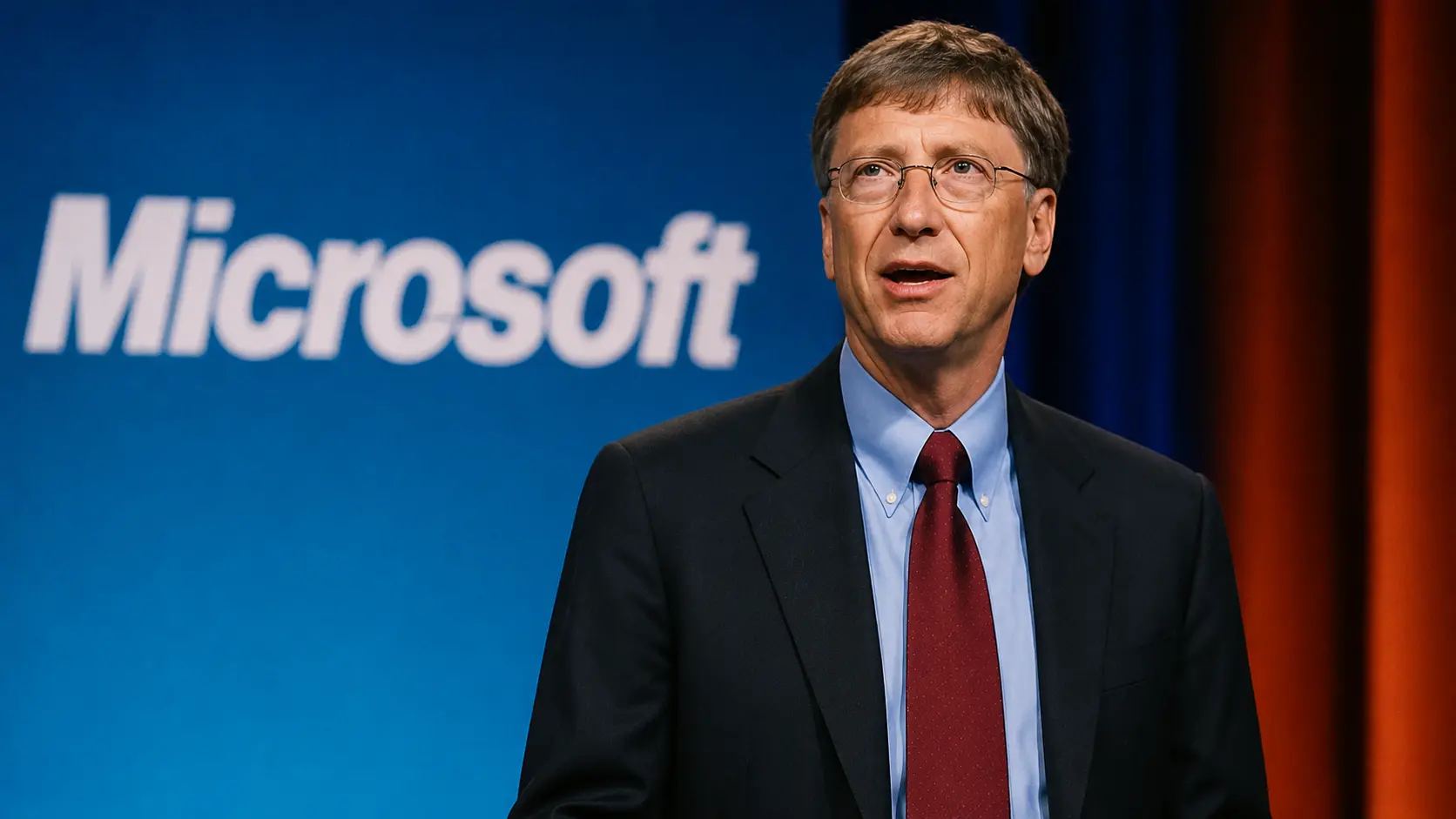

The tech world rarely pauses, but some announcements cut through the noise with quiet precision. On June 15, 2006, Bill Gates, then chairman of Microsoft, revealed a plan that would reshape not just the company but the broader landscape of tech leadership and philanthropy. He announced his intention to step back from daily operations by July 2008 to focus on the Bill and Melinda Gates Foundation.
This was more than a personal career move. It was a calculated pivot that acknowledged the growing complexity of Microsoft and the tech industry at large. Gates’ transition was a recognition that the company needed a fresh operational focus while he could leverage his influence and resources to tackle global challenges through philanthropy.
At the time, Microsoft was navigating a rapidly evolving tech ecosystem. The internet was maturing, software paradigms were shifting, and competition was intensifying. Gates stepping back from day-to-day management allowed Steve Ballmer, then CEO, to steer Microsoft with a sharper operational lens. This separation of roles helped clarify leadership responsibilities and accelerated decision-making processes within the company.
The announcement also highlighted a broader trend in tech leadership, the increasing importance of dedicated focus. As companies scale, the roles of visionary founders and operational leaders often diverge. Gates’ move underscored the need for specialization at the top, a concept that has since become a blueprint for many tech giants.
What changed because of this? Microsoft’s leadership structure evolved, enabling more agile responses to market demands. Gates’ shift freed him to channel his energies into philanthropy, which in turn influenced how tech leaders think about their social responsibilities. The Bill and Melinda Gates Foundation grew into one of the world’s most influential philanthropic organizations, tackling issues from global health to education.
This transition also set a precedent. It showed that stepping away from the helm doesn’t mean stepping away from impact. Gates demonstrated that tech leaders could redefine their roles to balance business innovation with broader societal contributions. This dual focus is now a familiar narrative in the tech world, where many executives engage deeply in social causes alongside their corporate duties.
Today, the 2006 announcement remains relevant because it illustrates the evolving nature of leadership in technology. It reminds us that innovation isn’t just about products or services but also about how leadership adapts to changing contexts. Gates’ decision helped Microsoft maintain its competitive edge while expanding the scope of what tech leadership can achieve beyond the boardroom.
In reflection, this moment was a quiet catalyst. It wasn’t about flashy product launches or breakthrough technologies but about leadership maturity and strategic foresight. It’s a reminder that sometimes the most impactful tech stories are about the people steering the ship, not just the ship itself.