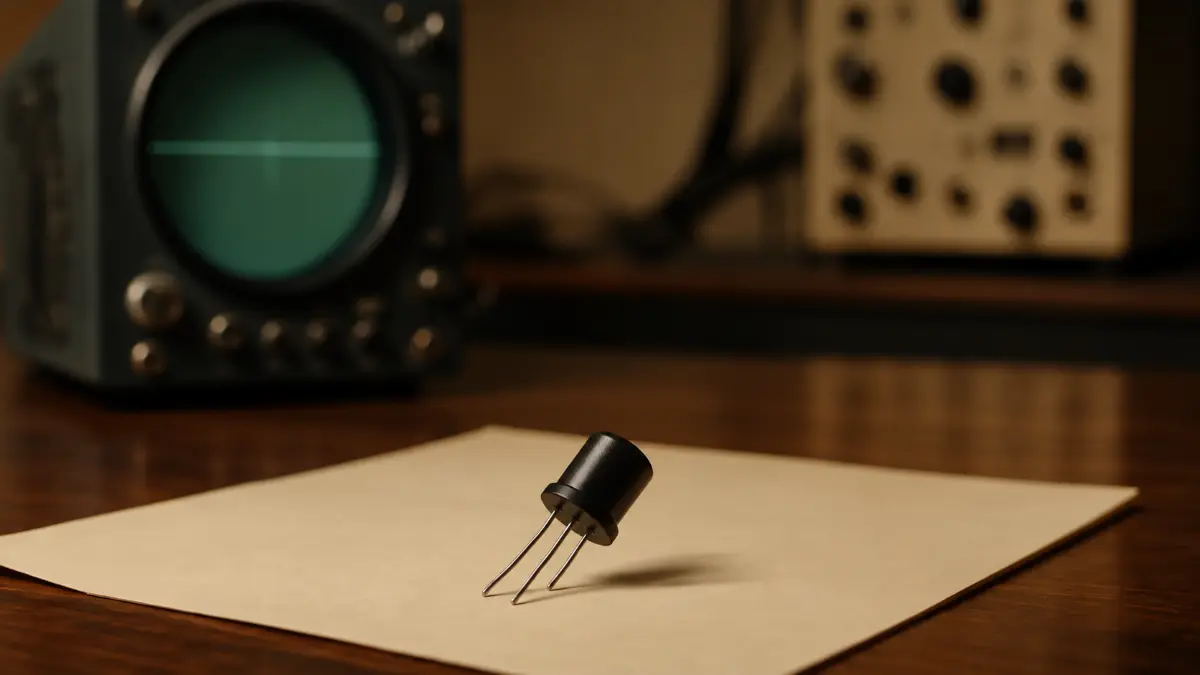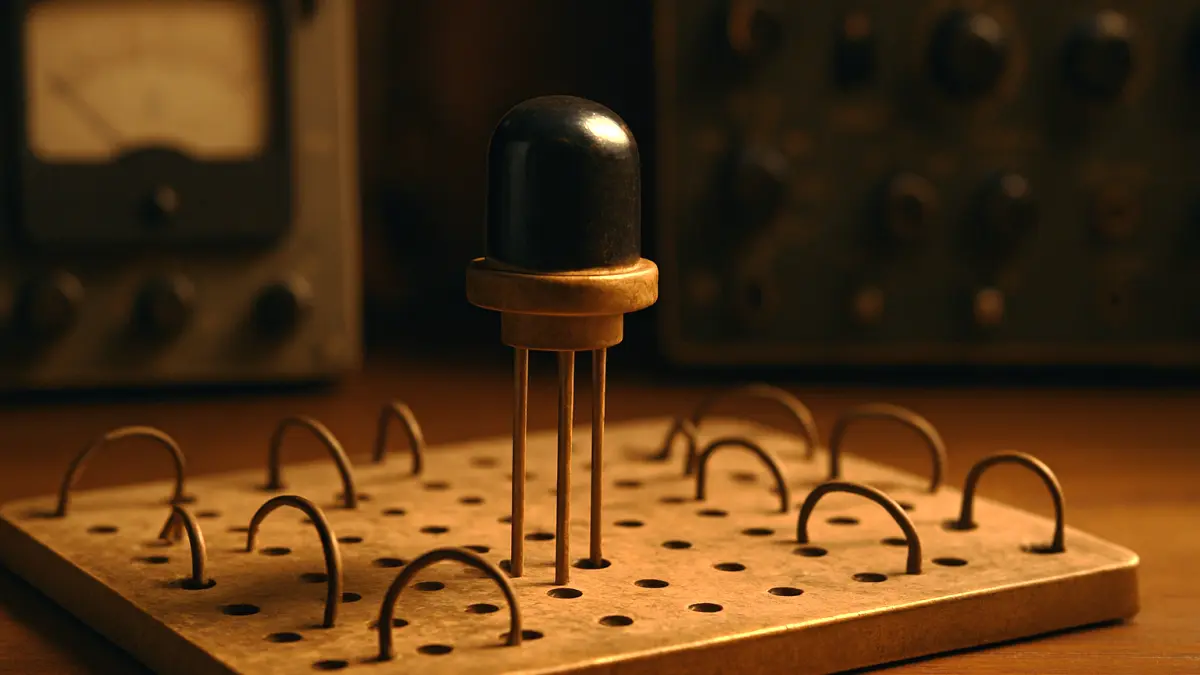

The quiet hum of progress often starts with a single spark. On June 26, 1948, William Shockley filed the original patent for the grown-junction transistor, known today as the first bipolar junction transistor. This wasn’t just another patent, it marked a turning point that laid the foundation for the electronics that power our world.
The bipolar junction transistor (BJT) introduced a new way to amplify and switch electronic signals. Before this, bulky vacuum tubes dominated, limiting size, efficiency, and reliability. Shockley’s invention tackled these issues head-on by using semiconductor materials to control current flow with unprecedented precision. This was more than a component; it was a new language for electronics.
At the time, the impact was immediate yet subtle. The BJT made devices smaller, faster, and more energy-efficient. It solved a fundamental problem: how to reliably amplify signals without the fragility and power drain of vacuum tubes. This opened doors for more compact radios, early computers, and communication devices. The transistor’s ability to switch and amplify signals with minimal energy loss became the backbone of modern electronics.
What changed next was a cascade of innovation. The BJT’s design principles set the stage for integrated circuits, microprocessors, and eventually the digital age. It transformed how engineers approached circuit design, enabling the miniaturization that fuels today’s smartphones, laptops, and countless smart devices. The transistor shifted the paradigm from mechanical and bulky to solid-state and scalable.
Today, the bipolar junction transistor remains a fundamental building block in electronics. While newer transistor types have emerged, the BJT’s principles still underpin analog circuits and power applications. Its patent filing reminds us that breakthroughs often start with solving practical problems: how to control electrical signals more efficiently and reliably. This efficiency is at the core of everything from audio amplifiers to radio transmitters, proving that Shockley’s work still resonates in the devices we use daily.
Reflecting on this moment shows how a single technological idea can ripple through decades, shaping industries and lifestyles. The BJT patent is a testament to the power of innovation grounded in solving real-world challenges. It’s a reminder that the future often builds quietly on the foundations laid by those who see beyond the limits of their time.