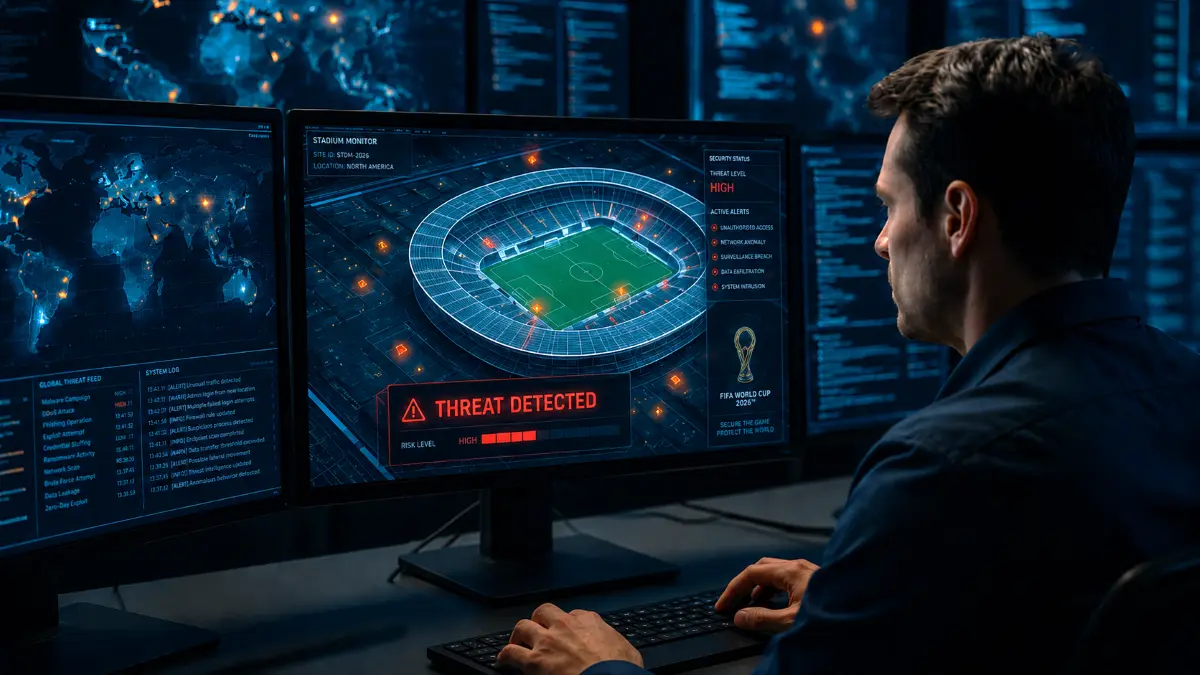

The FIFA World Cup is turning into a high-stakes testbed for AI-powered cybersecurity. With millions of fans connecting across stadiums and digital platforms, organizers and security partners are relying on autonomous AI agents to monitor and respond to cyber threats in real time. These systems aim to detect phishing attempts, credential theft, distributed denial-of-service (DDoS) attacks, and suspicious network activity as the tournament unfolds.
This deployment matters because the scale and complexity of the event create a prime target for cybercriminals. Traditional security measures struggle to keep pace with the volume and sophistication of attacks during such global gatherings. AI agents offer a dynamic, adaptive defense that can analyze network traffic and user behavior faster than human teams, potentially preventing disruptions that could affect millions of users and the tournament’s digital infrastructure.
The broader context is the growing trend of integrating AI into cybersecurity frameworks, especially for large-scale events and critical infrastructure. As cyber threats evolve, automated systems that can learn and respond autonomously are becoming essential. The World Cup’s use of AI agents reflects a wider industry shift toward proactive, AI-driven security solutions that reduce reliance on manual intervention.
Strategically, this approach could set a precedent for future global events and enterprises that face similar cybersecurity challenges. If successful, it may accelerate adoption of AI-powered monitoring across sectors that require real-time threat detection at scale. However, the effectiveness of these systems in complex, high-traffic environments remains to be fully validated.
What to watch next is how these AI agents perform under the intense pressure of the World Cup’s network demands and threat landscape. Their ability to mitigate attacks without false positives or service interruptions will be crucial. The results could influence how AI is deployed in cybersecurity beyond sports, shaping defense strategies in an increasingly connected world.