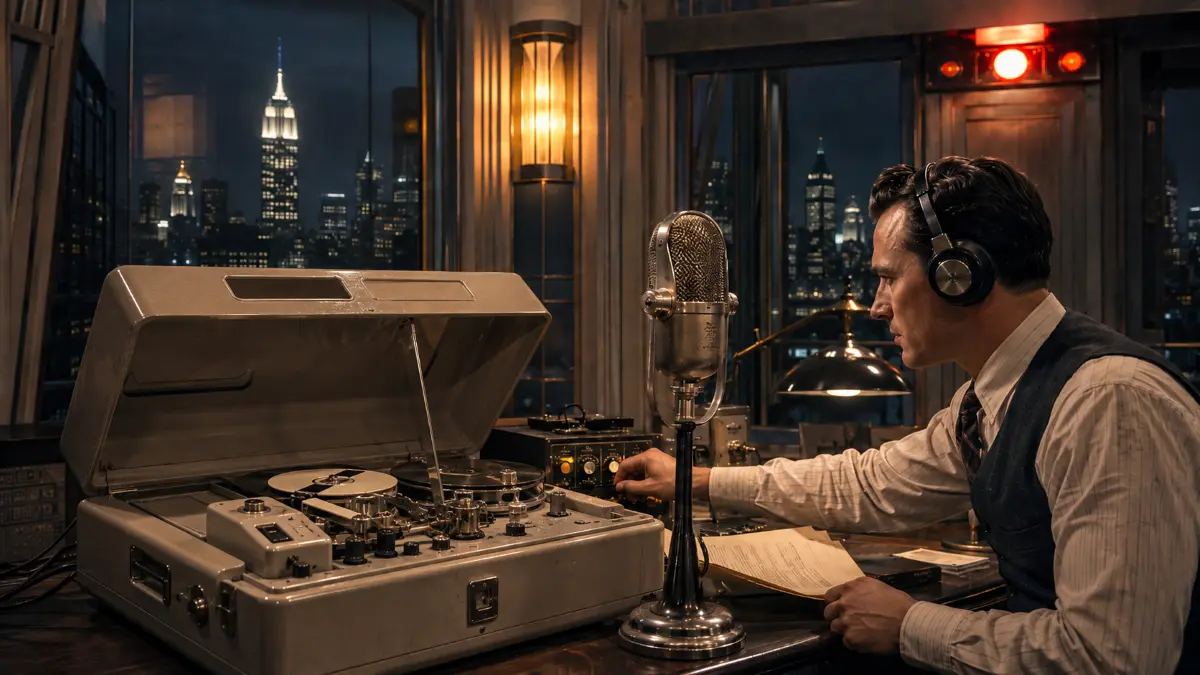

Imagine tuning into your favorite radio station and hearing a broadcast that wasn’t live but recorded and played back with crystal clarity. On August 26, 1938, radio station WQXR in New York City did exactly that by broadcasting a program using a tape recorder for the first time. The technology behind this breakthrough was the Phillips-Miller recording system, also known as Millertape, invented by James Arthur Miller.
Before this moment, radio broadcasts were predominantly live or relied on cumbersome and lower-quality transcription discs. The introduction of the tape recorder broadcast solved a fundamental challenge: how to capture and replay sound with fidelity and flexibility. The Millertape system offered superior sound quality and editing capabilities compared to earlier methods, making it possible to pre-record shows and air them without the pressure and unpredictability of live performance.
At the time, this was a game changer for radio production. Broadcasters could now schedule programs more efficiently, avoid mistakes inherent in live shows, and experiment with complex audio editing. The tape recorder’s ability to capture nuanced sound also opened doors for better music broadcasts, interviews, and storytelling. It laid the groundwork for the modern concept of recorded audio content, which would later extend into television, film, and eventually digital media.
The ripple effects of this event are profound. The tape recorder broadcast introduced a new production paradigm that prioritized sound quality and post-production control. This shift enabled the rise of radio as a medium capable of delivering polished, repeatable content. It also accelerated the development of audio technology, pushing manufacturers to refine tape recording equipment and techniques. Over time, tape recorders evolved into indispensable tools for journalists, musicians, and producers, shaping the way we consume and create audio.
Today, the legacy of that first tape recorder broadcast remains relevant. While digital recording has largely replaced analog tape, the principles established by the Millertape system endure. Modern audio editing, podcasting, and streaming owe their existence to the early innovations in tape recording. The ability to capture, edit, and replay sound seamlessly is a cornerstone of contemporary media production. Understanding this history reminds us that the technologies we take for granted often stand on decades of incremental innovation and problem-solving.
Reflecting on the event, it’s clear that the WQXR broadcast was more than a technical milestone. It was a shift in how sound could be controlled and shared. The Phillips-Miller system didn’t just record audio; it rewrote the rules of radio storytelling and production. In a world now dominated by on-demand audio, that moment in 1938 feels like the opening scene of a long, ongoing story about how technology shapes the way we listen.