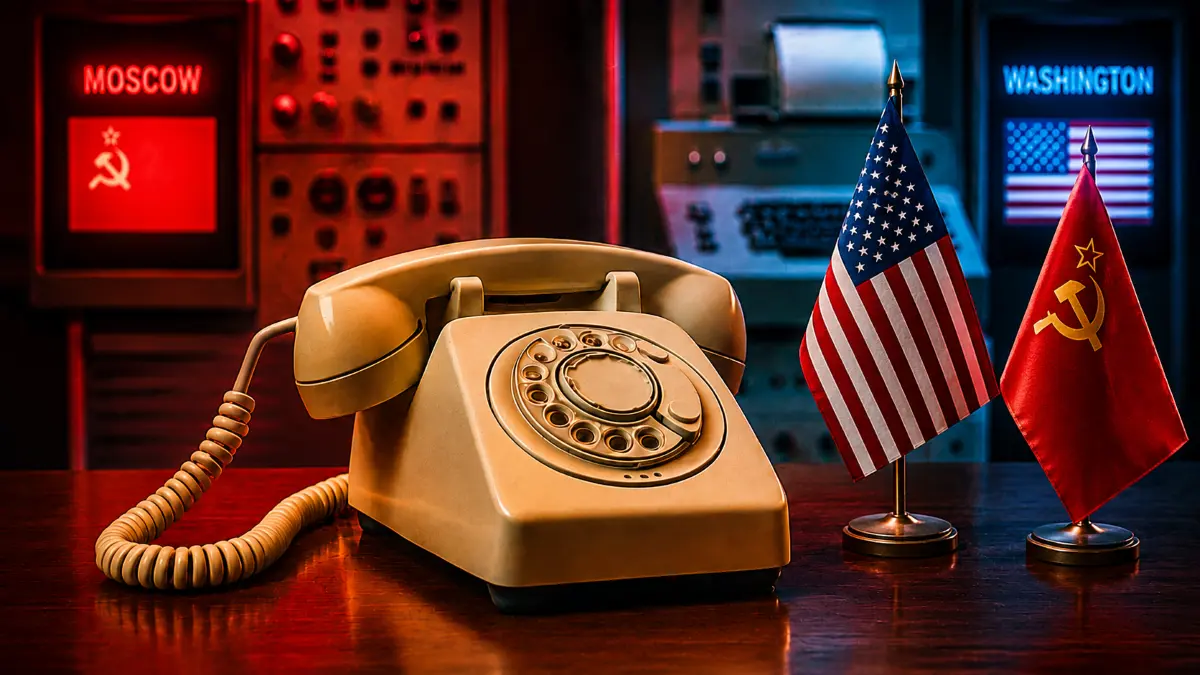

In the shadow of nuclear tension, a simple phone line emerged as a crucial technology for global security. On August 30, 1963, the Moscow–Washington hotline between the leaders of the U.S. and the Soviet Union went into operation. This direct communication link was not just a diplomatic tool but a technological innovation designed to reduce the risk of accidental war and miscommunication during one of history’s tensest eras.
The hotline was born from the urgent need to bridge the communication gap exposed during the Cuban Missile Crisis in 1962. Prior to its establishment, messages between the two superpowers were slow, indirect, and prone to delays and misunderstandings. The hotline introduced a dedicated, secure, and immediate way for the highest levels of government to communicate, bypassing traditional diplomatic channels that could be cumbersome or compromised.
At the time, the technology was straightforward yet effective: a direct teletype link initially connected Washington and Moscow. Unlike a typical telephone call, this system sent written messages instantly, avoiding the risks of mishearing or mistranslation in verbal communication. The choice of teletype technology was deliberate, emphasizing clarity and permanence in messages. This was a critical step in managing the delicate balance of power and avoiding accidental escalation.
What made the Moscow–Washington hotline remarkable was its focus on reliability and security. The system was designed to work under extreme conditions, ensuring that even in a crisis, communication lines would remain open. This was not just about sending messages; it was about creating a fail-safe mechanism to prevent misunderstandings that could lead to catastrophic consequences.
The impact of the hotline extended far beyond its initial Cold War context. It introduced a new paradigm in crisis communication, one where technology directly supported diplomacy and conflict prevention. The concept of a dedicated, secure communication channel between adversaries has since influenced global diplomatic practices and crisis management protocols worldwide.
Over time, the hotline evolved with advances in technology, transitioning from teletype to fax and eventually to secure email and encrypted voice calls. Each upgrade reflected the ongoing importance of maintaining a reliable and instantaneous communication link between the two nations. The hotline set a precedent for how technology can be harnessed to manage geopolitical risks in real time.
Today, the Moscow–Washington hotline remains a symbol of how technology can serve as a tool for peace rather than conflict. It reminds us that even in an era dominated by complex digital networks and cyber threats, the core challenge remains the same: ensuring clear, direct, and secure communication between powerful actors to prevent misunderstandings.
Reflecting on this event, it’s clear that the hotline was more than a phone line. It was a technological embodiment of a fragile peace, a practical solution to a problem that could not be solved by diplomacy alone. Its legacy endures as a testament to the power of communication technology in shaping global stability.