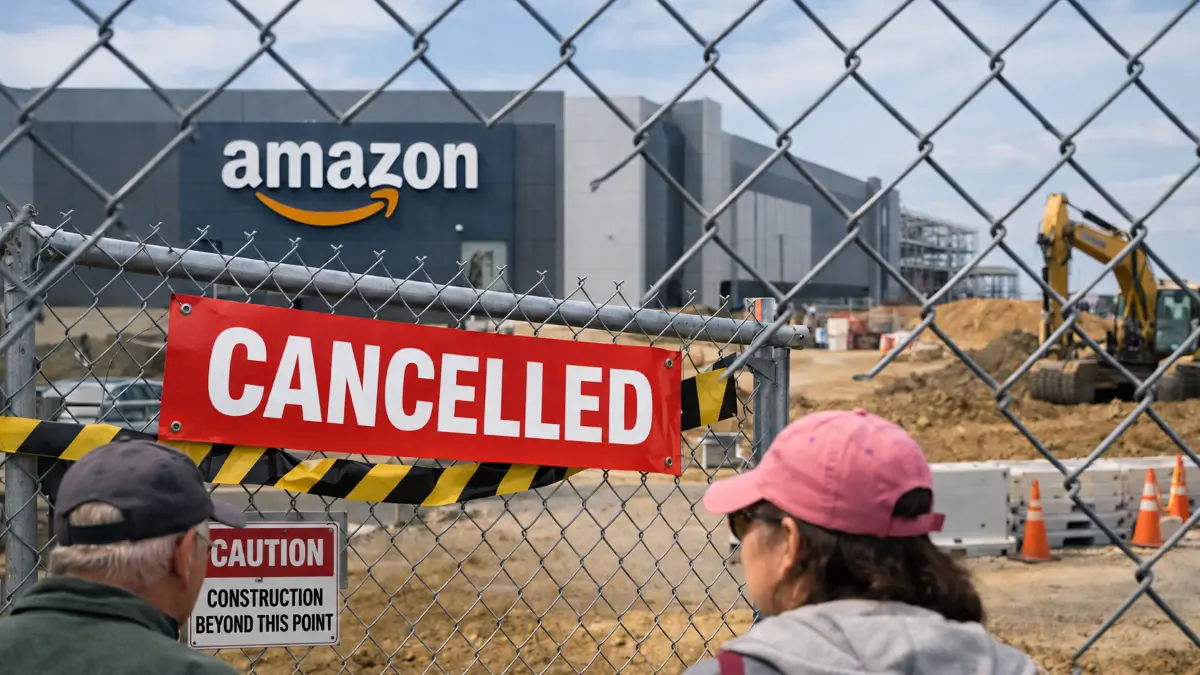

Amazon has reversed its decision to build four new data centers in Loudoun County, Virginia, after facing substantial opposition from local residents and officials. The company has agreed to repurpose the 122-acre site, previously part of George Washington University’s Virginia Science and Technology Campus, for mixed-use and residential development. This decision marks a significant shift in Amazon’s expansion strategy and highlights the growing influence of community concerns on large-scale infrastructure projects.
Community Opposition Leads to Project Cancellation
In July 2026, Amazon Web Services (AWS) submitted a proposal to construct four data centers totaling over 800,000 square feet on the Loudoun County site. The plan was met with immediate resistance from local residents, students, and county officials, who expressed concerns about the environmental impact, increased traffic, and the strain on local resources. The area, already known as “Data Center Alley” due to its high concentration of data facilities, has seen a surge in development, leading to heightened community apprehension.
Loudoun County Board of Supervisors Chair Phyllis J. Randall played a pivotal role in addressing these concerns. She initiated discussions with Amazon to explore alternative uses for the land that would better align with the community’s needs and preferences. These collaborative efforts culminated in the agreement to withdraw the data center proposal and repurpose the site for mixed-use development.
Agreement Details and Community Benefits
Under the terms of the agreement, Amazon will donate approximately 25 acres of the property to Loudoun County. This portion is valued at $65 million and is designated for the development of a community arts center and an indoor sports facility. Additionally, Amazon has committed $5 million to the county’s housing fund, supporting the construction of affordable housing in the area.
The remaining 97 acres will be rezoned for mixed-use development, with a focus on residential housing. The county has agreed to expedite the rezoning process to facilitate this transition. George Washington University will retain the option to remain on the property for up to five years, ensuring continuity for the institution during the development phase.
Broader Implications for Data Center Expansion
This development reflects a broader trend of community resistance to data center expansion, particularly in areas already saturated with such facilities. The rapid growth of data centers, driven in part by the increasing demand for artificial intelligence (AI) services, has raised concerns about environmental sustainability, energy consumption, and the impact on local communities.
AWS CEO Matt Garman has acknowledged these challenges, emphasizing the importance of data centers in maintaining the United States’ competitive edge in AI. He has also highlighted the company’s commitment to addressing community concerns through initiatives like the “Built Together” program, which aims to invest $1 billion over five years in local communities near data centers. This program focuses on education, job training, energy affordability, and water and energy conservation efforts.
The Future of Data Center Development
The cancellation of Amazon’s data center plans in Loudoun County may signal a shift in how tech companies approach data center development. As community opposition becomes more pronounced, companies may need to engage more proactively with local stakeholders to address concerns and ensure that development projects align with community interests.
The situation in Loudoun County also underscores the importance of balancing technological advancement with environmental and social responsibility. While data centers are crucial for supporting the digital infrastructure of modern society, their expansion must be managed thoughtfully to mitigate negative impacts on local communities and ecosystems.
What to Watch Next
As the tech industry continues to expand its infrastructure to support AI and other data-intensive applications, it will be essential to monitor how companies navigate community relations and regulatory environments. Future projects may involve more comprehensive community engagement strategies and a greater emphasis on sustainable development practices.
Additionally, the success of initiatives like AWS’s “Built Together” program could serve as a model for other companies seeking to integrate more harmoniously with the communities in which they operate. Observing the outcomes of such programs will provide valuable insights into the effectiveness of corporate-community partnerships in large-scale development projects.
In conclusion, Amazon’s decision to cancel its data center plans in Loudoun County and repurpose the site for community-focused development highlights the growing importance of community input in corporate decision-making. It also reflects a broader movement towards more sustainable and socially responsible development practices in the tech industry.