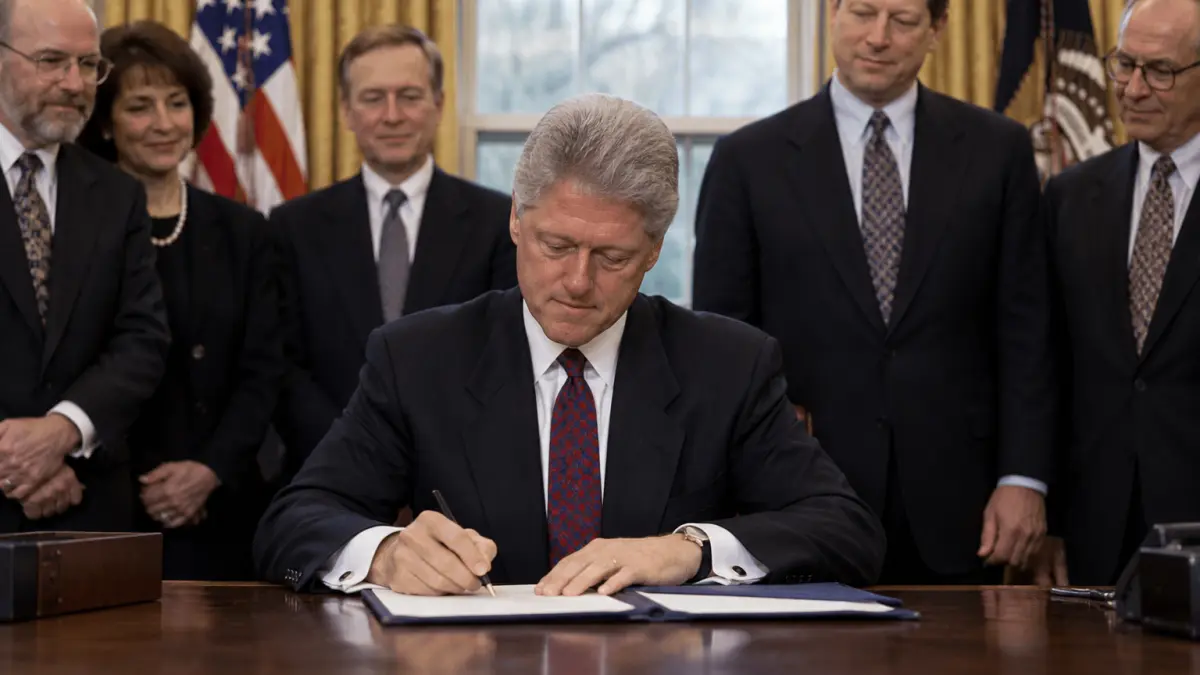

October 28, 1998, marked a defining moment in the ongoing battle between digital content protection and technological innovation. On this day, US President Bill Clinton signed into law the Digital Millennium Copyright Act (DMCA). The law aimed to criminalize the production and dissemination of technology designed to bypass digital copyright protections, commonly known as Digital Rights Management (DRM).
The Digital Millennium Copyright Act was not just another copyright statute. It introduced a legal framework that directly targeted the tools and technologies enabling circumvention of DRM. The intent was clear: protect the rights of content creators and distributors in an increasingly digital world where copying and sharing digital media had become effortless.
At the time, the DMCA addressed a pressing problem. The internet was rapidly expanding, and with it, the ease of unauthorized copying and distribution of music, movies, software, and other digital content. Traditional copyright enforcement methods were no longer sufficient. The DMCA provided a new weapon in the legal arsenal, criminalizing not just copyright infringement but also the creation and spread of devices or software that could bypass DRM protections.
However, the law’s impact was far from straightforward. While it fortified copyright holders’ control over their digital assets, it also sparked controversy and debate that continue to this day. Critics argued that the DMCA’s anti-circumvention provisions went too far, effectively stifling innovation and competition. Technologies that could have enabled interoperability, fair use, or security research sometimes fell into legal gray areas or outright prohibition.
The DMCA created a chilling effect on developers and researchers who feared legal repercussions for exploring or improving digital rights technologies. This tension between protecting intellectual property and fostering technological progress remains a core challenge in digital policy. The law’s enforcement has occasionally been criticized for being wielded not just against piracy but also against legitimate technological advancements and consumer rights.
Beyond its immediate legal effects, the DMCA shaped how digital content is distributed and consumed. DRM technologies became embedded in everything from music files to e-books and streaming services. The law helped entrench a model where access to digital content is tightly controlled, often at the expense of user flexibility and ownership.
Today, the Digital Millennium Copyright Act still matters because it set the foundation for how digital rights and copyrights are managed worldwide. Its influence extends beyond the US, inspiring similar legislation elsewhere. The ongoing debates over DRM, fair use, and digital freedoms trace back to the framework the DMCA established.
In an era where digital content is ubiquitous and cloud-based services dominate, the balance between protecting creators and enabling innovation remains delicate. The DMCA’s legacy is a reminder that laws governing technology must evolve alongside the technologies themselves to avoid unintended consequences.
Reflecting on the Digital Millennium Copyright Act’s signing reveals how legal frameworks can shape technological ecosystems for decades. It underscores the complexity of legislating in a digital age where the lines between protection and restriction blur. The conversation sparked by the DMCA continues to influence how we think about digital rights, innovation, and the future of technology.