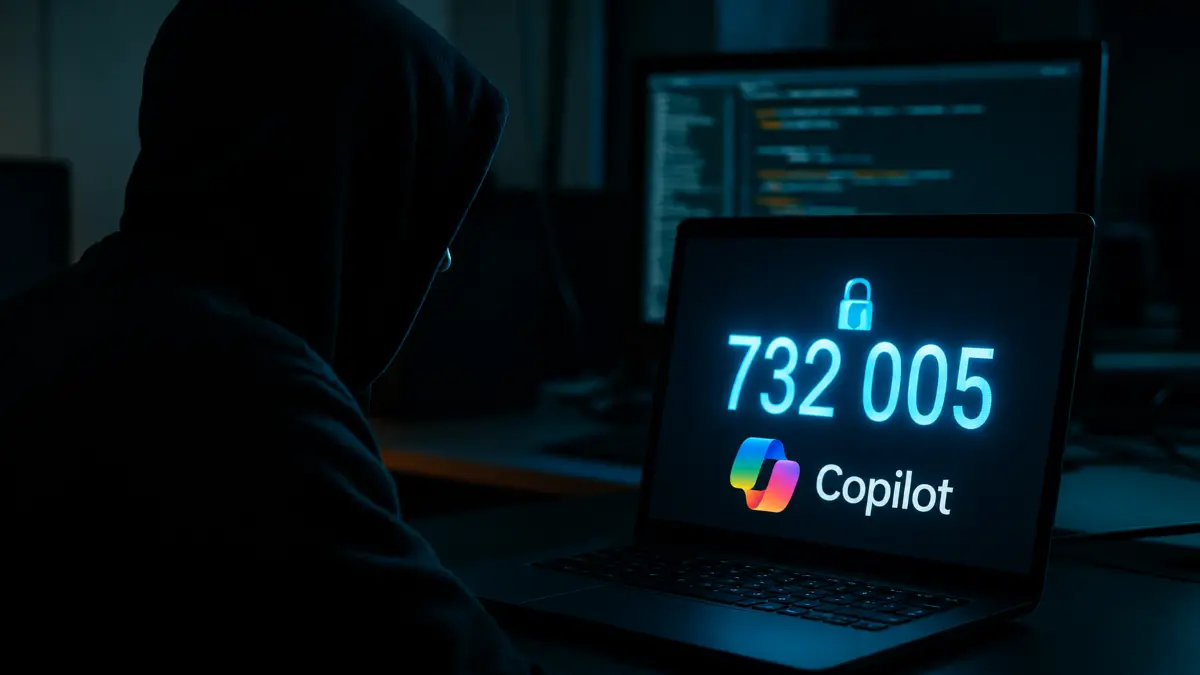

A critical vulnerability in Microsoft’s Copilot AI assistant recently allowed hackers to intercept users’ two-factor authentication (2FA) codes, exposing a significant security gap in AI-powered tools. The flaw reportedly enabled attackers to extract sensitive 2FA information, undermining a key layer of user account protection. This incident highlights ongoing challenges in securing large language models (LLMs) integrated into everyday digital workflows.
Two-factor authentication is widely adopted to prevent unauthorized access, but this breach reveals how AI assistants, designed to streamline tasks, can inadvertently become attack vectors. Copilot’s ability to access and process user data, including 2FA codes, became a liability when exploited by malicious actors. The vulnerability underscores the complexity of balancing AI functionality with robust security safeguards, especially as AI tools gain deeper integration into enterprise and personal environments.
The broader industry context points to a growing need for stringent security audits and real-time monitoring of AI assistants. As companies increasingly rely on AI to manage sensitive information, the risk of similar exploits rises. This incident may prompt vendors to rethink how AI models handle authentication data and enforce stricter compartmentalization to prevent leakage. It also raises questions about the sufficiency of current AI security frameworks and the speed at which vulnerabilities are patched.
Strategically, this breach could slow adoption of AI assistants in security-critical applications until trust is restored. Enterprises may demand clearer transparency on AI data handling and stronger guarantees against data exposure. Meanwhile, cybersecurity teams will need to develop new protocols tailored to AI-driven environments, blending traditional security with AI-specific threat models.
Looking ahead, the key focus will be on how quickly Microsoft and other AI providers can address these vulnerabilities and prevent future incidents. Monitoring updates from Copilot’s development team and independent security audits will be crucial. This event serves as a reminder that AI’s convenience must never come at the expense of foundational security practices.