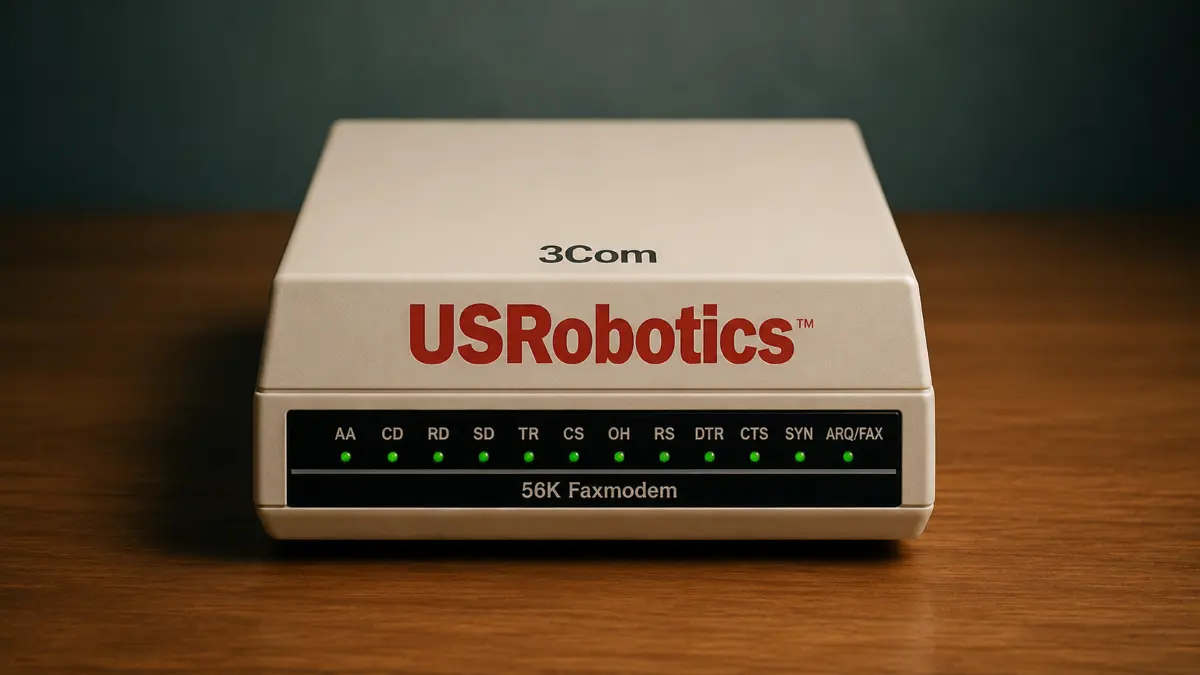

In the fast-moving world of digital connectivity, some deals do more than shuffle assets, they redefine the playing field. On June 12, 1997, 3Com Corp. and U.S. Robotics Corp. officially completed their merger. Valued at approximately $6.6 billion, this was the largest business deal in the networking industry at the time. It wasn’t just a headline-grabbing number; it was a strategic fusion of two technology powerhouses that shaped how networks and remote access evolved.
3Com was already a dominant force in local network adapters, the hardware that connects computers within offices and homes. U.S. Robotics, meanwhile, led the charge in remote access and modem technology, the critical tools that allowed computers to communicate over phone lines and early internet connections. Bringing these two together created a company that could offer a comprehensive suite of networking solutions, covering both local and remote connectivity.
At the time, this merger addressed a growing problem: the fragmentation between local area networks (LANs) and wide area network (WAN) access. Businesses and consumers were demanding seamless connectivity that bridged internal networks with external communication lines. Before this deal, companies often had to source their network adapters and modems from different vendors, complicating integration and support. The merger promised a unified approach, simplifying deployment and improving interoperability.
The implications were immediate. By combining their expertise, 3Com and U.S. Robotics accelerated the development of integrated networking products. This helped push the industry toward more standardized and reliable solutions, which in turn supported the rapid expansion of internet access in the late 1990s and early 2000s. The merger also set a precedent for consolidation in the tech sector, showing how combining complementary technologies could create stronger market players capable of driving innovation.
Today, the impact of the 3Com and U.S. Robotics merger still echoes in the networking landscape. The integration of local and remote connectivity laid groundwork for the seamless, always-on internet experiences we take for granted. Modern networking devices, from routers to modems, trace their lineage back to the kind of combined expertise this merger embodied. It also highlighted the importance of end-to-end solutions in tech, a principle that continues to guide networking hardware and software development.
Reflecting on this event reminds us that technology progress often hinges not just on invention but on smart partnerships. The 3Com and U.S. Robotics merger was a calculated move that solved real-world connectivity challenges and set a course for the networked world we live in today.