
In the late 19th century, calculation was a tedious, error-prone task. On August 21, 1888, William Seward Burroughs patented the first successful adding machine in the United States. This invention wasn’t just a mechanical curiosity, it was a practical solution to a pressing problem that plagued businesses and accountants alike.
Before Burroughs’ adding machine, adding long columns of numbers meant relying on human accuracy and patience. Clerks and bookkeepers spent hours manually tallying figures, with mistakes often slipping through unnoticed. Burroughs’ device automated this process, allowing for faster, more reliable calculations. The patent marked a turning point where mechanical precision began to replace manual effort in accounting and commerce.
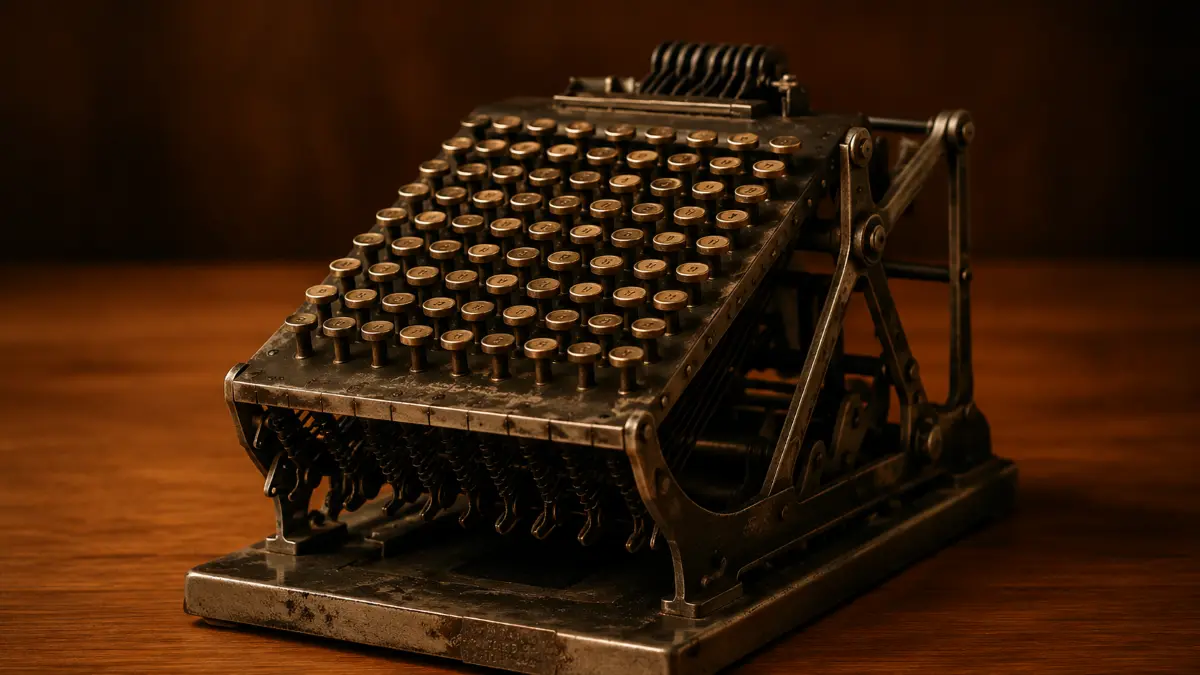
At the time, this adding machine was a breakthrough in business technology. It reduced human error and sped up financial operations, which was critical as industries expanded and bookkeeping became more complex. The machine’s design incorporated a set of keys and a printing mechanism that recorded the results, providing a physical audit trail. This feature was especially important for transparency and accountability in financial records.
The impact of Burroughs’ invention extended far beyond its immediate use. It laid the groundwork for the development of more advanced mechanical calculators and, eventually, electronic computing devices. By demonstrating that machines could handle arithmetic tasks reliably, it challenged the notion that such work was inherently human. This shift opened the door to automation in various fields, from finance to engineering.
Today, the principles behind Burroughs’ adding machine still resonate. Modern calculators, computers, and financial software all trace their lineage back to this early mechanical innovation. The patent represents a critical step in the evolution of computational tools that underpin today’s digital economy. It reminds us that even the most complex technologies often start with simple, practical solutions to everyday problems.
Reflecting on this event, it’s clear that Burroughs’ adding machine was more than a gadget, it was a catalyst for change. It showed how mechanization could enhance accuracy and efficiency, values that remain central to technology development today. The story of this patent is a reminder that progress often begins with addressing the mundane but essential tasks that keep the world running.