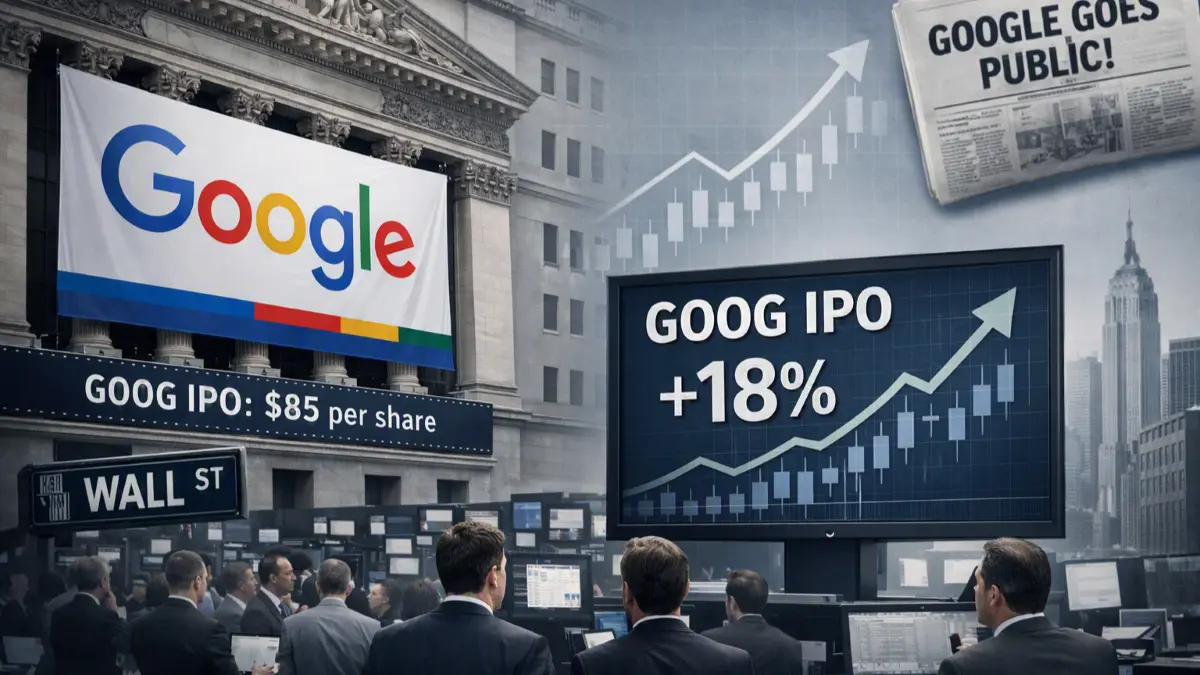

The tech world was watching closely on August 19, 2004. Google held its Initial Public Offering (IPO), selling over 22 million shares at a starting price of $85. By the end of the day, shares closed at $100.34, instantly creating a wave of new millionaires and a few billionaires. This was not just a financial milestone; it was a defining moment that underscored the growing power of digital innovation in the global economy.
At the time, Google was already a dominant force in search, but the IPO was about more than just raising capital. It was a statement that technology companies could command massive market valuations based on intangible assets like algorithms, user data, and network effects rather than traditional physical goods. The offering’s success demonstrated investor confidence in the digital economy’s potential to generate sustained growth and profits.
The IPO also introduced a novel auction-style process for share allocation, which was unconventional compared to the usual fixed-price offerings. This method aimed to democratize access to shares and reduce underpricing, signaling a shift toward more transparent and efficient capital markets. While the approach had its critics, it reflected Google’s broader ethos of innovation and disruption.
What changed because of this event went beyond Google’s balance sheet. The IPO set a new benchmark for tech companies going public, influencing how startups approached fundraising and growth strategies. It validated the business models of internet firms and accelerated venture capital flows into software, advertising technology, and cloud services. The influx of capital fueled rapid expansion, product development, and acquisitions that shaped the digital landscape for years to come.
Moreover, the creation of instant millionaires and billionaires through the IPO had cultural and economic ripple effects. It spotlighted the tech sector as a lucrative career path and investment opportunity, attracting talent and capital worldwide. The wealth generated also contributed to the rise of tech philanthropy and new ventures, further embedding technology’s role in society.
Today, the 2004 Google IPO still matters because it laid the groundwork for how tech companies are valued and financed. It highlighted the importance of scalable software platforms and data-driven business models that dominate the market today. The event also serves as a case study in how public markets can both empower innovation and introduce new challenges around governance, market expectations, and regulatory scrutiny.
Reflecting on this moment reminds us that technology’s impact is not just about gadgets or software but also about the financial ecosystems that enable innovation to thrive. Google’s IPO was a catalyst that helped shape the modern digital economy, a reminder that behind every tech giant is a complex interplay of technology, finance, and market dynamics.