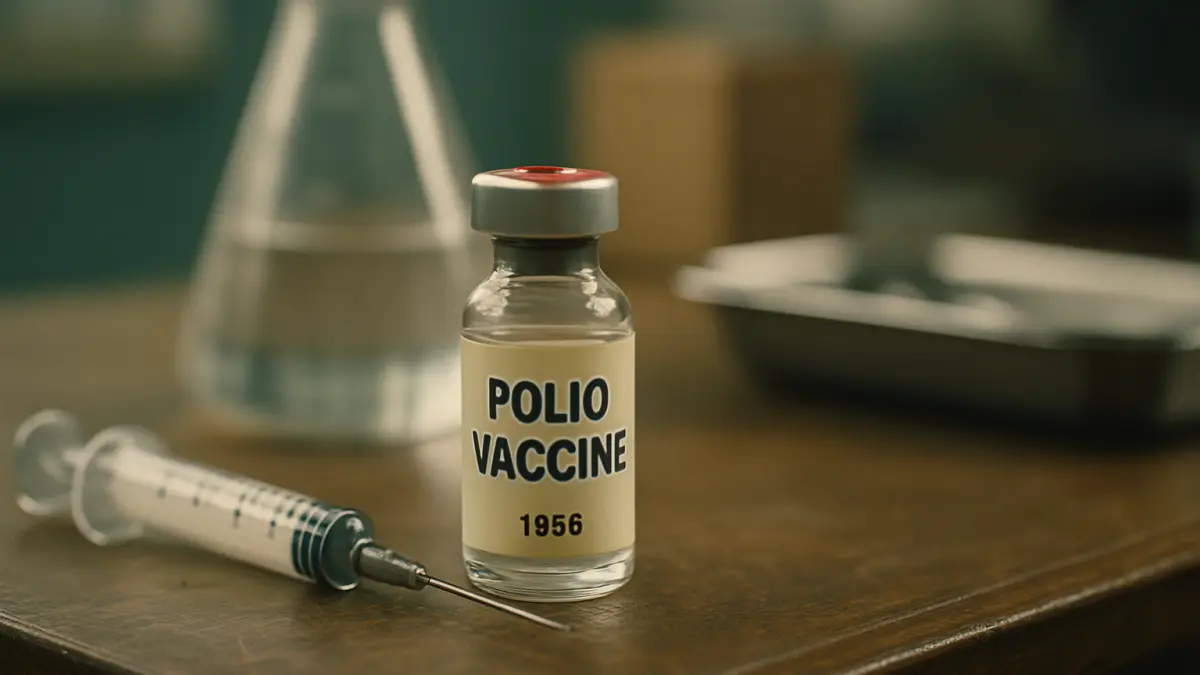

The moment a vaccine moves from lab to public use is more than a medical milestone, it’s a technological leap. On May 1, 1956, the Jonas Salk polio vaccine was made available to the public, marking a turning point in how science confronts viral epidemics. This wasn’t just about stopping a disease. It was about proving that large-scale immunization could be engineered, distributed, and trusted worldwide.
Before the vaccine’s release, polio was a relentless threat, causing paralysis and death across the globe. The challenge wasn’t just the virus itself but the absence of a reliable method to prevent it. Jonas Salk’s approach, using an inactivated virus to trigger immunity, solved a critical problem: how to safely stimulate the immune system without risking infection. This was a technical breakthrough in vaccine design, moving away from live attenuated viruses that had higher risks.
At the time, the vaccine’s availability meant more than just hope. It demonstrated the power of coordinated scientific research, mass production, and public health infrastructure working in tandem. The technology behind cultivating the poliovirus in large quantities, inactivating it, and ensuring stability during transport was complex and pioneering. It set a new standard for vaccine manufacturing, influencing how future vaccines would be developed and distributed.
The ripple effects of this release extended far beyond polio itself. It established a blueprint for rapid vaccine development and deployment that modern medicine still relies on. The Salk vaccine’s success helped build public trust in vaccination programs, a critical factor in managing infectious diseases. It also underscored the importance of government and private sector collaboration in health crises, a lesson that echoes in today’s pandemic responses.
Even now, the Jonas Salk polio vaccine’s legacy is embedded in the DNA of vaccine technology. It paved the way for innovations in immunology, virology, and pharmaceutical manufacturing. The principles of virus inactivation and large-scale production remain foundational. Moreover, it highlighted the necessity of accessibility, making a vaccine available to the public is as much a technological challenge as a scientific one.
Reflecting on this event reveals more than a historical achievement. It’s a reminder that technological progress in health is often about solving practical problems: how to produce, preserve, and deliver life-saving interventions at scale. The Salk vaccine’s introduction was a masterclass in this, proving that technology can be the bridge between scientific discovery and real-world impact.