
The summer of 1993 brought more than just blockbuster thrills. On June 9, 1993, Jurassic Park premiered in Washington D.C., marking a turning point in the art and technology of visual effects. Jurassic Park CGI was not just a flashy gimmick; it was a calculated leap forward that reshaped how movies bring fantastical worlds to life.
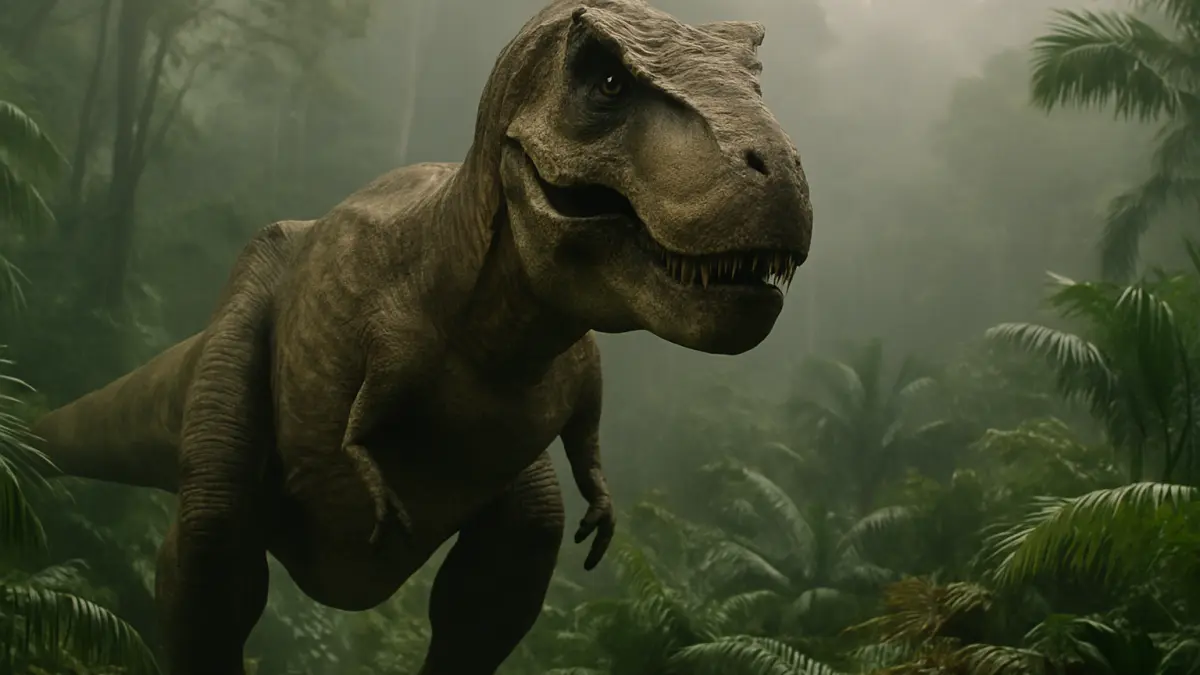
Before Jurassic Park, special effects leaned heavily on practical models, puppetry, and stop-motion animation. The film’s production team made a bold decision to integrate computer-generated imagery (CGI) on an unprecedented scale. This was not simply about adding digital flourishes but about creating creatures that moved and interacted with their environment in ways that felt genuinely alive. The CGI dinosaurs, combined seamlessly with animatronics, delivered a level of realism that stunned audiences and filmmakers alike.
At the time, Jurassic Park CGI solved a fundamental problem: how to depict lifelike dinosaurs without the limitations of physical models alone. Animatronics provided tactile realism, but they were constrained by mechanical complexity and cost. CGI offered fluidity and scale, allowing for dynamic movement and scenes impossible with traditional methods. This hybrid approach elevated the film’s special effects beyond anything seen before, setting a new benchmark for immersive storytelling.
The impact was immediate and far-reaching. Jurassic Park CGI jump-started a wave of films throughout the 1990s that embraced digital effects as a core storytelling tool. It shifted the industry’s mindset, proving that CGI could be more than a novelty, it could be a narrative necessity. The film’s success demonstrated that audiences craved and accepted digital creatures and environments when done with precision and artistry.
Today, the legacy of Jurassic Park CGI is visible in nearly every blockbuster. The seamless blend of CGI and practical effects pioneered by the film has become standard practice. Modern visual effects teams build on this foundation, pushing the boundaries of photorealism and interactivity. The film’s influence extends beyond entertainment, inspiring advancements in simulation, animation, and even virtual reality.
Jurassic Park’s use of CGI was not just a technical achievement; it was a creative strategy that expanded what cinema could achieve. It showed that technology and artistry could coexist to create experiences that captivate and convince. This balance remains a guiding principle for filmmakers and technologists working at the intersection of imagination and innovation.
Looking back, Jurassic Park CGI was more than a spectacle. It was a blueprint for the future of visual effects, proving that technology could breathe life into the impossible. Its impact continues to ripple through the industry, reminding us that the best special effects serve the story, not the other way around.