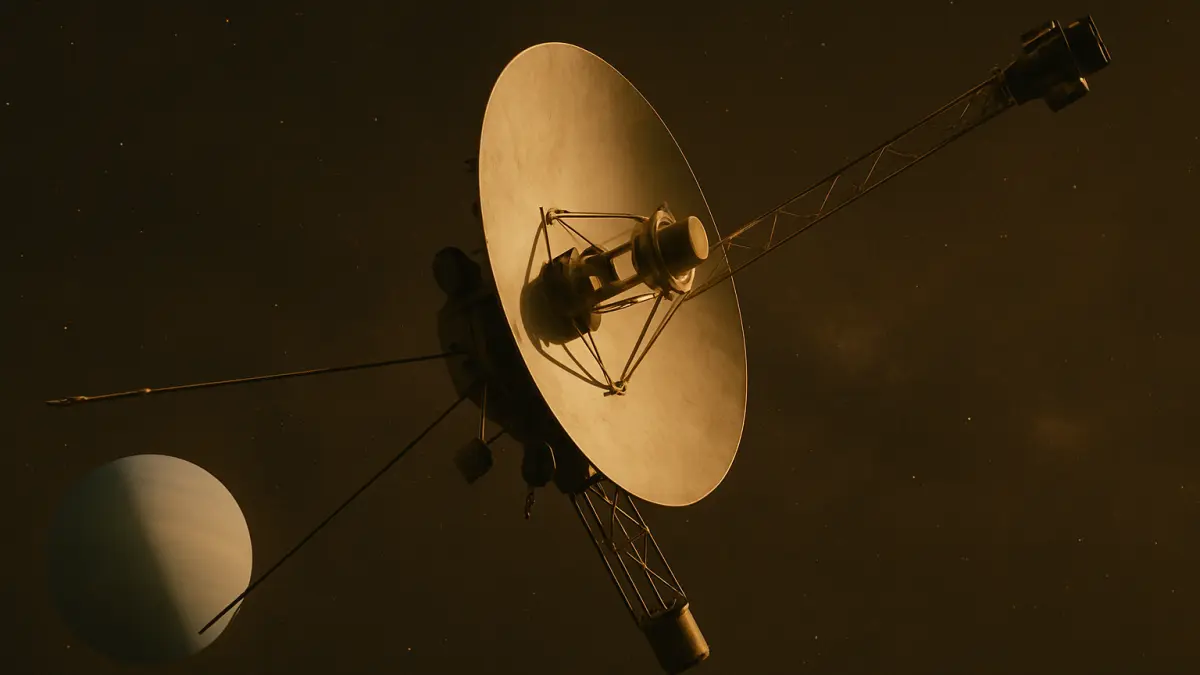

Space exploration often feels like a story of endless frontiers, but on June 13, 1983, one spacecraft quietly redefined the boundary of human reach. Pioneer 10 became the first man-made object to leave the central Solar System when it passed beyond the orbit of Neptune. This wasn’t just a milestone in distance, it was a leap in technological endurance and navigation that still echoes in today’s deep-space missions.
Pioneer 10’s journey started as a probe to study Jupiter, but its trajectory was designed to push beyond the known planetary neighborhood. Passing Neptune’s orbit meant crossing the threshold of the central Solar System, a region dominated by the Sun’s gravitational influence and the familiar orbits of the major planets. This event was the first time humanity’s technology ventured into the vast, uncharted expanse between stars.
Why did this matter? The feat was more than a symbolic gesture. It demonstrated that spacecraft could survive and operate far beyond the immediate environment of Earth and its planetary neighbors. The challenges were immense: maintaining communication over billions of kilometers, managing power with limited solar energy, and ensuring onboard systems could endure the harsh conditions of deep space. Pioneer 10’s success proved that robotic explorers could be sent on missions that extend decades and billions of miles.
The implications of this breakthrough shaped the design and ambition of all subsequent deep-space missions. By proving that a spacecraft could leave the central Solar System, Pioneer 10 laid the groundwork for interstellar exploration concepts. It also provided critical data on the outer solar environment, including solar wind and cosmic radiation, which helped engineers design better shielding and communication systems. The mission’s long-term telemetry offered insights into spacecraft aging and reliability in ways no Earth-bound test could replicate.
Even today, Pioneer 10’s legacy matters. Its journey informs how we think about the limits of robotic exploration and the technical hurdles of sending probes beyond the heliosphere, the bubble of charged particles and magnetic fields created by the Sun. As missions like Voyager and New Horizons continue to push outward, the lessons from Pioneer 10’s crossing remain relevant. The spacecraft’s trajectory and data continue to serve as a reference for navigating and surviving the interstellar medium.
Reflecting on this event, Pioneer 10’s passage beyond Neptune is a reminder that exploration is as much about endurance and engineering as it is about discovery. It wasn’t just about reaching a new point in space; it was about proving that human technology could extend its presence into the cold, dark frontier. This quiet milestone set the stage for the next chapters in humanity’s quest to understand the cosmos.