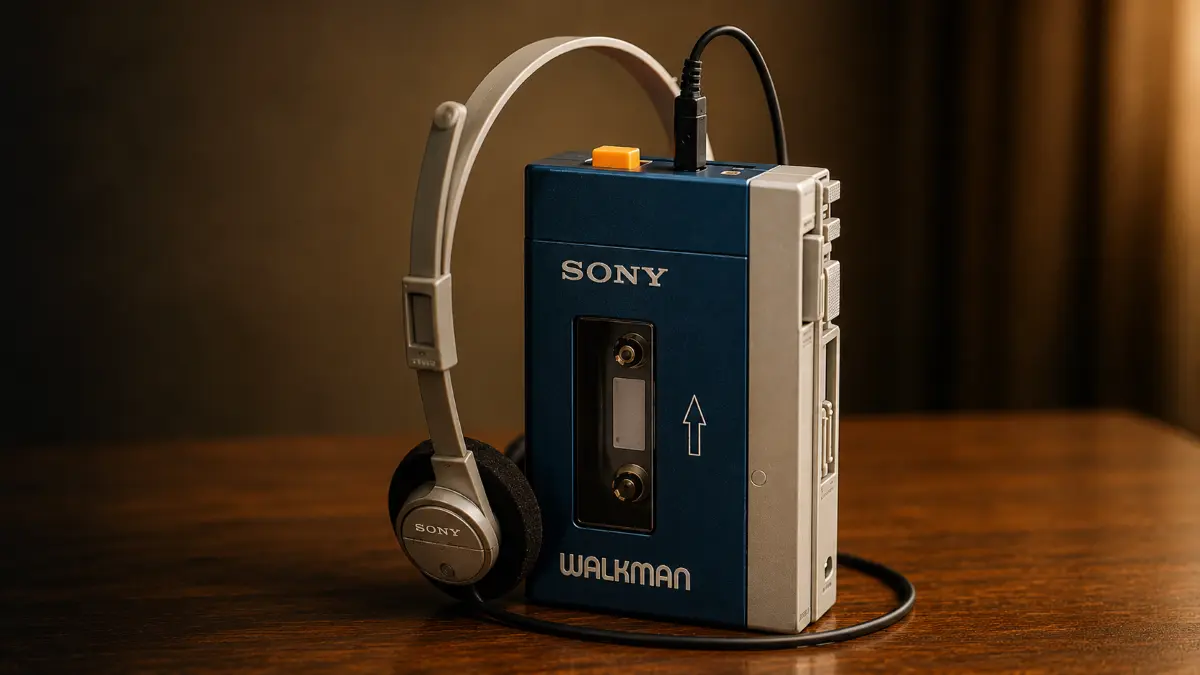

July 1, 1979, marked a defining moment in how we consume music. The Sony Walkman debuted in Japan, introducing a portable stereo cassette player that put high-fidelity sound directly into users’ hands. The TPS-L2 model was not just a gadget; it was a profound shift in audio technology and lifestyle.
Before the Walkman, music was largely a shared or stationary experience. You listened at home on bulky stereos or in cars, tethered by wires or speakers. The Walkman changed that by making music personal and mobile without compromising sound quality. It solved a fundamental problem: how to enjoy high-quality audio privately while moving through the world.
At the time, the Walkman’s impact was immediate and tangible. It redefined the relationship between listeners and their music libraries. Suddenly, people could curate their own soundtracks for daily life, commutes, workouts, walks, without disturbing others. This was a new kind of freedom, enabled by a compact device that combined portability with stereo fidelity.
The technical innovation behind the Walkman was deceptively simple but powerful. By miniaturizing cassette player components and optimizing battery use, Sony delivered a lightweight device that didn’t sacrifice audio quality. This balance of engineering and user experience set a new standard for consumer electronics.
What changed because of the Walkman goes beyond music habits. It paved the way for personal, portable media devices and foreshadowed the mobile digital revolution. The concept of carrying your media with you, controlling when and where you consume it, became a blueprint for future technologies, MP3 players, smartphones, streaming services. The Walkman was the first step in untethering entertainment from fixed locations.
Today, the legacy of the Walkman still matters. While cassettes are obsolete, the principle of personal, portable audio lives on in earbuds, wireless headphones, and streaming apps. The Walkman’s emphasis on user control over music consumption anticipated modern expectations for convenience and customization in digital media. It also highlighted the importance of design that balances technical capability with lifestyle integration.
Reflecting on the Walkman’s debut reminds us how a single device can reshape cultural practices through clever engineering and thoughtful design. It wasn’t just about playing music, it was about changing how people interact with sound and space. That shift continues to influence how technology adapts to human behavior today.