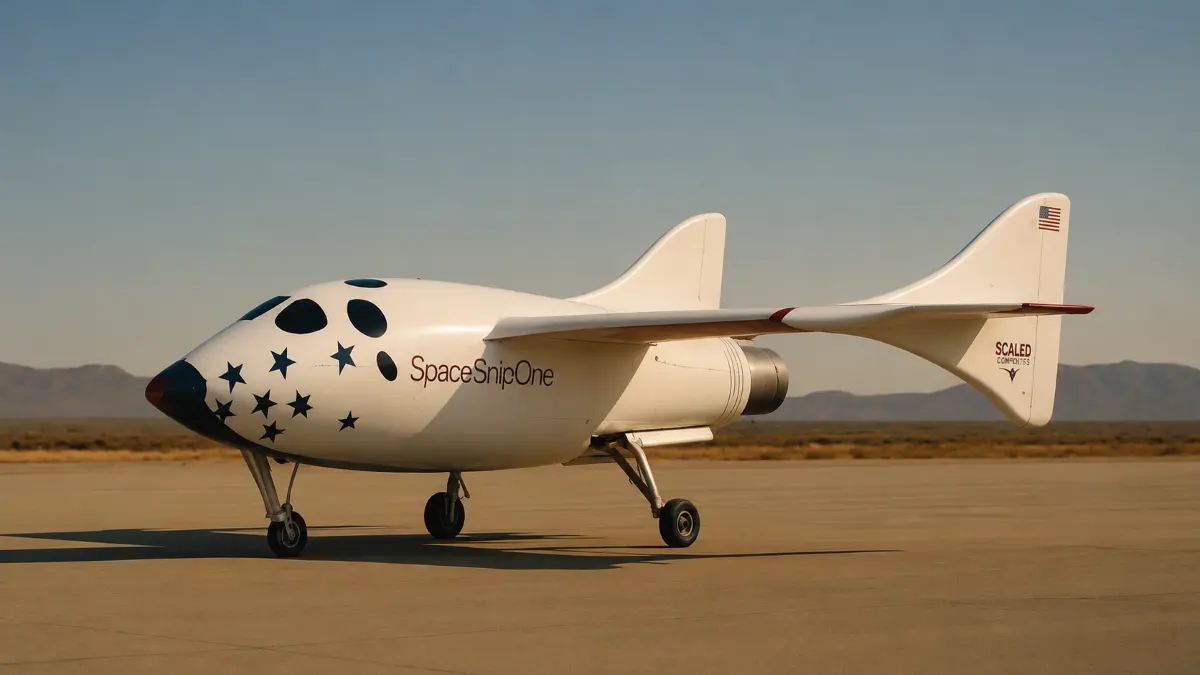

In the early 2000s, space was still largely the domain of nation-states and government agencies. That changed on June 21, 2004, when SpaceShipOne became the first privately funded spaceplane to achieve spaceflight. This wasn’t just a flashy stunt; it was a clear signal that the aerospace landscape was shifting toward private innovation and commercial viability.
SpaceShipOne’s flight was a technical and strategic milestone. Unlike traditional rockets, this spaceplane was designed for reuse, efficiency, and cost reduction. It demonstrated that private entities could engineer vehicles capable of reaching the edge of space without the vast budgets and bureaucracies of government programs. The implications for aerospace engineering were profound. It proved that smaller teams with focused goals could design, build, and operate spacecraft that met rigorous safety and performance standards.
At the time, the achievement addressed a fundamental problem: the prohibitive cost and complexity of accessing space. Government missions had decades of experience but often faced budget overruns and slow progress. SpaceShipOne’s success showed that innovation could come from outside the established aerospace giants, potentially accelerating development cycles and opening space to new markets.
What changed after this event was the door it opened for private spaceflight ventures. It laid the groundwork for a new era where commercial companies could compete and collaborate in space exploration and tourism. The flight proved the feasibility of reusable suborbital vehicles, influencing design philosophies and investment strategies. It also sparked a wave of interest and funding in private aerospace startups, shifting the industry’s center of gravity.
Today, SpaceShipOne’s legacy is clear. It marked the beginning of a commercial space economy that continues to expand. The principles it validated, reusability, cost efficiency, and private sector innovation, remain central to current space projects. As space tourism, satellite deployment, and even interplanetary travel gain momentum, the 2004 flight stands as a reminder that breakthroughs often come from unexpected places.
Reflecting on this milestone, it’s evident that SpaceShipOne did more than just reach space. It rewrote the rulebook for who can participate in spaceflight and how. Its success continues to inspire a new generation of engineers and entrepreneurs to push boundaries and rethink what’s possible beyond Earth’s atmosphere.