

A Storm Becomes a Systems Test
On January 23, 2026, the National Weather Service (NWS) issued warnings across more than 30 states as a powerful storm associated with the polar vortex barreled toward the United States. The system promised heavy snow, freezing rain and dangerous cold from Texas to the Northeast, with more than 200 million people under winter storm watches or warnings. Forecast models predicted 0.2–0.5 inches of ice across the Southern Plains and Southeast and up to 12 inches of snow from eastern Kansas through Missouri and into the Appalachian region. Energy providers mobilized crews, state governments declared emergencies, and airlines canceled hundreds of flights.
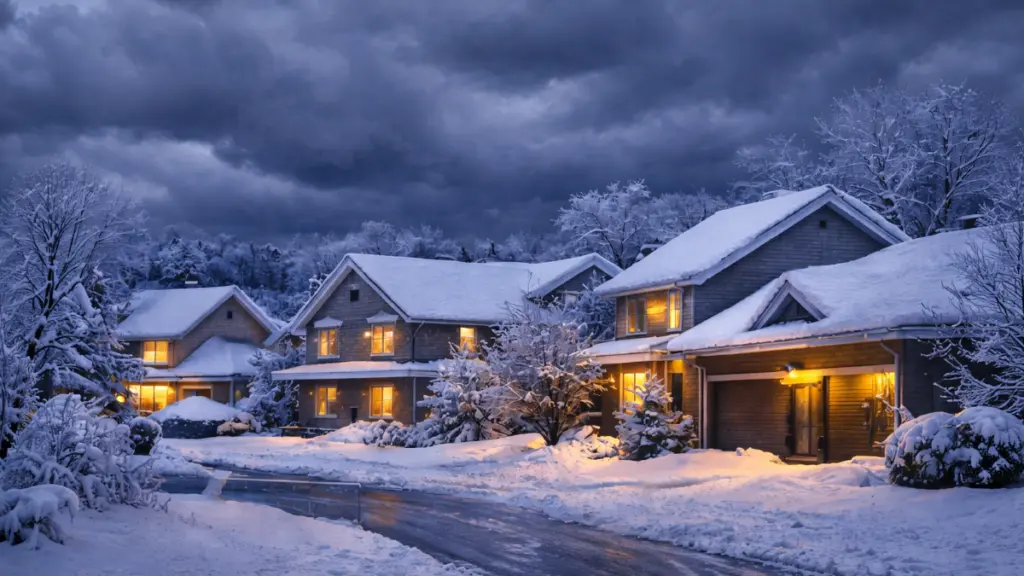
For Gus, a reader in Framingham, Massachusetts, and millions like him, this storm isn’t just about shovels and snow tires. It’s about technology—how the devices in our pockets, the sensors in our homes and the networks in the sky quietly shape our ability to prepare, respond and remain calm.
As a technology columnist, I have long argued that innovation is less about gadgets than systems. Extreme weather is a test of those systems. This weekend’s polar vortex storm provides a window into how innovation, design and ethics converge in the face of climate‑driven extremes.
Table of Contents
The Quiet Role of Smartphones
In 2025 the Pew Research Center reported that 98 % of U.S. adults own a cellphone and 91 % own a smartphone. Smartphones have become nearly universal, yet their role during disasters is still underappreciated. They deliver Wireless Emergency Alerts without relying on specific apps, provide real‑time radar maps and function as flashlights, radios and GPS navigators.
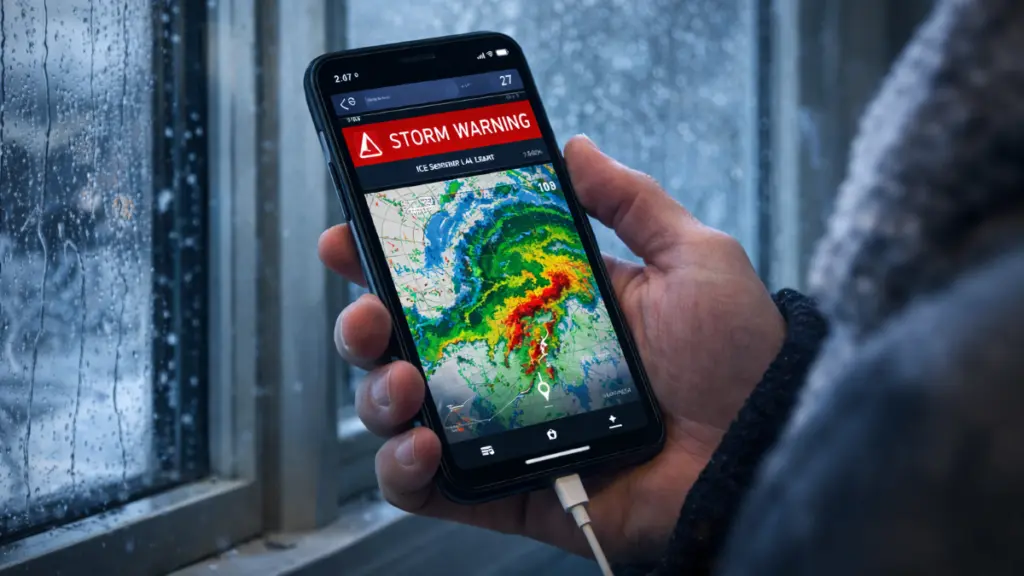
During the January storm, forecasters warned that ice accumulation could take down power and cell towers. Networks can become overloaded when thousands of people call simultaneously. Text messages often succeed when calls fail because they use less bandwidth, and downloaded offline maps can guide people when connectivity drops.
Preparedness begins with simple steps: charge your devices, enable Low Power Mode, and have a portable battery ready. The long‑term solution, however, is broader. While almost everyone has a phone, 16 % of U.S. adults rely solely on smartphones for internet access—a population disproportionately drawn from lower‑income households. When emergencies strike, these users have no home broadband to fall back on. Redesigning emergency communications to account for smartphone‑only households is an ethical imperative.
Smart Homes: Automation Meets Ethics
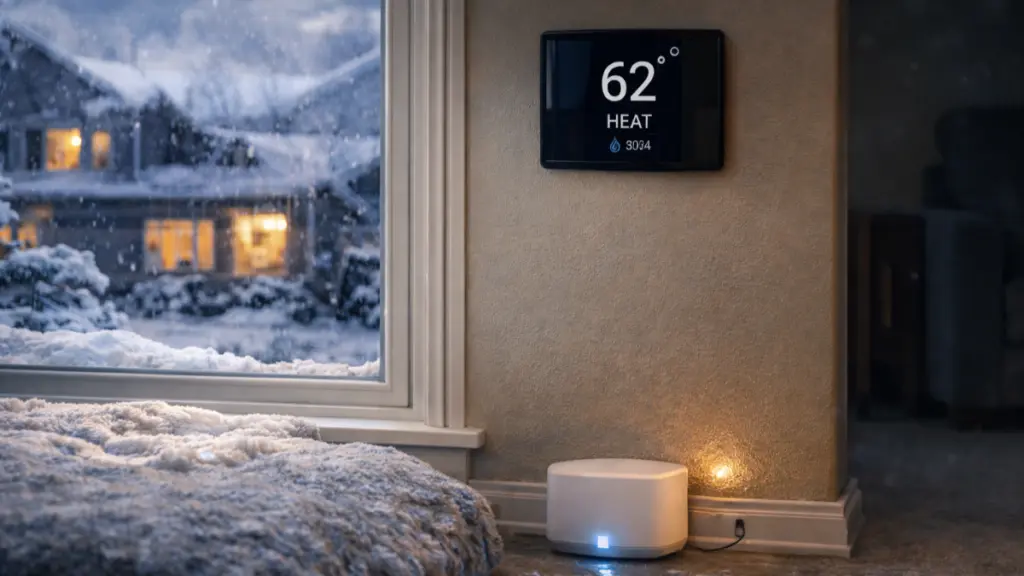
Smart homes are often marketed as lifestyle upgrades: thermostats that learn your habits, lights that respond to voice commands. In severe weather they become quiet guardians. Smart thermostats can maintain minimum temperatures to prevent frozen pipes. Leak sensors can detect a burst before it causes catastrophic damage. Smart plugs and power monitors help prioritize which devices draw precious battery power during an outage.
These capabilities are no longer niche. The portable power station market, which includes many household battery systems, was valued at USD 4.69 billion in 2025 and is projected to grow to USD 6.85 billion by 2035. North America alone accounted for over 42 % of revenue in 2025, and emergency‑power applications represented nearly 48 % of that market. Rising sales reflect an acknowledgment that climate‑driven outages are the new normal.
Yet smart‑home resilience remains unevenly distributed. Renters and lower‑income households often lack the resources to install leak sensors or battery backups. Design choices—like requiring subscription fees for advanced alerts—can exclude those most at risk. Ethical innovation means ensuring that safety features, not just entertainment, are available across housing types. Public‑sector programs could subsidize basic sensors or integrate them into affordable housing projects.
Power as the New Digital Currency
The January storm underscores a reality: electricity is the currency that makes modern life possible. Ice storms snap power lines, and restoration can take days. Entergy, which supplies power across parts of Arkansas, Louisiana, Mississippi and Texas, urged customers to finalize preparations and warned that restoration may take longer than usual due to icy conditions. The company mobilized more than 4 000 restoration workers and encouraged patience as crews contend with dangerous roads and falling trees.
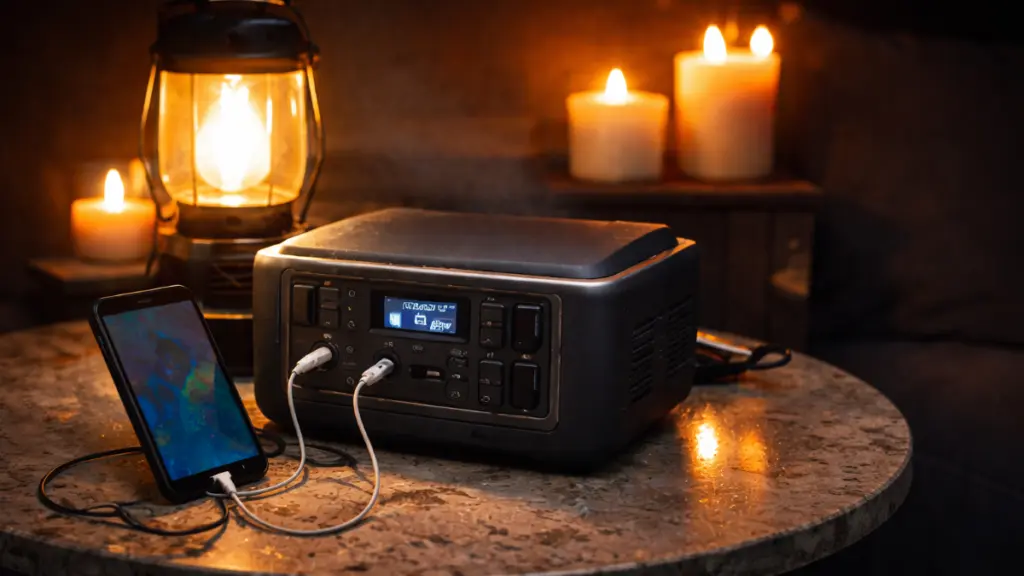
Backup power options have evolved beyond gasoline generators. Portable battery stations are quiet, safe indoors and can be recharged via solar panels. Vehicle‑to‑home (V2H) technology allows electric vehicles to power refrigerators and medical devices during short outages—a feature already deployed in some Japanese markets and slowly reaching the U.S. Designers of EVs and chargers must integrate this capability for it to become mainstream. The ethical question is whether automakers will prioritize resilience or keep such features in premium models.
The storm also highlights the importance of microgrids—localized energy networks that can operate independently of the main grid. Schools, hospitals and community centers equipped with solar‑plus‑storage microgrids could become neighborhood refuges during outages. Advances in smart inverters and peer‑to‑peer energy trading suggest a future where neighbors share power as easily as they share Wi‑Fi passwords. Realizing that vision requires regulatory changes and community ownership models that prioritize social good over profit.
Connectivity Beyond Cell Towers
If power is the currency, connectivity is the marketplace. During storms, networks are strained. In the January 2026 storm, weather experts warned that cell networks might overload and that texts had a better chance of getting through. Recognizing this, carriers have invested heavily in resilience.
T‑Mobile, for example, rolled out a self‑organizing network (SON) that uses AI to automatically adjust antennas and reroute traffic when towers are damaged. During hurricanes Helene and Milton in 2024, the system performed over 121 000 antenna adjustments to maintain service. The carrier also introduced T‑Satellite, a direct‑to‑device service that delivered over 500 000 satellite messages and 140 Wireless Emergency Alerts during recent disasters. Ulf Ewaldsson, T‑Mobile’s President of Technology, noted that “staying connected isn’t a luxury — it’s a lifeline”.
Such systems blur the line between terrestrial and space‑based connectivity. Low Earth orbit satellites now allow basic text messaging when towers fail. Companies like Starlink and Iridium are testing direct‑to‑device data services. The design challenge is not just technical but ethical: How do we ensure that emergency satellite communication is available to all, not just those who can afford premium plans? Regulators must mandate that carriers open their satellite channels for public alerts during declared disasters.
AI Forecasts: A New Lens on Extreme Weather
For decades, weather forecasting has relied on physics‑based models that solve equations representing atmospheric dynamics. Artificial intelligence is quietly reshaping this field. In February 2025 the European Centre for Medium‑Range Weather Forecasts (ECMWF) introduced the Artificial Intelligence Forecasting System (AIFS)—the first operational machine‑learning model for global weather. Tests found that it outperformed conventional models by up to 20 % while using about 1 000 times less energy and producing forecasts much faster. ECMWF’s Director‑General Florence Rabier called the system a “milestone” that would transform weather science.
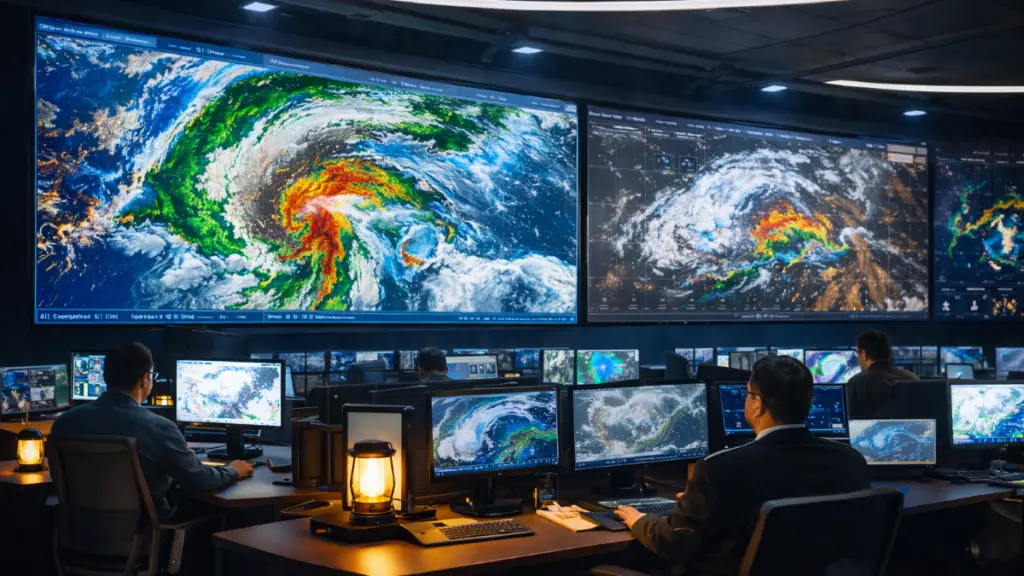
In the U.S., AI models are being integrated into the National Weather Service pipeline and private forecasting companies. They excel at pattern recognition—predicting the track of tropical cyclones 12 hours further ahead than traditional models—and offer more granular precipitation estimates, which are critical for ice storms and flash floods.
However, algorithmic forecasts raise ethical questions. Who owns the data? How transparent are the models? Biases in training data could lead to under‑forecasting in regions with fewer sensors. Public agencies must require open models and independent verification, ensuring that AI augments rather than replaces human meteorologists. The goal is not to cede control to machines but to empower forecasters with better tools—and to communicate uncertainty clearly to the public.
Designing for Resilience: Mobility and Urban Systems
Technology’s intersection with mobility becomes evident when roads glaze over and transit systems freeze. The NWS warned that major interstates—including I‑35, I‑40, I‑44 and I‑70—could close due to ice and snow. Electric vehicles, with their high torque and regenerative braking, can handle slippery conditions better than some gas cars but still depend on accessible charging infrastructure. During outages, few charging stations operate. Designers of charging networks must integrate backup power and microgrid capabilities. There is also a policy opportunity: allow EVs stranded on highways to serve as distributed energy resources for emergency shelters.
Urban planners are beginning to treat extreme weather as a core design parameter. Green infrastructure—parks, bioswales, permeable pavement—reduces flood risk and mitigates urban heat, making cities more resilient year round. Modular housing designs that include integrated solar panels and battery storage could provide temporary shelter during disasters and long‑term affordable housing in their aftermath. The storm also invites us to rethink public transit. Trains and buses should be equipped with communication and power hubs that can transform into warming centers when routes are suspended.
Ethical Dimensions: Who Benefits and Who Is Left Behind?
As technology becomes central to storm preparedness, disparities become more visible. Smartphone adoption is nearly universal, yet older adults and low‑income households have lower ownership rates and are more likely to be smartphone‑only users. Smart homes and backup batteries are expensive. Satellite messaging may require premium subscriptions.
The digital divide is no longer only about internet access; it’s about resilience access. During the storm, wealthier neighborhoods may benefit from smart thermostats and battery storage, while rural and low‑income communities depend on overloaded call centers. Ethical technology design must address this divide. That could mean public subsidies for basic resilience devices, universal access mandates for satellite emergency channels, and community‑owned microgrids. It also means ensuring that AI forecasting systems consider regions with sparse sensor coverage, thereby avoiding geographic bias.
Speculating Forward: Design Futures for a Stormy Planet
Looking beyond this weekend’s polar vortex, climate models project that winter storms will become more erratic yet potentially more intense as the jet stream weakens. Technology’s role will expand. Here are a few realistic possibilities:
- Integration of Electric Vehicles and Homes: Vehicle‑to‑home and vehicle‑to‑grid systems will allow parked EVs to supply neighborhoods during outages, turning driveways into distributed energy nodes. Automakers and regulators will debate whether to mandate bidirectional charging ports.
- Direct‑to‑Device Satellite Networks: As companies deploy thousands of small satellites, basic text and low‑bandwidth data will be available globally without ground infrastructure. Governments may classify satellite channels as critical infrastructure, requiring open access during emergencies.
- AI‑Personalized Alerts: Future alerts may integrate personal risk profiles (health conditions, mobility constraints) to deliver tailored guidance—like advising someone with an electric wheelchair about shelter locations with power outlets. Designers must guard against privacy abuses and ensure opt‑in consent.
- Community Microgrids and Energy Co‑ops: Neighborhoods may form energy co‑operatives that own solar arrays and battery banks. In storms, these microgrids will island from the main grid, prioritizing essential loads and sharing energy among members. Policy frameworks must enable co‑ownership and fair governance.
- Resilient Urban Planning: Cities may adopt “resilience zoning,” requiring new developments to include backup power, flood defenses and storm shelters. Public transit vehicles could double as mobile warming centers, outfitted with satellite communication and battery storage.
Conclusion: A Weather Eye on Technology
The polar vortex storm of January 2026 forces us to confront how deeply technology is woven into our survival. Smartphones transmit emergency alerts; smart homes leak‑proof our pipes; AI forecasts extend our warning times; satellite networks bridge communication gaps; and battery systems sustain our lives when the grid goes dark. Yet these tools also expose our inequalities and ethical blind spots.
As a technology columnist, I see storms not only as weather events but as systems tests. They reveal whether our networks, devices and policies serve everyone or only the privileged. They push designers to consider resilience alongside convenience, and they remind policymakers that innovation must be inclusive.
This weekend, as snow falls and ice coats trees, take the obvious steps: charge your phone, enable alerts and check on your neighbors. But also look ahead. Ask how the technologies you embrace might evolve to keep you safe in a stormy future and what role you can play in ensuring that no one is left out in the cold.




Reader perspectives, questions, and reactions.
No comments yet. Start the conversation.
Comments are closed for this article.