

Encryption explained is the foundation of modern digital trust, shaping how messages, payments and personal data remain secure in everyday life.
Why encryption matters today
On a crisp winter morning at a Boston café, a doctor texts confidential patient data to a specialist across town. At the next table, a student orders coffee with a mobile wallet while scanning a news article about election interference abroad. Most of us take for granted that our conversations, transactions and private information traverse the ether unseen. Yet the digital locks that make this possible – the algorithms and key exchanges collectively known as encryption – remain mysterious and often contentious.
That mystery creates vulnerability. In late 2024, the Salt Typhoon cyber‑espionage campaign compromised major U.S. telecommunications providers, capturing real‑time calls and messages. The U.S. Cybersecurity and Infrastructure Security Agency and the FBI subsequently urged Americans to adopt end‑to‑end encrypted services. “Encryption is your friend,” one official reminded reporters. Protecting human dignity in a digital age means understanding how these invisible shields work and why they matter.
Table of Contents
Encryption Explained in Simple Terms
Encryption explained is the process of converting readable data into secure code using cryptographic algorithms and keys. It protects digital communication, financial transactions and stored information from unauthorized access.
These mechanisms build on foundational cryptographic principles that have evolved over decades of mathematical research and computer science innovation.
In practice, encryption underpins secure messaging, online banking, cloud computing and digital identity systems.
How encryption works: scrambling information into unreadable code
At its core, encryption transforms readable data (plaintext) into randomized characters (ciphertext) using a mathematical function and a secret key. Only someone with the appropriate key can transform the ciphertext back into its original form. According to Splunk’s introductory guide, encryption protects data in transit, at rest, and end‑to‑end across the entire life cycle. Encryption protects data both while it is being transmitted across networks and when it is stored on devices or servers. The differences between these two approaches are explored in our breakdown of encryption at rest vs in transit. Without encryption, personal messages, banking details and intellectual property would be vulnerable whenever they traverse networks or sit in storage.
In large-scale infrastructure environments, encryption operates across multiple protocol layers rather than as a single mechanism. A technical exploration of how encryption secures modern networks examines how protocols like MACsec, IPsec and TLS work together in real-world systems.
Symmetric and asymmetric encryption are the two main families of cryptographic techniques. Symmetric algorithms like the Advanced Encryption Standard (AES) use one secret key for both encryption and decryption. This makes them efficient for large data sets and widespread use in file and application encryption, Wi‑Fi security, VPNs and SSL/TLS protocols. The challenge is safely sharing and storing the key: if an attacker obtains it, your data can be decrypted.
Asymmetric encryption, also known as public‑key cryptography, solves this by using a public key to encrypt data and a separate private key to decrypt it. The public key can be distributed openly, but only the private key holder can read the message. Rivest–Shamir–Adleman, commonly known as the RSA public-key cryptography model , and Elliptic Curve Cryptography (ECC) are widely used asymmetric methods.. RSA relies on the difficulty of factoring large prime numbers, making it ideal for secure messaging and digital signatures, though it is slower for large volumes. ECC offers comparable security with shorter keys, enabling faster performance for web communications, emails and even cryptocurrencies.
In practice, modern systems combine symmetric and asymmetric techniques through the TLS encryption protocol used across the modern web , which secures everything from online banking sessions to cloud applications. For example, web browsers use asymmetric encryption to exchange a symmetric session key, which then encrypts the bulk of the data. This hybrid approach delivers both security and efficiency.
Modern encryption systems rely on cryptographic standards defined by NIST to ensure global interoperability, security validation and algorithm reliability.
Protecting conversations: end‑to‑end encryption and messaging privacy
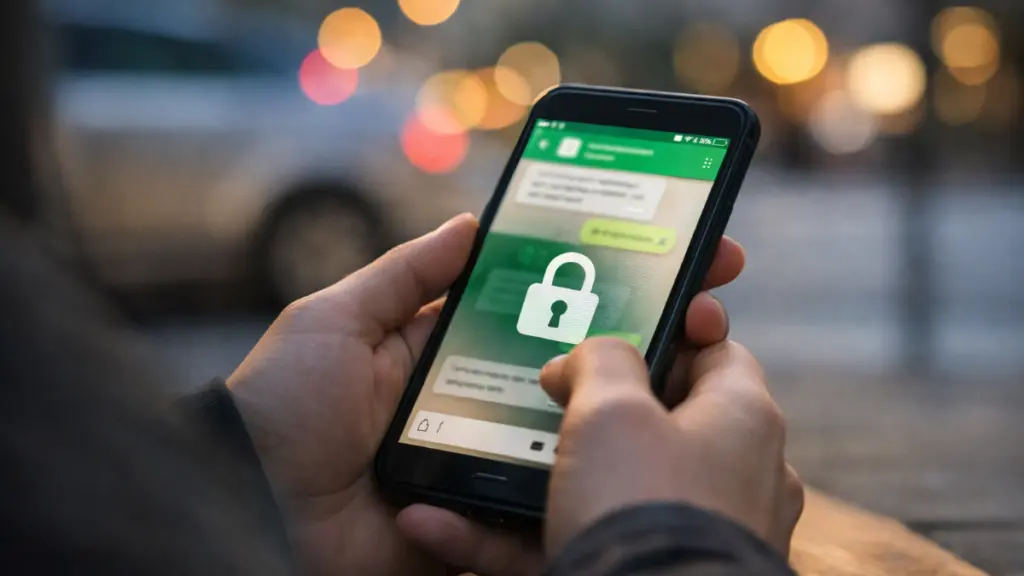
End-to-end encryption frameworks used by messaging platforms ensure that messages are encrypted on the sender’s device and decrypted only on the recipient’s device. Even the service provider hosting the platform cannot access the content. Unlike standard transport‑layer encryption (TLS), which secures data only while it moves between your device and a company’s server, E2EE keeps messages encrypted throughout their entire life cycle. This design prevents third parties – including carriers, cloud providers and even government agencies – from reading your messages.
The benefits are tangible. E2EE ensures data confidentiality, helps organizations comply with regulations like GDPR and HIPAA, mitigates the impact of data breaches and builds trust with clients. After the Salt Typhoon incident exposed unencrypted calls and texts, U.S. agencies recommended highly targeted individuals switch to E2EE apps like Signal. Such warnings highlight the stakes: without robust encryption, sensitive conversations become fodder for espionage, extortion or manipulation.
However, widespread adoption of E2EE has sparked controversy. Law enforcement agencies argue that encrypted communications impede investigations, citing cases ranging from terrorism to child exploitation. Politicians in several countries have floated proposals to mandate “exceptional access” or client‑side scanning. Yet experts warn that any built‑in backdoor weakens security for everyone. A 2025 SC Media analysis notes that adding mandatory backdoors would create vulnerabilities exploitable by malicious actors and could lead to mission creep, as tools designed to detect abuse might be repurposed to monitor political speech. The debate underscores a fundamental tension between individual privacy rights and collective security.
Encryption in digital payments and finance

Our financial lives depend on encryption in more subtle ways. Every time you tap a card at a store, make a mobile payment or transfer money online, encryption shields your payment details from prying eyes. Payment systems use protocols like SSL/TLS (which rely on symmetric ciphers such as AES) to establish secure channels with payment processors. The card number and other sensitive data are encrypted, often replaced by tokens – randomly generated substitutes – that reduce the risk if intercepted. This dual approach of encryption and tokenization helps merchants comply with Payment Card Industry (PCI) Data Security Standards. Without it, every transaction would expose your credit card number to network eavesdroppers.
Modern payment processors also employ format‑preserving encryption to protect data while maintaining its structure. As Splunk’s guide notes, format‑preserving encryption keeps the length and format of data such as phone numbers or credit card numbers while randomizing the digits. This allows legacy systems to handle encrypted data without breaking database constraints, enhancing security without sacrificing compatibility. Algorithms like Blowfish and Twofish also secure e‑commerce platforms and password managers.
At the same time, encryption alone cannot prevent fraud. Attackers often bypass cryptography by tricking users into revealing credentials or by compromising endpoints where data is decrypted. A holistic payment security strategy combines encryption with multi‑factor authentication, transaction monitoring and user education. Ethical considerations arise when payment providers collect metadata about transactions. Should they share insights with marketers or law enforcement? What happens when algorithms inadvertently discriminate against certain groups or misinterpret legitimate activity as fraud? These questions highlight the socio‑technical nature of financial encryption.
Securing data at rest: disks, clouds and databases
Encryption is just as crucial for data stored on devices or in the cloud. Whether it’s a hospital’s electronic health record system or a media company’s content library, information at rest is a prime target for attackers. Understanding how stored data differs from data in motion is essential, and these distinctions are explored in our breakdown of encryption at rest vs in transit. Advanced Encryption Standard (AES) has become the de facto standard for encrypting files, databases and storage volumes. With keys of 128, 192 or 256 bits, AES can secure government secrets, cloud databases and enterprise backups. Cloud providers often encrypt data before writing it to disk, giving only the customer the keys. Some platforms offer customer‑managed keys to ensure the provider cannot decrypt your data.
However, technical challenges persist. Storing and managing cryptographic keys securely is harder than it sounds. Splunk’s guide notes that keys must be stored in a secure location; if they are exposed, hackers can decrypt data. Large organizations may use Hardware Security Modules (HSMs) or cloud key management services, but human error remains a threat. Additionally, older systems may rely on outdated algorithms like the Data Encryption Standard (DES) and require expensive upgrades.
Brute‑force attacks and technological change are other concerns. While modern encryption is resistant to brute forcing, the continuing evolution of computing power – especially quantum computing – raises questions about long‑term viability. If adversaries record encrypted traffic today, they could potentially decrypt it in the future when more powerful computers become available. This “harvest now, decrypt later” strategy is already being observed in the wild.
The ethical and political debate: backdoors, surveillance and human rights
Encryption sits at the intersection of technology and ethics. For governments and law enforcement, encrypted data can impede investigations into serious crimes. From the FBI’s 2016 battle with Apple over unlocking a terrorist’s iPhone to the European Union’s 2022 “chat control” proposals, officials have sought mechanisms to scan or access encrypted data. Proponents argue that exceptional access is necessary to protect children or national security; opponents counter that any backdoor undermines trust and invites abuse. Recent debates over the security of consumer networking hardware further illustrate how encryption policy is increasingly tied to infrastructure resilience, a dynamic explored in our analysis of why governments now see home networks as national security assets.
SC Media’s 2025 examination of backdoor proposals illustrates the risks. Mandating client‑side scanning or key escrow systems creates vulnerabilities that can be exploited by cybercriminals or hostile states. Previous examples like the NSA’s EternalBlue exploit – which was leaked and weaponized – demonstrate how government‑created backdoors can backfire. The article warns that once one government obtains a backdoor, others will demand the same, eroding global cybersecurity and citizens’ trust.
There are also human rights considerations. Encryption enables journalists, activists and marginalized communities to communicate safely. Weakening encryption disproportionately harms those who lack power and resources. At the same time, absolute secrecy can enable wrongdoing. Striking a balance requires transparent laws, robust oversight and the development of privacy‑preserving technologies that allow targeted investigations without mass surveillance.
A glimpse into the future: post‑quantum and privacy‑preserving cryptography
Cryptographers and engineers are not standing still. Emerging post‑quantum cryptography aims to build algorithms resilient against quantum computing attacks. Messaging platforms like Signal have already begun integrating post‑quantum key exchange protocols. In 2023, Signal moved from its X3DH protocol to PQXDH, combining classical elliptic curve cryptography with the CRYSTALS‑Kyber algorithm. In 2025 it introduced the Sparse Post Quantum Ratchet (SPQR), blending classical and post‑quantum ratcheting to protect against future quantum attacks. These innovations show that encryption is a dynamic field – staying secure requires continuous adaptation.
Beyond quantum resilience, researchers are exploring ways to process encrypted data without decrypting it. Fully Homomorphic Encryption (FHE) allows computations on encrypted data, producing encrypted results that, when decrypted, match what you would obtain if the operations were performed on the plaintext. The technology is still computationally expensive but holds promise for privacy‑preserving analytics. Imagine hospitals collaborating on medical research without exposing patient data, or companies sharing aggregated insights without revealing trade secrets. Similarly, protocols like Messaging Layer Security (MLS) enable scalable group messaging with forward secrecy and post‑compromise security.
As cryptography evolves, so do threats. Quantum computers are not the only challenge; artificial intelligence may be used to automate attacks, and the proliferation of inexpensive hardware could enable more actors to attempt brute forcing. Policies must account for these changing realities without succumbing to fear. Over‑reactive legislation, such as requiring universal scanning of private messages, risks undermining the very security it seeks to enhance. Meanwhile, under‑regulation leaves users at the mercy of corporations that may prioritize profit over privacy.
Practical tips: how individuals and organizations can stay secure
Understanding encryption empowers you to make safer choices. Here are some best practices:
- Choose reputable services with E2EE: Prefer messaging and collaboration platforms that implement audited, open‑source encryption protocols. Look for features like forward secrecy and support for post‑quantum transitions.
- Use strong, unique passwords and multi‑factor authentication: Encryption protects data in transit and at rest, but if attackers control your account, they can bypass it. Password managers generate and store complex passwords for you.
- Update software and hardware: Many high‑profile breaches exploit vulnerabilities in outdated systems. Keep operating systems, browsers and firmware up to date.
- Encrypt your devices: Most smartphones and laptops support full‑disk encryption. Enable it to protect data if your device is lost or stolen.
- Understand metadata: Even encrypted services collect metadata, information about when and with whom you communicate. Consider what metadata you’re comfortable sharing and explore privacy settings accordingly.
- Invest in key management: For organizations, use secure hardware or cloud key management services and implement policies for key rotation and revocation. Poor key management is a common weak link.
Reflecting on encryption’s role in society
Encryption is not magic. It is a set of tools we use to articulate values – privacy, security, autonomy and trust – in the language of mathematics. When used wisely, encryption protects vulnerable people, supports free expression and underpins commerce. When misunderstood or misused, it can become a scapegoat for social ills or a mask for wrongdoing.
As a former machine‑learning researcher turned ethicist, I see encryption as part of a broader conversation about technology’s role in society. The same algorithms that filter our news feeds or recommend movies can also perpetuate bias or erode agency. Similarly, the same encryption that shields activists can be repurposed by criminal organizations. Navigating these tensions requires empathy, critical thinking and informed public debate.
Looking ahead, we must resist simplistic narratives that pit privacy against security. We need legal frameworks that protect encryption while providing narrow, transparent mechanisms for legitimate investigations. We need investment in research on privacy‑preserving technologies and post‑quantum resilience. And we each have a role to play in adopting secure habits and advocating for policies that respect human rights. Encryption’s story is ultimately about agency: our ability to control our own data and, by extension, our lives.
As we continue to digitize everything from voting systems to genetic data, the stakes will only grow. The locks we choose today will shape the freedoms we enjoy tomorrow. Understanding encryption is the first step toward participating in that choice.




Reader perspectives, questions, and reactions.
No comments yet. Start the conversation.
Comments are closed for this article.