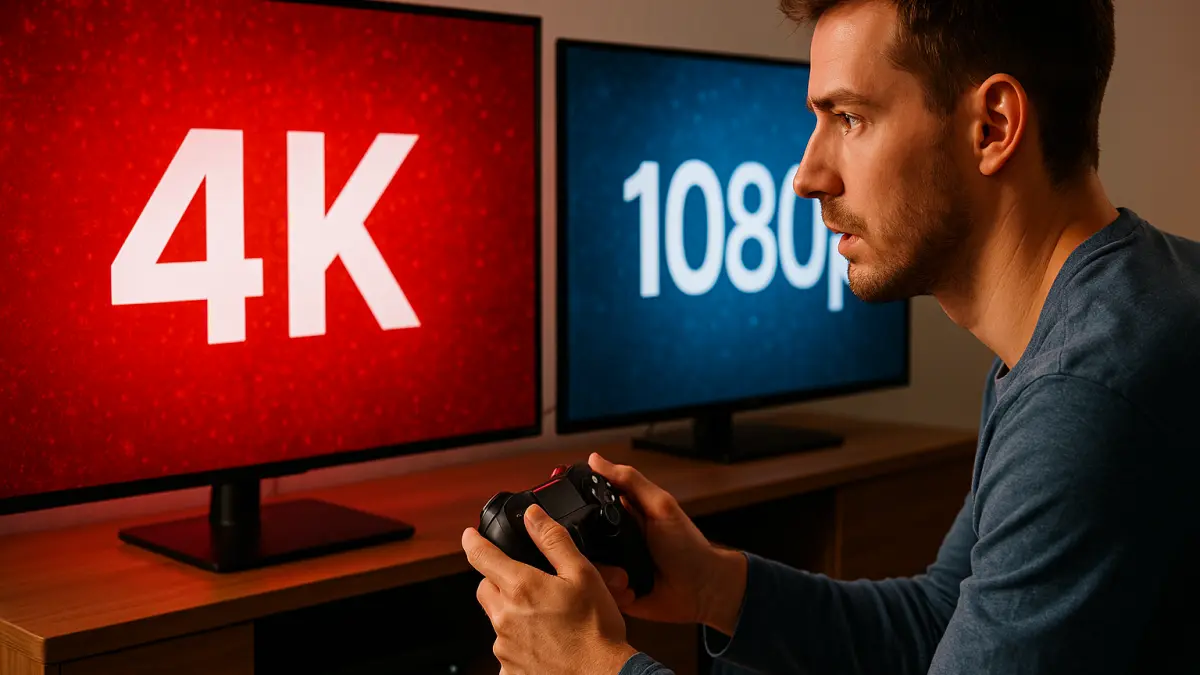

The claim that 4K TVs are always better than 1080p TVs for gaming is a myth. While 4K resolution provides stunning visuals and a more immersive experience, it does not automatically mean it is the best choice for every gamer.
Claim: 4K TVs are always better than 1080p TVs for gaming.
Quick answer: The claim that 4K TVs are always better than 1080p for gaming is a myth due to context-dependent factors like frame rates.
One significant factor to consider is the frame rate. Many high-end games can run at much higher frame rates on 1080p displays compared to 4K displays. This is particularly important for competitive gamers who prioritize smooth gameplay and quick reactions over visual fidelity. A higher frame rate can lead to a more responsive gaming experience, which can be critical in fast-paced games.
Another aspect to think about is input lag. 4K TVs often have more processing overhead, which can introduce input lag. This means that the time it takes for your actions on the controller to be reflected on the screen can be longer on a 4K TV than on a 1080p TV. For gamers who play titles that require quick reflexes, such as first-person shooters or fighting games, minimizing input lag is essential.
Furthermore, the hardware capabilities of the gaming console or PC play a crucial role. Not all gaming systems can output 4K resolution effectively. If your gaming setup does not support 4K, you may not experience the benefits of a 4K TV. In such cases, a 1080p display may be the more practical choice.
Ultimately, the best choice depends on the individual gamer’s preferences and the type of games being played. While 4K TVs offer enhanced graphics for single-player experiences or visually stunning titles, competitive gamers may find that 1080p displays provide the performance they need.
In conclusion, while 4K TVs have their advantages, they are not universally better for gaming. Gamers should evaluate their specific needs, the types of games they play, and their gaming hardware before making a decision.