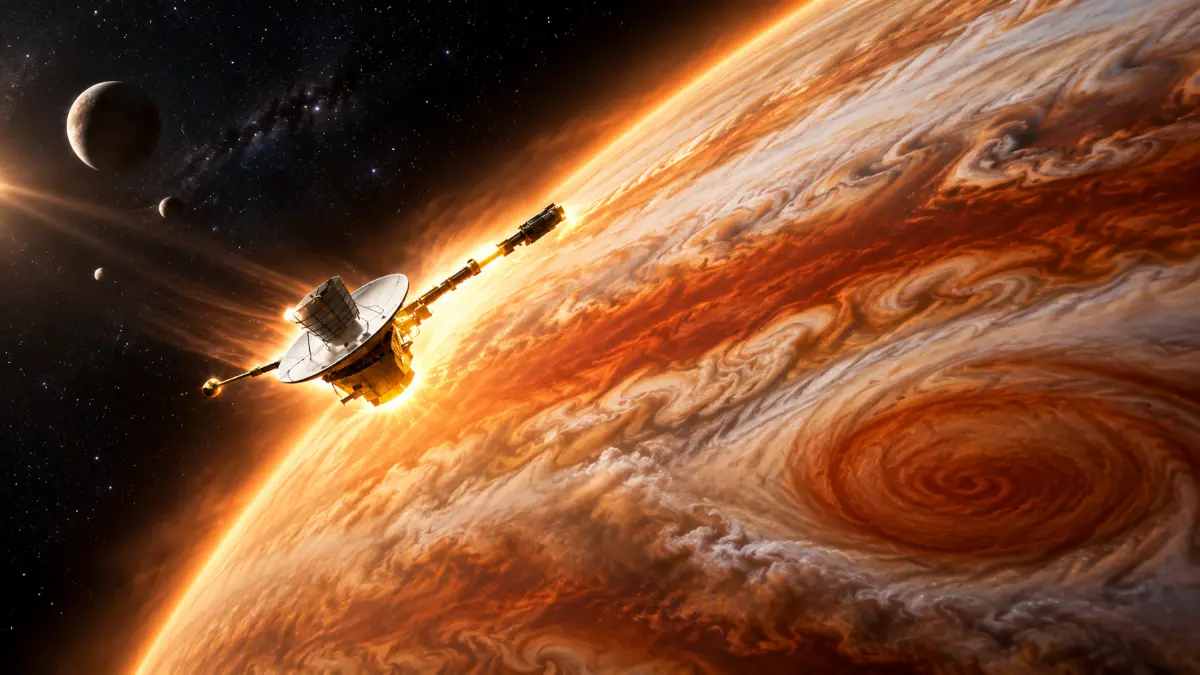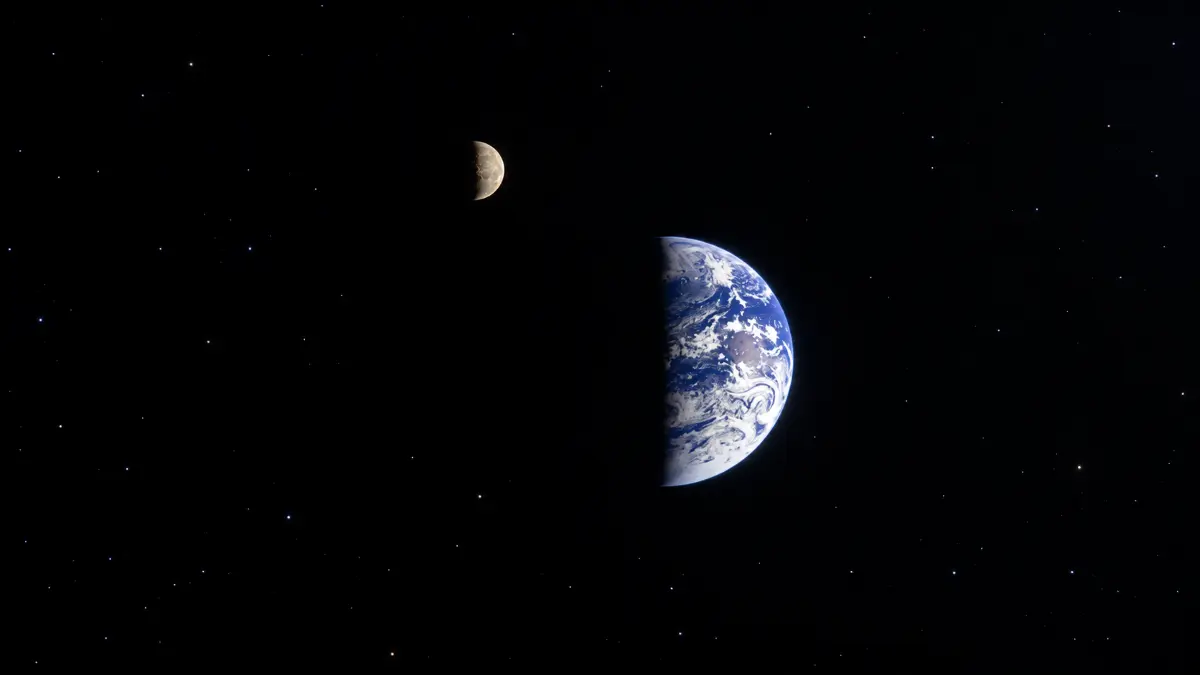

Imagine seeing your home planet and its companion in a single frame from millions of miles away. On September 18, 1977, Voyager I took the first distant photograph of the Earth and the Moon together. This wasn’t just a snapshot; it was a technical milestone in space imaging that expanded our ability to observe celestial bodies as interconnected systems.
Voyager I’s first distant photograph was a feat of precision and engineering. The spacecraft, launched earlier that year, was designed to study the outer planets, but capturing Earth and its satellite together required careful calibration of its imaging instruments. The image offered a new vantage point, showing Earth and the Moon as tiny points of light against the vast darkness of space. This perspective was impossible from Earth-based telescopes or earlier probes.
At the time, this photograph mattered because it proved that spacecraft could operate far from Earth with enough control to capture meaningful images of distant targets. It demonstrated the reliability of Voyager’s imaging system and its ability to function autonomously over vast distances. This capability was essential for the mission’s later success in photographing Jupiter, Saturn, and beyond.
The image also shifted how scientists and the public viewed Earth’s place in the cosmos. Seeing Earth as a small, fragile dot alongside the Moon underscored the scale of space and the isolation of our planet. It foreshadowed the iconic “Pale Blue Dot” image taken years later, which would deepen the philosophical and scientific impact of space photography.
Technologically, the event marked a turning point in remote sensing and spacecraft navigation. The success of Voyager’s imaging system validated the use of long-range cameras and autonomous imaging sequences on deep-space missions. This laid the groundwork for future probes to capture multi-body systems, track planetary moons, and map distant worlds with unprecedented detail.
Today, Voyager I’s first distant photograph still matters because it set the standard for how we visualize Earth from afar. It reminds us that our planet is part of a larger system, encouraging a holistic approach to planetary science. The image also highlights the importance of spacecraft autonomy in managing complex imaging tasks millions of miles from Earth.
Moreover, this early success helped shape the design of modern interplanetary missions, where imaging distant targets remains critical for navigation, science, and public engagement. The ability to capture multiple celestial bodies in one frame continues to inform mission planning and inspire new generations of space explorers.
Reflecting on this event, we see how a single photograph can extend beyond its pixels to influence technology, science, and culture. Voyager I’s distant view of Earth and the Moon wasn’t just a technical achievement; it was a moment that connected humanity to the cosmos in a new way, one that still resonates today.