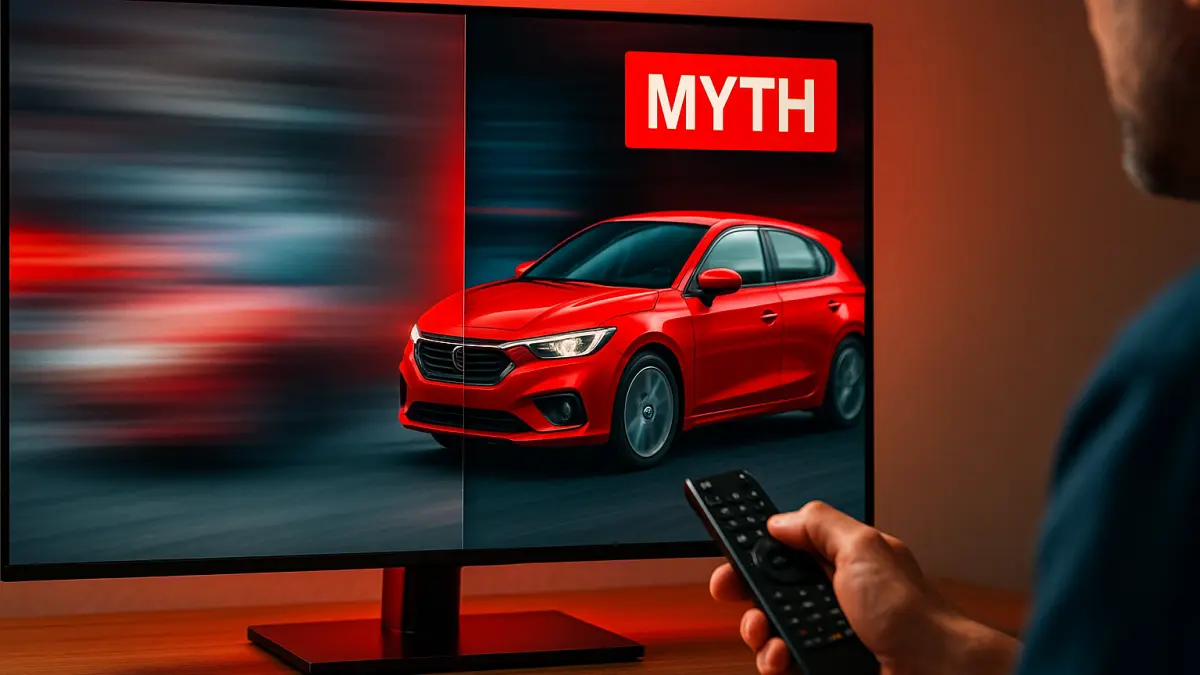

The claim that higher refresh rates always lead to a smoother viewing experience on TVs is a myth. While it is true that refresh rates play a role in how fluid motion appears on screen, they are not the sole determinant of a smooth viewing experience.
Claim: Higher refresh rates always result in a smoother viewing experience on TVs.
Quick answer: The claim that higher refresh rates always result in a smoother viewing experience is a myth.
Refresh rates, measured in hertz (Hz), indicate how many times per second a TV can redraw the image on the screen. Common refresh rates include 60Hz, 120Hz, and 240Hz. The assumption is that a higher number translates to better performance. However, this is not always the case. The actual content being viewed is a critical factor. Most television shows and movies are filmed at 24 frames per second (fps) or 30 fps. When a TV with a 120Hz refresh rate displays such content, it must interpolate frames to match the higher refresh rate. This can sometimes lead to artifacts or a ‘soap opera effect’ that some viewers find unappealing.
Moreover, the technology behind the display also plays a significant role. OLED and QLED technologies, for example, handle motion differently and may provide a smoother experience at lower refresh rates compared to traditional LCDs. Additionally, personal preferences vary widely. Some viewers prefer the natural look of lower refresh rates, while others may appreciate the hyper-realism that higher refresh rates can deliver.
Understanding refresh rates and their implications can help consumers choose the right TV for their needs. It is essential to consider the type of content you watch, your viewing environment, and your personal preferences when making a decision. In conclusion, while higher refresh rates can enhance the viewing experience under certain conditions, they do not guarantee it. Context is crucial.