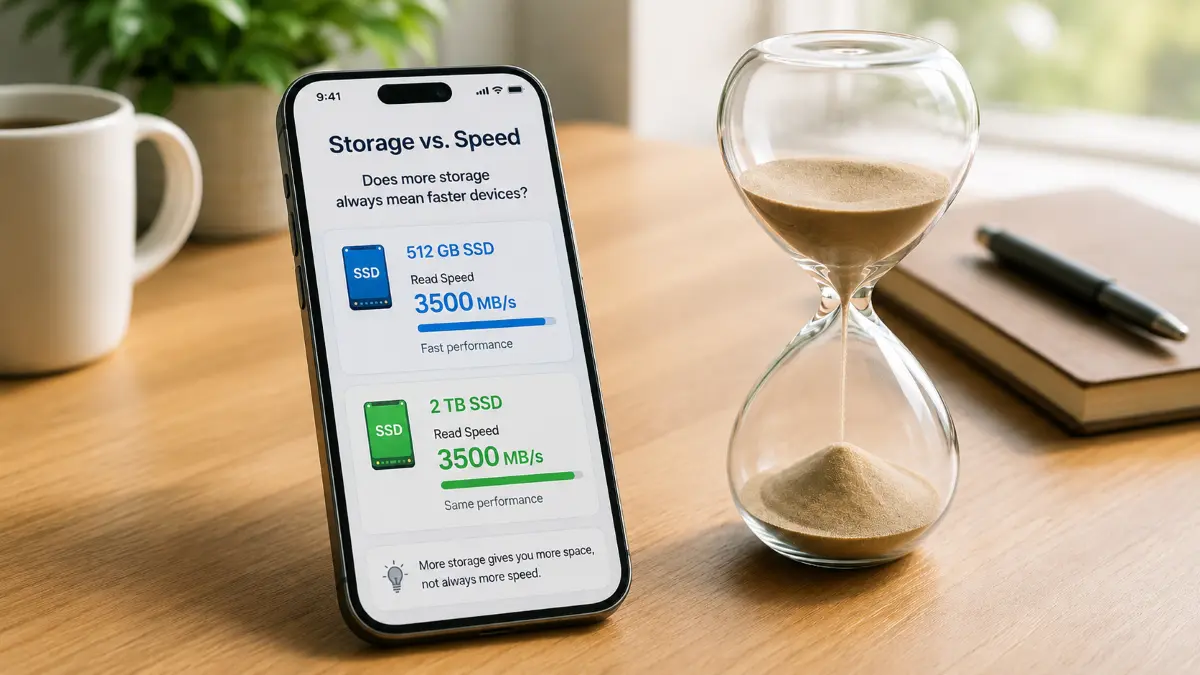

The claim that more storage space on your device means it will always run faster is a myth. While having ample storage can prevent slowdowns caused by a full disk, it is not the only factor influencing device performance.
Claim: More Storage Space on Your Device Means It Will Always Run Faster
Quick answer: The verdict is Myth because storage size is not the sole determinant of device performance.
Storage size is important, especially for applications and files, but it does not directly correlate with speed. Other components, such as RAM and the processor, play crucial roles in determining how quickly a device can execute tasks.
RAM, or Random Access Memory, is essential for multitasking. When you run multiple applications simultaneously, the amount of RAM available affects how smoothly your device operates. If your device has insufficient RAM, it may struggle to keep applications running efficiently, regardless of how much storage space is available.
The processor, or CPU, is another critical factor. It determines how fast your device can process information. A powerful processor can handle demanding tasks more quickly and efficiently than a weaker one. Therefore, even with extensive storage, a device with a slower processor may still lag in performance.
This myth can lead users to overlook these other critical aspects of performance. For instance, a smartphone with a large storage capacity but a weak processor and limited RAM may not provide the smooth user experience that a device with less storage but a more powerful processor and ample RAM would offer.
In conclusion, while having enough storage space is essential for preventing performance issues related to storage capacity, it is not the sole determinant of a device’s speed. Users should consider RAM and processor speed when evaluating device performance to ensure a well-rounded experience.
Practical takeaway: When purchasing a device, look beyond storage size. Evaluate the RAM and processor specifications to ensure optimal performance for your needs.