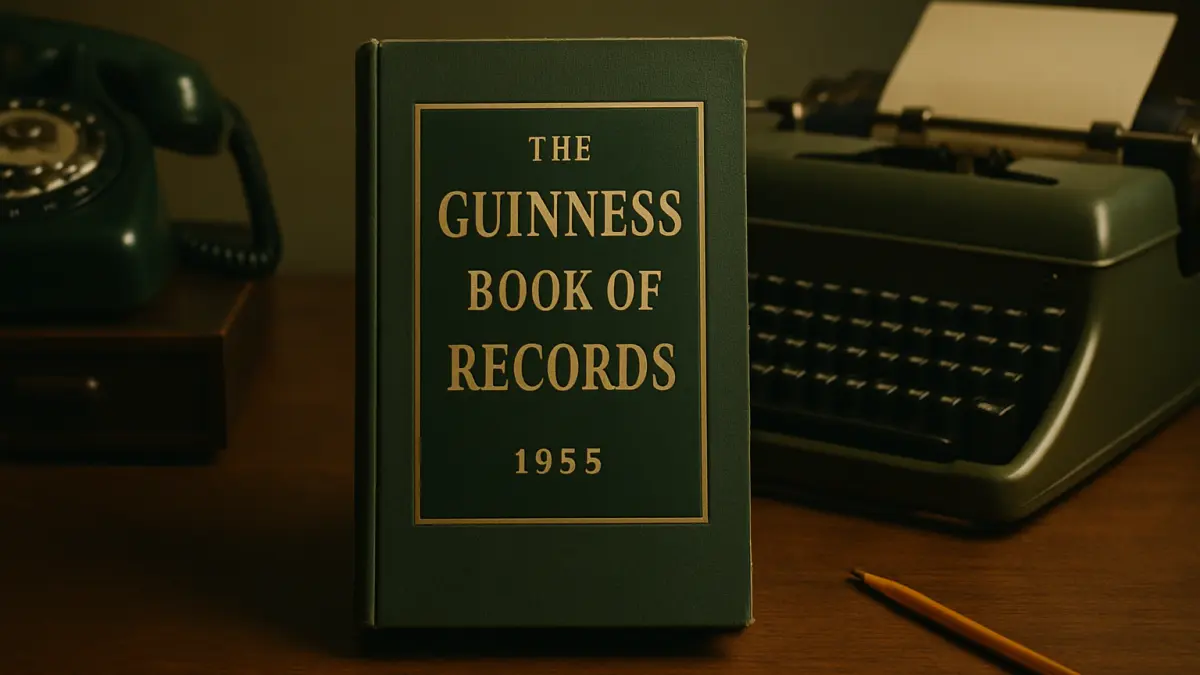

There’s a certain thrill in knowing the biggest, the fastest, or the most unusual. On August 27, 1955, the first edition of the Guinness Book of Records was published in Great Britain, setting the stage for a new way of cataloging human achievement and natural phenomena. This wasn’t just a quirky book for trivia buffs, it was a pioneering effort in systematic data gathering and verification that foreshadowed modern information management.
At the time, the Guinness Book of Records filled a gap between anecdotal storytelling and verified fact. It offered a centralized, accessible source for record-breaking feats, from the mundane to the extraordinary. This was a period when mass media was expanding, and people craved reliable, digestible information. The book’s editors had to develop rigorous standards for verifying claims, a process that demanded meticulous research and fact-checking. This approach laid early groundwork for the data validation practices that underpin today’s digital information economy.
The book’s impact extended beyond print. It introduced a format that invited participation and competition, encouraging people worldwide to document and verify their own records. This spawned a culture of crowdsourced data collection long before the internet made it commonplace. The Guinness Book became a template for how to organize and present large datasets in an engaging way, influencing everything from sports statistics to online leaderboards.
Technologically, the book’s legacy is subtle but profound. It anticipated the challenges of data integrity, authenticity, and standardization that digital platforms face today. The editorial rigor required to maintain the Guinness records mirrors the algorithms and verification systems used by modern databases and social media platforms to combat misinformation. The book’s model of categorizing diverse types of data into a coherent, searchable format also foreshadowed the development of structured databases and metadata tagging.
Why does the Guinness Book of Records still matter? In an era dominated by digital content and instant information, the principles it established remain relevant. It reminds us that behind every headline or viral claim, there must be a framework for verification. The book’s ethos of celebrating human potential through documented facts continues to inspire how we approach data transparency and authenticity. Moreover, it highlights the enduring human fascination with extremes, a drive that fuels innovation and exploration.
Reflecting on the first edition’s release, we see more than a nostalgic artifact. It was a quietly transformative moment in how we collect, validate, and share knowledge. The Guinness Book of Records didn’t just chronicle feats; it shaped the very way we think about information in a connected world. That legacy endures, proving that even a book of records can be a blueprint for technological progress.