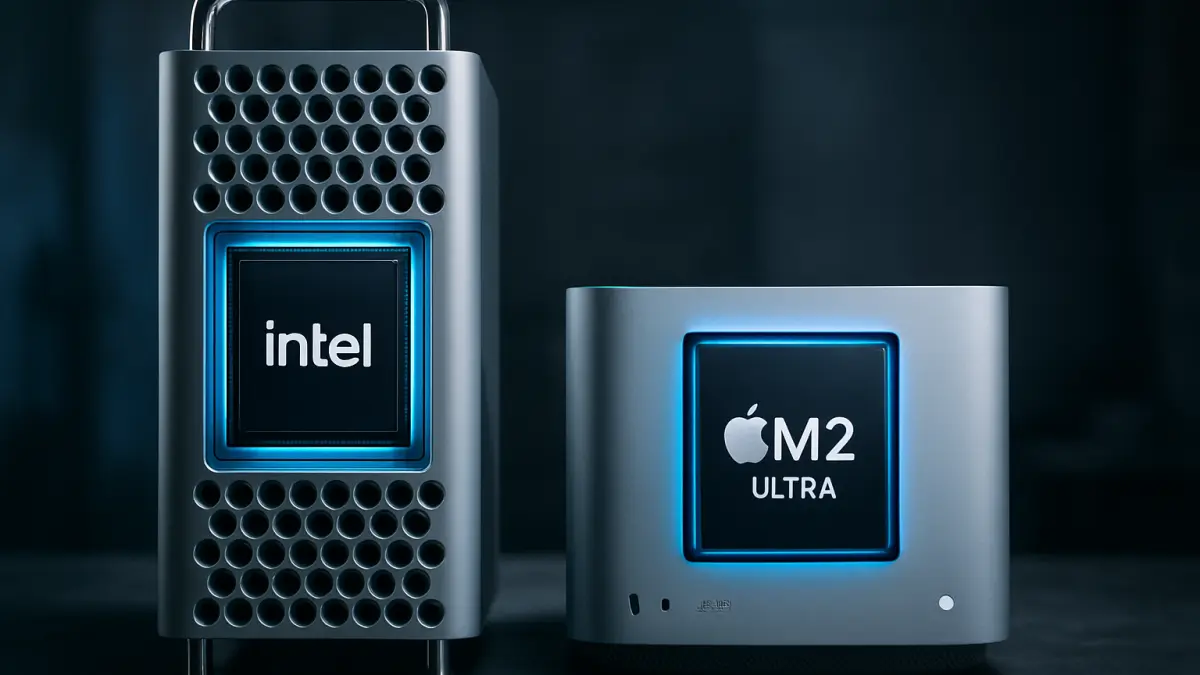

Apple’s high-end Mac Pro lineup could have been dramatically more powerful than the current Mac Studio, according to recent reports. Internal plans reportedly envisioned a Mac Pro featuring processing power twice that of the Mac Studio’s Ultra chip. This ambitious design would have pushed Apple’s desktop performance well beyond what’s currently available in its Apple Silicon lineup.
The revelation sheds light on Apple’s evolving strategy for its professional desktop market. While the Mac Studio has been a solid bridge between the Mac mini and Mac Pro, the canceled Mac Pro iteration suggests Apple was aiming for a much more formidable machine. Additionally, Apple reportedly considered releasing a final Intel-based Mac Pro before fully transitioning to Apple Silicon, indicating a more cautious and gradual shift than previously understood.
For Apple users and developers, this means the company’s roadmap for pro desktops has been more fluid than public releases suggest. The decision to scrap the ultra-powerful Mac Pro concept likely reflects balancing performance ambitions against market demand, cost, and engineering challenges. It also highlights Apple’s prioritization of Apple Silicon’s scalability and efficiency over legacy Intel architecture, even in the highest performance tiers.
In the broader industry context, Apple’s move contrasts with competitors who continue to push raw desktop power aggressively. Apple’s approach favors integrated design and energy efficiency, which may limit peak performance but enhances system coherence and software optimization. The canceled Mac Pro plans underscore the tension between these philosophies and the needs of pro users demanding extreme performance.
Looking ahead, Apple’s pro desktop strategy will be critical to watch. Will the company revisit the Mac Pro’s power ceiling as Apple Silicon matures? Or will it continue refining the Mac Studio and other form factors to meet professional demands? The evolving balance between innovation, user needs, and market realities will shape Apple’s role in the high-end desktop space for years to come.