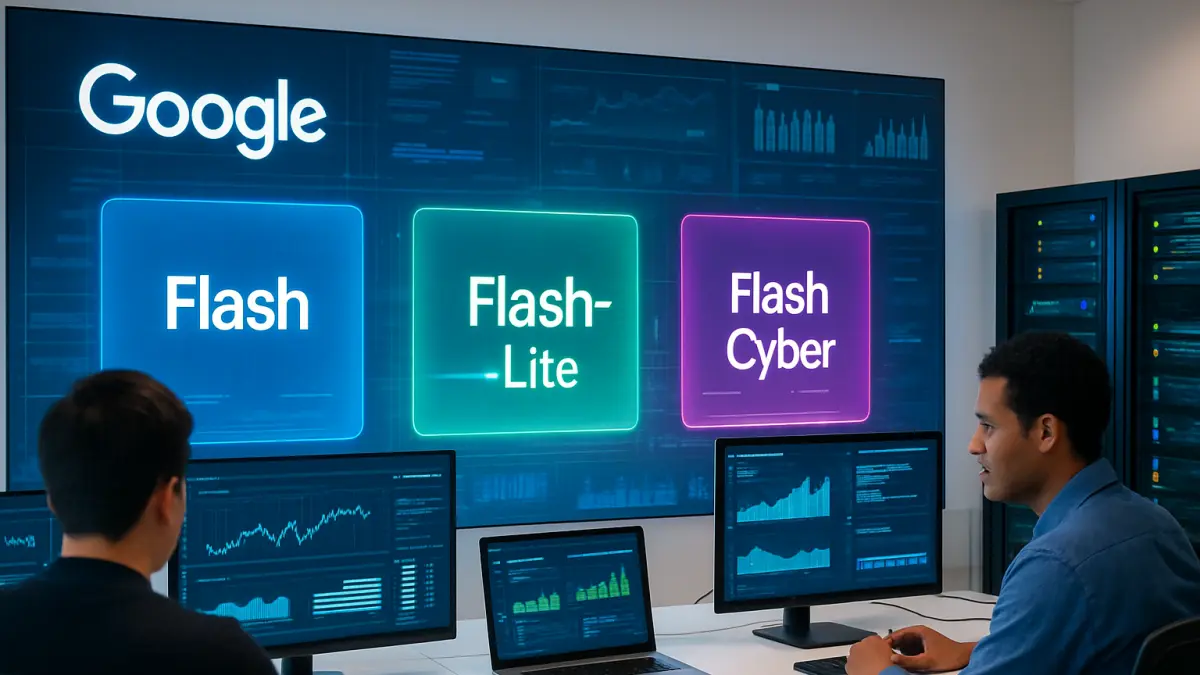

Google has introduced a new lineup of AI models under its Gemini brand, spotlighting the 3.6 Flash as its latest workhorse designed to improve coding, knowledge work, and multimodal performance. According to the Artificial Analysis Index, Gemini 3.6 Flash reduces output token usage by 17% compared to its predecessor, 3.5 Flash, with some benchmarks like DeepSWE by Datacurve showing reductions as high as 65%. This efficiency gain comes with a lower cost per output token, signaling a significant step forward in AI model optimization.
Alongside 3.6 Flash, Google also launched 3.5 Flash-Lite, a faster and more cost-effective variant of the 3.5-class models. Delivering 350 output tokens per second, Flash-Lite outperforms previous generations in agentic workflows, making it a compelling choice for applications requiring rapid, efficient AI responses. This model targets users who prioritize speed and cost-efficiency without sacrificing performance in complex task execution.
Perhaps most notable is the introduction of 3.5 Flash Cyber, a specialized AI model tailored for cybersecurity applications. This model is integrated with Google’s CodeMender code security agent, combining AI with agent infrastructure to tackle cybersecurity challenges. This pairing aims to deliver competitive performance at the forefront of cyber defense, reflecting the growing importance of AI-driven security tools in an increasingly complex threat landscape.
These releases come amid intensifying competition in the AI space, where efficiency, speed, and specialization are critical differentiators. Google’s approach of segmenting AI models by use case, from general coding and multimodal tasks to cybersecurity, illustrates a strategic pivot toward more targeted AI solutions. This could influence how enterprises adopt AI, pushing for models that align tightly with specific operational needs rather than one-size-fits-all solutions.
Looking ahead, the market will be watching how these models perform in real-world deployments, especially the cyber-focused 3.5 Flash Cyber. Its success could set a precedent for integrating AI with security agents, potentially reshaping cybersecurity strategies. Meanwhile, the efficiency gains in 3.6 Flash may pressure competitors to optimize their models further, accelerating innovation in AI performance and cost-effectiveness.