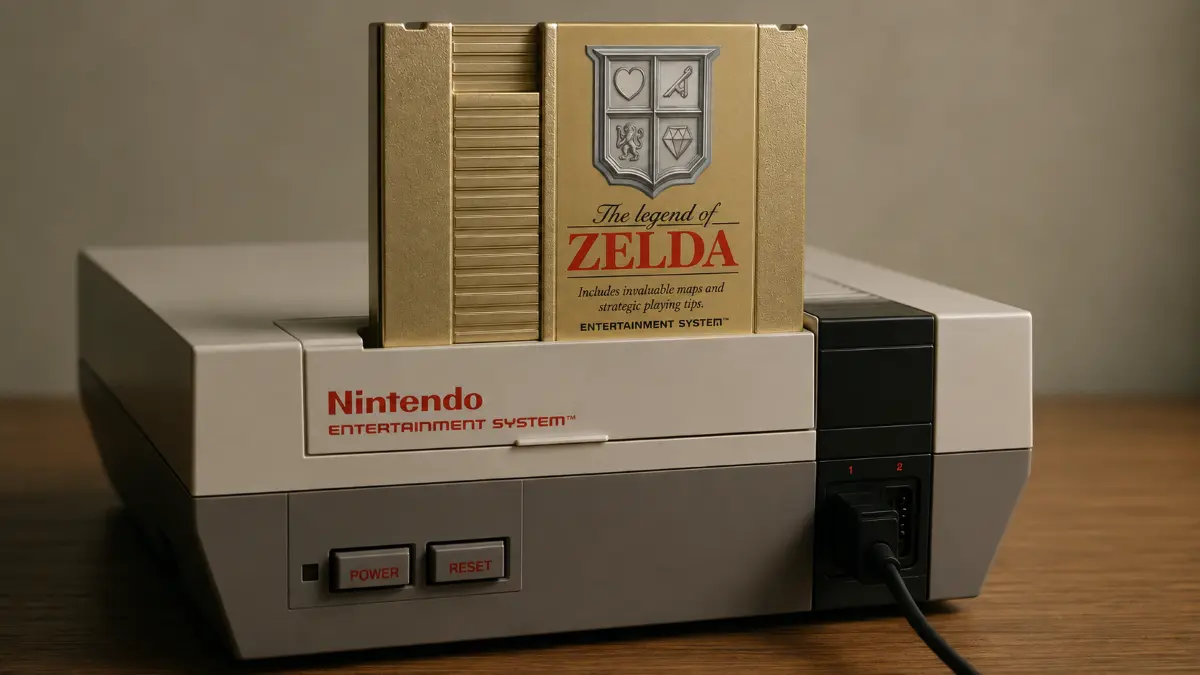

The Legend of Zelda arrived on North American NES consoles on August 22, 1987, and it didn’t just launch a game; it opened a new chapter in digital storytelling and gameplay design. This wasn’t merely another cartridge to add to the shelf. It was the blueprint for what role-playing video games could be, immersive, expansive, and deeply engaging.
At its core, The Legend of Zelda introduced players to a sprawling open world filled with secrets, puzzles, and a non-linear progression that was rare for its time. Unlike many games that followed a strict path, Zelda gave players the freedom to explore Hyrule at their own pace, uncovering dungeons and items in an order that suited their play style. This approach solved a fundamental problem in early video games: linearity that limited player agency and replay value.
When it hit shelves in 1987, the game’s design was a bold departure from the arcade-style action and platformers dominating the market. The Legend of Zelda combined action, adventure, and puzzle-solving with a persistent world that remembered player progress. It was one of the earliest games to save progress directly to the cartridge, eliminating the need for passwords or starting over. This innovation made the experience more seamless and encouraged longer, more involved gameplay sessions.
The impact of The Legend of Zelda extended beyond its immediate commercial success. It laid the groundwork for the role-playing game genre by blending narrative depth with gameplay mechanics that rewarded exploration and problem-solving. The game’s structure inspired countless developers to think bigger about what video games could offer in terms of storytelling and player engagement. It wasn’t just about defeating enemies; it was about discovery, strategy, and immersion.
The series that followed built on this foundation, but the original’s influence remains evident in modern game design. Open-world games today, from sprawling RPGs to action-adventure titles, owe a debt to Zelda’s pioneering spirit. Its emphasis on player choice, environmental storytelling, and integrated puzzles set standards that many games still strive to meet.
More than three decades later, The Legend of Zelda’s 1987 release still matters because it challenged the conventions of its time and expanded the possibilities of interactive entertainment. It showed that video games could be complex, rich worlds where players shape their own journey. This principle continues to drive innovation in game development, influencing how stories are told and how players connect with virtual worlds.
Looking back, The Legend of Zelda wasn’t just a game launch; it was a statement about the potential of gaming as an art form and a medium for exploration. Its legacy is a reminder that the best technology doesn’t just entertain, it invites us to explore, think, and engage on a deeper level.